2026 US-Iran Hormuz Blockade: Oil Market Impact & Forecasts
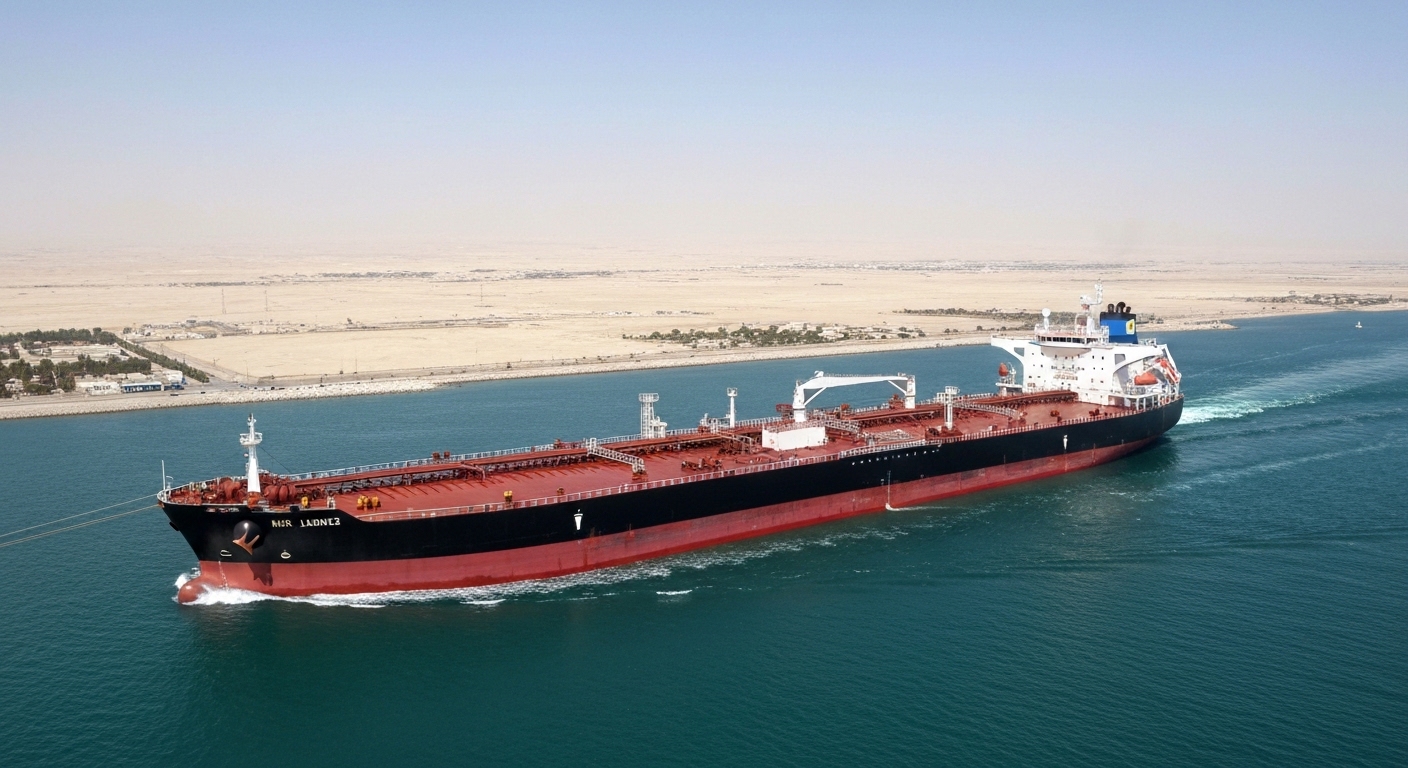
The Strait of Hormuz is the world’s most important oil artery. Through this narrow channel, roughly a fifth of the globe’s daily oil supply travels from the Persian Gulf to markets worldwide. It’s a chokepoint so critical that even the threat of its closure sends shockwaves through the global economy. This raises a pressing question for 2026: What would a US-Iran confrontation look like, and what would the US-Iran Hormuz blockade oil market impact in 2026 truly be? This article provides a predictive analysis, exploring the specific scenarios, market mechanics, and geopolitical fallout of a potential crisis.
The Geopolitical Chessboard: US-Iran Tensions in 2026
The year 2026 finds the world on edge, with the Strait of Hormuz once again the epicenter of geopolitical risk. Years of simmering tensions between the United States and Iran have reached a boiling point. According to recent reports, diplomatic efforts have faltered, with peace talks failing to produce a breakthrough. This has led to a dramatic escalation.
In a decisive move, the U.S. military has announced its intention to begin a blockade of Iranian ports and coastal areas. The stated goal is to halt Iran’s oil exports and disrupt its support for regional proxies. In response, Tehran has issued its own stark warnings, threatening to target other ports in the Middle East, effectively putting the entire region on high alert. This standoff has transformed the long-standing shadow war into a direct and perilous confrontation, setting the stage for a crisis with global ramifications.
Blockade Scenarios: How a 2026 Hormuz Crisis Could Unfold
The term “blockade” can be misleadingly simple. A 2026 crisis in the Strait of Hormuz would likely unfold along one of several distinct and increasingly dangerous pathways, each with different implications for the oil market.
-
Scenario 1: The “Surgical” US Blockade. This appears to be the current situation unfolding in April 2026. The US Navy and its allies would focus on interdicting ships heading to and from Iranian ports, aiming to cripple Iran’s economy without shutting down the entire Strait. The goal is to apply maximum pressure on Tehran while allowing tankers from other Gulf nations (like Saudi Arabia, the UAE, and Kuwait) to pass. However, this is a high-risk strategy, as it dares Iran to respond.
-
Scenario 2: Iran’s Asymmetric Retaliation. Unable to match the US Navy in a conventional fight, Iran would likely resort to asymmetric warfare. This could involve:
- Naval Mines: Deploying “smart” mines to create hazardous, no-go zones for commercial shipping.
- Swarm Tactics: Using fleets of small, fast-attack craft armed with anti-ship missiles to harass and intimidate tankers.
- Drone and Missile Strikes: Targeting ships or nearby energy infrastructure in Saudi Arabia and the UAE. This would create a “de facto” blockade, where the Strait is technically open but insurance costs and physical risks make passage commercially unviable for most.
-
Scenario 3: Full Closure Attempt. This is the most extreme and self-destructive option for Iran, but one that cannot be discounted in a desperate, cornered regime. In this scenario, Iran would overtly attempt to shut down the Strait to all traffic. This would trigger an immediate and overwhelming military response from the US, which is already preparing to conduct a naval sweep to secure the critical oil route. While a full closure would likely be short-lived, the resulting conflict would be devastating, and the market panic would be absolute.
Anatomy of the Oil Shock: Detailed Market Impact
The news of a US-led blockade has already caused oil prices to surge, but a prolonged disruption would trigger a multi-stage economic shockwave far beyond the initial headlines. The US-Iran Hormuz blockade oil market impact in 2026 would be felt through several key mechanisms.
First, the immediate physical disruption would remove millions of barrels of oil per day from the market. The Strait of Hormuz handles about 21 million barrels per day (bpd). Even a partial disruption that cuts off 10-15 million bpd would represent the largest supply shock in modern history.
This physical shortage would unleash chaos in financial markets:
- Price Explosion: Brent crude prices would not just rise; they would explode. Initial estimates suggest a leap of $30-$50 per barrel is possible within days. A prolonged closure could see prices well north of $200 per barrel, shattering all previous records.
- Futures Market Mayhem: A “war risk premium” would be instantly priced into every oil futures contract for months to come. The market structure would likely flip into a steep “backwardation,” where immediate delivery costs far more than future delivery, reflecting acute panic and scarcity.
- Shipping and Insurance Paralysis: The cost to insure a supertanker transiting the Gulf would become astronomical. The London insurance market would declare the Persian Gulf a warzone, and many ship owners would simply refuse to enter the area at any price, halting traffic more effectively than a naval blockade itself.
To counter this, the US and other members of the International Energy Agency (IEA) would almost certainly authorize a coordinated release from their Strategic Petroleum Reserves (SPRs). While this can temporarily add a few million barrels per day to the market, it is a finite resource. An SPR release can cushion the initial shock but cannot replace a closed Strait of Hormuz for long. The key question for the US economy becomes how to navigate the fallout of sustained high prices.
Global Reactions: How the World Would Respond to a 2026 Blockade
A Hormuz crisis would instantly become the world’s top diplomatic and economic emergency, forcing major powers to make difficult choices.
-
China: As the world’s largest oil importer and a top customer for Iranian and Saudi crude, China’s energy security would be critically threatened. Beijing would be in a bind. It would fiercely condemn the US action and call for de-escalation while simultaneously pressuring Iran not to retaliate against all shipping. The crisis would be a stark reminder of its vulnerability to US control over global sea lanes.
-
Europe: Already struggling with energy security after the Russia-Ukraine war, the EU would face a catastrophic economic blow. Soaring oil and gas prices (as LNG prices would rise in sympathy) would trigger rampant inflation and likely push the continent into a deep recession. European leaders would desperately pursue a diplomatic off-ramp.
-
Saudi Arabia and the UAE: As US partners and Iranian rivals, they would be on the front line. While quietly supporting the goal of containing Iran, they would be extremely vulnerable to retaliatory strikes on their oil fields, desalination plants, and ports. They have limited pipeline capacity to bypass the Strait, but it’s insufficient to replace tanker traffic, leaving their economies exposed.
-
Russia: For the Kremlin, a massive surge in oil prices would be an enormous financial windfall, helping to fund its state budget and geopolitical objectives. While publicly calling for calm, Moscow would benefit immensely from the chaos and would likely use the crisis to highlight what it frames as destabilizing US foreign policy.
The Long-Term Fallout: A New Era for Energy Security
Beyond the immediate market panic, a severe or prolonged Hormuz blockade in 2026 would fundamentally reshape the global energy landscape and accelerate trends that are already underway.
The most significant impact would be a radical re-evaluation of energy security. The decades-long reliance on a fragile chokepoint would be exposed as a critical vulnerability. This would likely trigger two major shifts:
- An Accelerated Energy Transition: While a fossil fuel crisis might seem to empower oil producers in the short term, it would serve as a powerful catalyst for their eventual decline. Governments in Europe, Asia, and North America would pour trillions into renewables, battery storage, and electric vehicles with a newfound urgency, aiming to permanently break their addiction to volatile foreign oil.
- Supply Chain Diversification: Countries would aggressively seek to diversify their energy sources away from the Persian Gulf. This would benefit producers in the Americas (US, Canada, Brazil, Guyana) and parts of Africa. Furthermore, investment would surge into alternative transport routes, such as expanding the pipelines that run from the Gulf to the Red Sea or the Arabian Sea, to create permanent bypass options.
Ultimately, a 2026 Hormuz crisis could mark the beginning of the end for the petro-state era. The shock would force a global reckoning with the unstable foundation of our energy system, leading to a new world where security is defined not by control over chokepoints, but by diversified, resilient, and increasingly clean energy infrastructure.
Conclusion: Navigating the Unthinkable
A US-Iran blockade in the Strait of Hormuz is the definition of a low-probability, high-impact “black swan” event. As the hypothetical events of April 2026 demonstrate, the consequences would be immediate and severe, cascading from oil markets to the broader global economy. The ultimate impact—whether it’s a temporary price spike or a world-altering economic crisis—depends entirely on the duration of the disruption and the specific escalation scenario that unfolds.
While the world’s attention is captured by the naval movements and market tickers, the most critical variable remains diplomacy. The current standoff highlights the urgent need for de-escalation and strategic preparedness. Finding an off-ramp is not just a regional necessity; it is a global economic imperative.
Frequently Asked Questions
How would a 2026 US-Iran Hormuz blockade specifically impact global oil markets?
A blockade of the Strait of Hormuz would severely disrupt global oil supply, as a significant portion of the world’s seaborne oil passes through this chokepoint daily. This would lead to an immediate and sharp surge in crude oil prices, potentially causing a global energy crisis and economic recession. The market would face extreme volatility and uncertainty regarding future supply availability.
What would be the economic consequences for the U.S. if Iran blocks the Strait of Hormuz in 2026?
For the U.S., a Hormuz blockade would translate to significantly higher gasoline prices, increased inflation, and potential economic slowdown due to rising energy costs across all sectors. It could also strain strategic petroleum reserves and necessitate urgent policy responses to secure alternative supplies. The broader economic impact would be widespread, affecting consumer spending and industrial production.
What are the potential scenarios for a 2026 Hormuz blockade?
Blockade scenarios could range from a temporary disruption caused by Iranian naval exercises or threats, to a full-scale closure involving military confrontation. The severity and duration would depend on the geopolitical triggers, such as escalating US-Iran tensions or a direct military incident. Each scenario would have distinct implications for market response and global stability.
What long-term effects could a 2026 Hormuz blockade have on global energy security?
A prolonged blockade would accelerate the global shift away from reliance on Middle Eastern oil, driving investments in alternative energy sources and diversified supply chains. It would also likely lead to increased strategic petroleum reserve capacities and greater emphasis on energy independence among major consuming nations. The event could fundamentally redefine international energy policies and alliances.
Why is the Strait of Hormuz so critical to global oil supply?
The Strait of Hormuz is a narrow chokepoint through which approximately one-fifth of the world’s total petroleum liquids consumption, including a significant portion of crude oil and LNG, passes daily. Its closure would effectively cut off major oil producers in the Persian Gulf from international markets, creating an unprecedented supply shock. This makes it a vital artery for global energy trade.