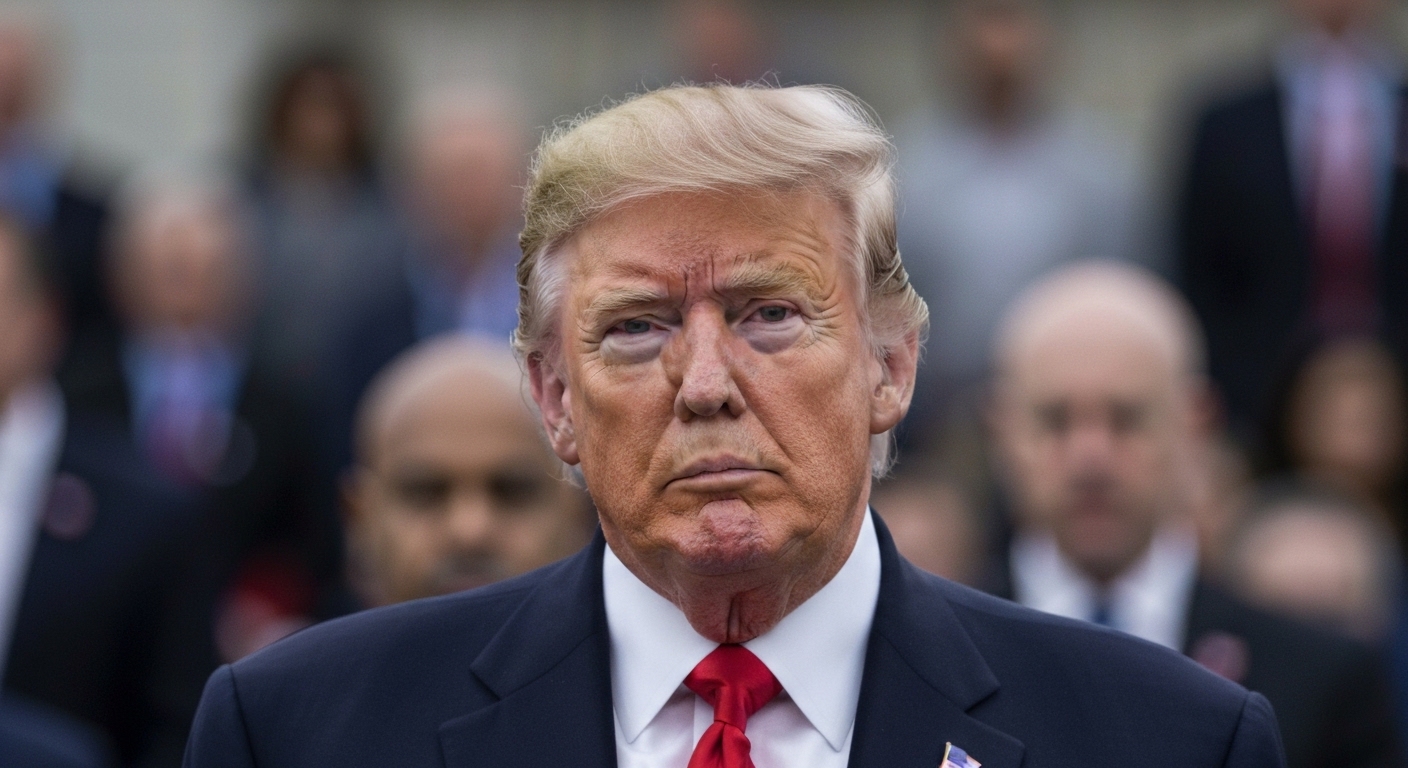
How Donald Trump’s Influence Shapes the GOP in 2026
Even years after his term in the White House, the shadow of Donald Trump looms larger than ever over the Republican Party. His presence is a defining force, shaping everything from policy debates in Washington to primary races in the smallest towns. This article provides a comprehensive analysis of how Donald Trump’s influence will shape the Republican Party in 2026, exploring the deep, lasting transformations in its core beliefs, candidate selection process, voter base, and internal power structure. As the GOP looks toward the 2026 midterms and beyond, understanding this legacy isn’t just helpful—it’s essential.
The ‘America First’ Legacy: A Fundamental Shift in GOP Ideology
Long before Donald Trump’s presidency, the pillars of Republican conservatism seemed firmly set: free markets, free trade, a hawkish foreign policy, and social conservatism. However, his influence has triggered a fundamental redefinition of what it means to be a Republican, shifting the party’s ideological center of gravity away from these traditional tenets and toward a more populist, nationalist platform.
This new ideological framework is best encapsulated by the phrase “America First.” It prioritizes a nationalist perspective on nearly every issue.
- Trade: The party of Ronald Reagan that championed free trade agreements like NAFTA has largely been replaced by a party skeptical of globalism. The new orthodoxy favors tariffs and protectionist measures designed to shield American industries and workers from foreign competition. This represents a direct departure from decades of GOP economic policy.
- Foreign Policy: The interventionist spirit that defined the party through the Cold War and the War on Terror has given way to a more isolationist or “realist” stance. There is a growing weariness with “endless wars” and a greater demand for allies to shoulder more of their own defense burdens. This has created new fault lines within the party between traditional hawks and America First advocates.
- Immigration: While the GOP has long advocated for border security, Trump’s influence has elevated the issue to a central, defining element of the party’s identity. The focus has sharpened intensely on building a border wall, restricting legal and illegal immigration, and framing the issue in stark, nationalist terms.
By 2026, this ideological transformation appears largely complete. The internal debates are no longer about whether to adopt these populist-nationalist ideas, but rather about the degree and manner of their implementation. For a new generation of Republican politicians, the America First platform is not a radical departure; it is simply the new conservative consensus.
The Kingmaker’s Court: Loyalty as the New Litmus Test for Candidates
Perhaps the most visible aspect of Donald Trump’s ongoing influence is his role as the party’s chief “kingmaker.” Even without holding office, his endorsement in a Republican primary can be a powerful, often decisive, factor. This has fundamentally altered the calculus for aspiring GOP candidates, creating a new, unwritten requirement for success: personal loyalty to Trump.
In this new political landscape, a candidate’s stance on policy is often secondary to their demonstrated allegiance. This litmus test manifests in several ways. Candidates frequently travel to Mar-a-Lago seeking his blessing, feature him prominently in their campaign ads, and echo his key talking points and grievances, particularly regarding the 2020 election. Publicly questioning Trump or his leadership is often seen as a career-ending move in a primary contest.
This dynamic creates a powerful feedback loop. Candidates who win primaries with Trump’s backing arrive in office owing their success to him, reinforcing his power and ensuring his priorities remain at the top of the party’s agenda. This “loyalty-first” approach has significant implications for the future of the GOP. It tends to sideline or purge officials who are perceived as insufficiently loyal, regardless of their conservative credentials or legislative effectiveness. As the party moves toward 2026, the roster of Republican candidates will be overwhelmingly composed of those who have successfully navigated this loyalty test, ensuring that Trump’s political style and priorities continue to dominate the party’s public-facing identity.
A New Republican Coalition: Who Votes for the GOP Today?
Donald Trump did more than just change the GOP’s policies; he successfully reconfigured its voter base, creating a new and different Republican coalition. He energized and attracted millions of voters who had previously felt ignored by both parties, while simultaneously alienating some traditional Republican demographics. This realignment continues to define the party’s electoral strategy in 2026.
The most significant shift has been the GOP’s transformation into a more working-class party. Trump’s populist message on trade, immigration, and culture resonated deeply with blue-collar voters in the Rust Belt and other industrial regions—voters who had reliably pulled the lever for Democrats for generations. These voters, often without a college degree, became the heart of the new Republican base, drawn to a message that spoke to their economic anxieties and cultural values.
At the same time, Trump’s rise has seen a notable increase in support among some minority groups, particularly Hispanic voters in regions like South Florida and the Rio Grande Valley in Texas. Many of these voters are drawn to the GOP’s focus on economic opportunity, religious values, and a strong stance against socialism. This has challenged the long-held assumption that demographic change exclusively benefits the Democratic Party. However, this growth has come at a cost. The party has seen its support erode among college-educated, suburban voters, especially women, who were once a bedrock of the Republican coalition. These voters are often repelled by the party’s populist turn and Trump’s personal style. This trade-off presents the central strategic challenge for the GOP in 2026: can it hold onto its new working-class base while finding a way to win back the suburban voters it needs to compete in swing states?
Remaking the Machine: Trump’s Influence on Party Structure and Leadership
Beyond shaping ideology and candidates, Donald Trump’s influence has permeated the very machinery of the Republican Party. From the national leadership at the Republican National Committee (RNC) down to state and county party chairs, there has been a systematic effort to remake the party apparatus in his image. This “long march” through the party’s institutions ensures his legacy will endure long after he has left the political stage.
The most prominent example of this was the 2024 overhaul of the RNC, which saw his handpicked leadership team, including his daughter-in-law, installed at the top. This move consolidated his control over the party’s vast fundraising and strategic operations. The RNC’s priorities, from legal strategies to get-out-the-vote efforts, are now intrinsically aligned with his. This top-down control ensures that the party’s resources are deployed to support loyalists and advance a Trump-aligned agenda.
This trend is mirrored at the state level, where grassroots activists motivated by the MAGA movement have successfully taken over local party organizations. In numerous states, long-serving establishment figures have been replaced by fervent Trump supporters. These new leaders are responsible for crucial functions like setting party rules, organizing conventions, and vetting candidates. This structural takeover creates an environment where dissent is difficult and loyalty is paramount. The ongoing power struggles between the remaining “establishment” wing and the dominant Trump wing define the party’s internal politics, but by 2026, it is clear which side has the upper hand in controlling the party’s operational levers.
Conclusion: The Republican Party at a Crossroads in 2026
The Republican Party of 2026 is, in almost every meaningful way, a party remade by Donald Trump. His influence has driven a lasting and profound transformation, shifting its core ideology toward “America First” nationalism, redefining candidate viability as a test of personal loyalty, forging a new working-class voter coalition, and seizing control of the party’s internal machinery. These are not fleeting changes but deep, structural shifts that will define the GOP for years to come.
As the party looks toward the 2026 midterm elections and begins to contemplate the 2028 presidential contest, it stands at a critical crossroads. The path forward is being defined entirely by its response to this powerful legacy. The key questions remain: Can this Trump-centric model of politics prove durable in a general election? Can the party expand its appeal beyond its loyal base without alienating the very voters who brought it to power?
The answers to these questions will determine the future of the Republican Party and, in turn, the future of American politics. The challenges are immense, but for many within the GOP, the opportunity to solidify a new conservative movement is a prize worth the risk.
For continued analysis of the evolving U.S. political landscape, subscribe to our newsletter for weekly updates and insights.
Frequently Asked Questions
How is Donald Trump expected to influence the Republican Party’s performance in the 2026 midterm elections?
Trump’s influence is anticipated to be a significant factor, shaping candidate selection through loyalty tests and defining the party’s platform around his ‘America First’ ideology. This could energize his base but also potentially alienate moderate voters, leading the GOP to a critical crossroads in 2026.
What specific policy priorities or ideological shifts will Trump’s influence bring to the GOP’s agenda for 2026?
Trump’s influence is expected to solidify the ‘America First’ agenda as the core of the GOP’s platform, emphasizing issues like border security, protectionist trade policies, and a non-interventionist foreign policy. This represents a fundamental shift from traditional Republican conservatism, impacting legislative priorities and campaign messaging.
How will Trump’s role as a ‘kingmaker’ affect candidate selection for the 2026 elections?
Trump’s ‘kingmaker’ status means that loyalty to him and his political movement will likely serve as a primary litmus test for Republican candidates seeking endorsements and support. This could lead to a slate of candidates who closely align with his vision, potentially sidelining those who do not demonstrate sufficient allegiance.
What demographic shifts or voter coalitions are emerging within the Republican Party due to Trump’s ongoing influence?
Trump’s appeal has reshaped the Republican coalition, drawing in a significant number of working-class voters and those disillusioned with traditional politics. This new base often prioritizes cultural issues and economic nationalism, potentially altering the party’s long-term electoral strategy and focus.
What are the potential risks or challenges for the Republican Party stemming from Trump’s continued influence in 2026?
While Trump’s influence can energize his base, it also carries risks, including potential alienation of moderate voters and independents. The party might face internal divisions between Trump loyalists and more traditional conservatives, which could complicate fundraising, messaging, and overall electoral success in competitive races.