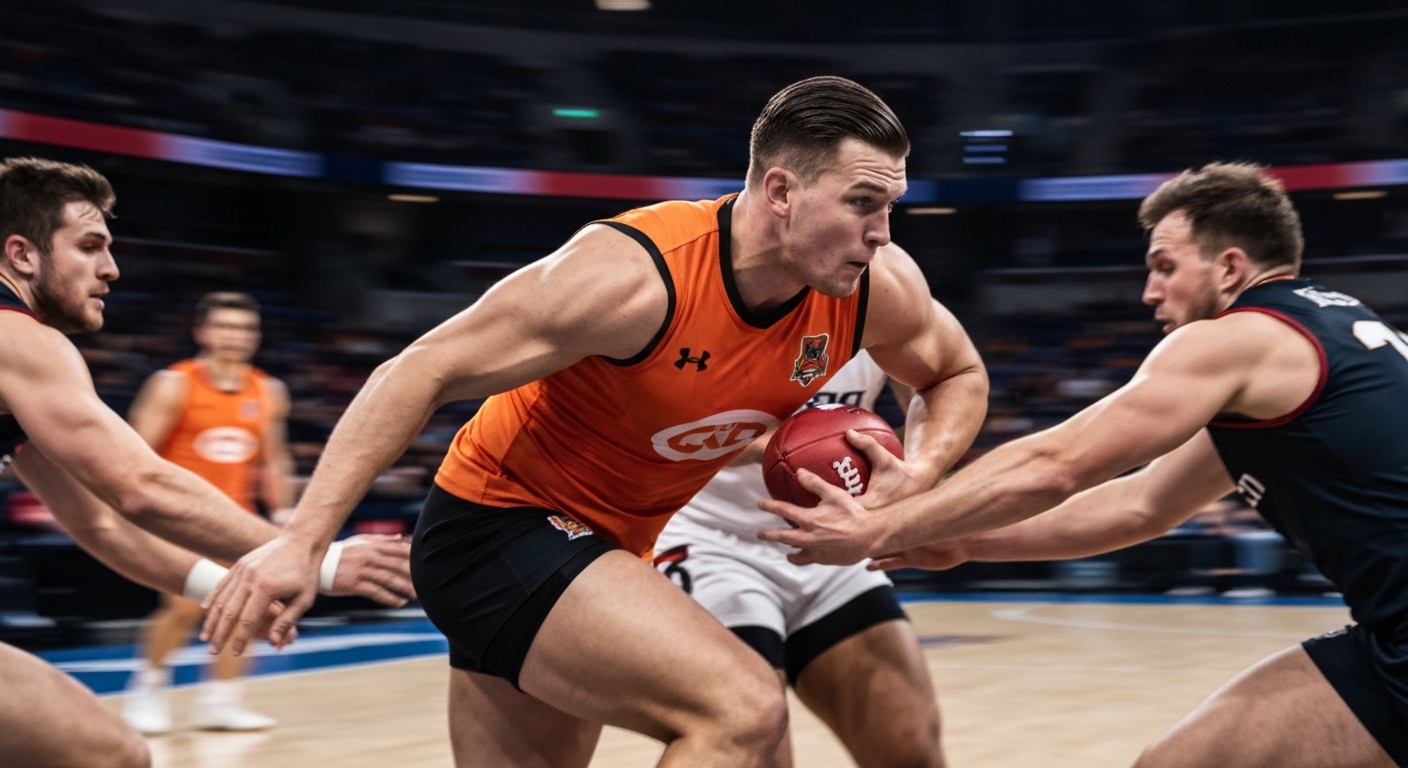
2026 NBA Playoff Team Building Strategies: Mastering Chaos
The era of predictable playoff matchups and rigid team-building formulas is over. Gone are the days when simply uniting three All-Stars guaranteed a deep playoff run. The modern NBA, and specifically the path to a championship, is defined by chaos, versatility, and relentless adaptation. This article breaks down the cutting-edge 2026 NBA playoff team building strategies that championship contenders are adopting to navigate this new landscape. Success is no longer just about acquiring stars; it’s about building a resilient, adaptable ecosystem designed to thrive under pressure and exploit opponent weaknesses on the fly.
The New Blueprint: Roster Construction for Ultimate Playoff Versatility
The modern playoff roster is built less around fixed positions and more around versatile skill sets that allow for multiple strategic looks. The most successful front offices have recognized that a seven-game series is a war of adjustments, and the team with more tactical options usually wins.
The traditional “Big Three” model, which often involved a dominant guard, a wing, and a big, has evolved. While star power remains essential, the new paradigm favors a more balanced approach. Championship-caliber teams are now constructed around one or two heliocentric superstars who are surrounded not by specialists, but by a supporting cast of multi-talented, high-IQ players. The goal is to eliminate weaknesses that can be exploited over a long series.
This shift has given rise to new and essential player archetypes:
- The “Point-Forward” or “Point-Center”: Players like Nikola Jokić have redefined what a primary playmaker looks like. Having a big man who can initiate the offense from the high post or after a rebound short-circuits traditional defensive schemes and creates mismatches all over the floor.
- The Two-Way Connector: These are the 6’6" to 6’9" players who can credibly defend multiple positions, hit open threes, and make smart decisions with the ball. A roster stacked with these players (think the Boston Celtics’ wing depth) allows a coach to switch everything on defense, maintain floor spacing on offense, and never suffer a significant drop-off when making substitutions.
- The Hyper-Specialist with a “Plus”: The “3-and-D” player is no longer enough. The new ideal is a “3-and-D-plus,” a player who excels at shooting and defense but also adds another skill—secondary playmaking, elite rebounding, or the ability to attack closeouts. This prevents them from being played off the floor when opponents adjust.
Ultimately, the goal of this roster construction strategy is to build a team that can play big or small, fast or slow, and can present different defensive coverages without having to change personnel. This versatility is the foundation for mastering the chaos of the playoffs.
The Chess Match: In-Series Tactical and Coaching Adjustments
A perfectly constructed roster is only as good as the coaching staff’s ability to deploy it. The best teams are not just built well; they are coached to adapt within the crucible of a seven-game series. The primary job of a playoff coach is to manage the chaos, and they do it through meticulous preparation and decisive real-time adjustments.
How do coaches manage the chaos of a playoff series? It begins long before Game 1. Coaching staffs and analytics departments work in tandem to create a comprehensive “playbook” for a specific opponent. This isn’t just about scouting their primary offensive sets; it’s about identifying pressure points and planning counters in advance.
- Pre-Planned Counters: A coaching staff will enter a series with a decision tree of adjustments. For example: “If they start doubling our star on the block, we will immediately flow into this ‘5-out’ set to punish them with shooters.” or “If their backup center is on the floor, we will relentlessly attack him in the pick-and-roll with this specific play call.” These aren’t panicked reactions; they are pre-loaded solutions to anticipated problems.
- The Lineup Game: The most significant adjustments often involve personnel. A coach might start a series with one rotation but have two or three alternative lineups ready. Losing Game 2 might trigger a shift to a smaller, faster lineup in Game 3 to change the pace and geometry of the series. The ability to successfully toggle between these different looks is a hallmark of an elite coaching staff and a versatile roster.
- Real-Time Adjustments: During the game, coaches are constantly hunting for small advantages. This can be as simple as changing a defensive matchup after a timeout to stop a player who is getting hot, or altering the team’s pick-and-roll coverage from “drop” to “hedge” to disrupt the opponent’s rhythm. These micro-adjustments can swing momentum and, over 48 minutes, decide a game.
The chess match is won by the team that can stay one move ahead, forcing the opponent to react rather than dictate. This requires a deep, versatile roster and a coaching staff that is both incredibly prepared and unflappable under pressure.
The Analytics Arms Race: Leveraging Data for Opponent-Specific Game Plans
The use of analytics in the NBA is no longer a novelty; it’s the bedrock of modern decision-making. In the playoffs, however, the focus of data shifts from broad, season-long trends to granular, opponent-specific insights. The analytics arms race is about translating raw data into actionable strategies that can exploit the micro-tendencies of a single team and its players over a seven-game series.
Front offices and coaching staffs now employ teams of data scientists to do more than just track points per possession. They are looking for exploitable patterns that don’t show up in a traditional box score.
- Targeting Player Weaknesses: Advanced tracking data can reveal where a star player is least efficient. For example, data might show that a dominant scorer shoots 15% worse when forced to his left and pulling up from the right elbow. The entire defensive game plan can then be built around denying him his preferred spots and funneling him into that specific zone. This is no longer about “playing good defense”; it’s about playing statistically optimized defense.
- Optimizing Offensive Matchups: On the other side of the ball, analytics helps identify the weakest link in the opponent’s defensive chain. Teams will run queries to see which defender allows the highest field goal percentage when switched onto their primary scorer, or which pick-and-roll combination generates the most open looks. The offense then becomes a relentless search for that specific matchup, running plays over and over until the opposing coach is forced to make a concession, such as subbing the player out or changing their scheme.
- Predictive Modeling for Rotations: Data is even used to game-plan for substitutions. Analytics teams can model the impact of different lineup combinations, predicting how a team’s offensive and defensive rating will change when, for instance, their backup point guard shares the floor with their starting center. This allows coaches to optimize their rotations to ensure there is never a “weak” lineup on the floor and to maximize their advantages against the opponent’s bench units.
This data-driven approach doesn’t replace the art of coaching, but it provides a powerful, objective tool. It allows teams to move beyond gut feelings and make hyper-informed decisions designed to tilt the razor-thin margins of a playoff game in their favor.
Forging Resilience: Preparing for the Playoff Grind
The “chaos” of the playoffs isn’t just tactical; it includes the brutal physical and mental toll of a two-month grind. Injuries, media pressure, and wild momentum swings are inevitable. The most forward-thinking 2026 NBA playoff team building strategies now include a proactive focus on forging resilience to withstand this adversity. This human element is often the final differentiator between a contender and a champion.
Building this resilience is a year-long process that touches every part of the organization. It’s about creating a system that protects and supports players so they can peak at the right time.
- The Sports Science Revolution: Injury prevention is the first line of defense. Teams invest millions in sports science departments that use wearable technology to monitor player load, sleep patterns, and biometric data. This allows for data-driven “load management” during the regular season, not just to rest stars, but to prevent fatigue-related soft-tissue injuries that could derail a playoff run. It’s about ensuring your best players are available and at their physical peak in May and June.
- Mental Performance and Fortitude: Recognizing that the mental grind is as taxing as the physical one, teams now integrate mental performance coaches and sports psychologists into their staff. These professionals work with players on techniques to handle pressure, block out external noise, and maintain confidence after a bad game. They also work with the team as a whole to build chemistry and communication, ensuring that a tough loss doesn’t fracture the locker room.
- Cultivating a Championship Culture: This is the most abstract but arguably most important piece. A resilient culture is one where accountability is high, but support is even higher. It’s established by the front office, embodied by the coaching staff, and led by the star players. It’s the belief that the team can overcome any obstacle, whether it’s a 3-1 series deficit, a key injury, or a controversial call. This shared belief system is what allows a team to bounce back from a blowout loss and win the next game with composure.
Teams that neglect this aspect of preparation are building a house of cards. A tactically brilliant, versatile roster can still crumble under the weight of an untimely injury or a crisis of confidence. The true champions are those built to endure the chaos, not just create it.
Conclusion: The Future of Building a Champion
The path to hoisting the Larry O’Brien Trophy has never been more complex. The blueprint for a champion is no longer a static document but a dynamic, living strategy. As we’ve seen, the core pillars of modern 2026 NBA playoff team building strategies are multifaceted: versatility in roster construction, adaptability in coaching tactics, precision in data-driven preparation, and a deep-seated commitment to building physical and mental resilience.
Simply collecting talent is a strategy of the past. The new standard for contention is building for chaos—constructing a team so versatile, so prepared, and so resilient that it can not only withstand the unpredictable nature of the NBA playoffs but turn it into a competitive advantage. As the league continues to evolve at a breakneck pace, the teams that fully embrace this adaptable, all-encompassing approach will be the ones left standing in June.
Frequently Asked Questions
Why is the traditional NBA playoff team-building blueprint considered obsolete for 2026?
The traditional blueprint, often relying on a singular dominant strategy or player archetype, is obsolete because the modern NBA demands greater versatility and adaptability. Teams now face more diverse offensive and defensive schemes, requiring dynamic rosters capable of adjusting to “chaos” throughout a series.
What is the “new blueprint” for roster construction in the 2026 NBA playoffs?
The new blueprint emphasizes building rosters with ultimate playoff versatility, prioritizing players who can excel in multiple roles and adapt to different defensive and offensive schemes. This allows teams to counter diverse opponent strategies and maintain effectiveness throughout a grueling series.
How crucial are in-series tactical and coaching adjustments for 2026 NBA playoff success?
In-series tactical and coaching adjustments are paramount, forming a “chess match” where teams constantly adapt to their opponents. Coaches must be adept at identifying weaknesses and implementing strategic shifts to gain an advantage as a series progresses.
What role does data analytics play in 2026 NBA playoff team building and strategy?
Data analytics is central to the “analytics arms race,” providing deep insights for opponent-specific game plans and player evaluation. Teams leverage advanced metrics to identify strategic advantages, optimize lineups, and predict opponent tendencies, moving beyond traditional scouting.
How do teams forge resilience to prepare for the intense 2026 NBA playoff grind?
Forging resilience involves comprehensive physical conditioning, mental preparation, and building roster depth to withstand injuries and fatigue. Teams must cultivate a strong team culture that can endure adversity and maintain focus through the intense, high-pressure environment of the playoffs.
What does “mastering chaos” entail for 2026 NBA playoff teams?
Mastering chaos involves building a highly adaptable team capable of responding to unpredictable game situations, injuries, and opponent adjustments. It combines roster versatility, astute in-series tactical changes, and data-driven insights to maintain control and exploit opportunities amidst the playoff unpredictability.