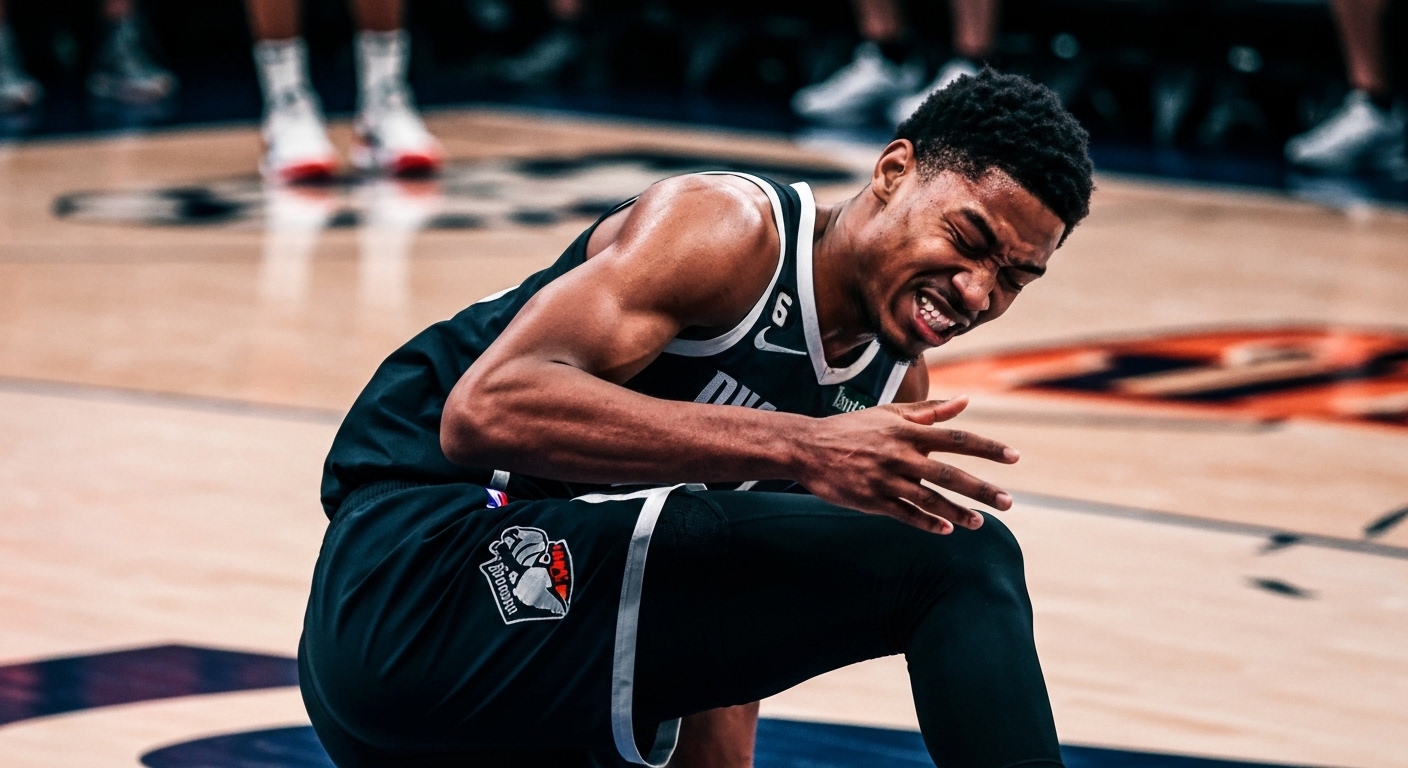
Update: 2026 NBA fantasy basketball playoff value injuries
Welcome, fantasy managers. You’ve made it. After months of navigating waiver wire chaos, agonizing over start/sit decisions, and surviving your league’s group chat, the fantasy basketball playoffs are here. This is where championships are won and lost, and the landscape is more treacherous than ever. This guide is your essential resource for understanding the factors that will define your championship run, with a deep dive into the 2026 NBA fantasy basketball playoff value injuries, trade deadline fallout, and the ever-present threat of rest.
The regular season is one thing; the fantasy postseason is a different beast entirely. A star player who carried you for months can become a liability with a sudden injury or a reduced role on a new team. Conversely, a forgotten player on the end of a bench can become a league-winner overnight. We’ll break down the key strategic themes shaping this year’s title chase and give you the intel you need to make the final push for glory.
Your Guide to the 2026 Fantasy Basketball Playoff Gauntlet
The fantasy basketball playoffs are a beautiful, chaotic mess. All the hard work you put in—the shrewd draft picks, the savvy trades, the waiver wire gems—has brought you to this point. But the final weeks of the NBA season introduce a new level of volatility that can upend even the most dominant teams. This isn’t just about who has the best players; it’s about who has the healthiest, most motivated, and best-scheduled players.
This article is your strategic map through the 2026 fantasy playoff gauntlet. We’re moving beyond simple player rankings to analyze the why behind shifting fantasy values. We will explore three critical pillars that are reshaping the championship picture as we speak:
- The Injury Domino Effect: How a single player’s absence creates a statistical vacuum and opportunity for others.
- Trade Deadline Fallout: The ripple effects of mid-season moves that are only now becoming clear.
- The Load Management Threat: How real-world team strategy can sabotage your fantasy hopes.
Think of this as your final scouting report. We’ll equip you with the frameworks to analyze your own roster, scout your opponents, and make the decisive moves that will put you over the top. Let’s get started.
Deep Dive: How 2026 NBA Player Injuries Alter Fantasy Playoff Value
When a star player gets injured, the most immediate fantasy impact is obvious: a gaping hole in your lineup. But for savvy managers, this is only the first part of the equation. A significant injury doesn’t just remove a player; it fundamentally alters their team’s entire statistical ecosystem. Understanding this domino effect is the key to capitalizing on the opportunities that 2026 NBA fantasy basketball playoff value injuries create.
An injury to a key player creates a vacuum of usage. Usage rate measures what percentage of a team’s plays a player “uses” (via a shot attempt, free throw attempt, or turnover) while on the floor. When a high-usage star—say, a point guard who dominates the ball and averages 25 points and 8 assists—is sidelined, those possessions have to go somewhere.
Here’s how to analyze the fallout:
- The Next Man Up: The most obvious beneficiary is the direct backup. If a starting point guard goes down, their backup is an immediate waiver wire target. They may not replicate the star’s production, but the sheer volume of minutes and opportunity can make them a valuable fantasy asset, especially in assists and steals.
- The Co-Star’s Boost: Often, the biggest winner isn’t the direct backup but the team’s second or third option. A scoring wing who was previously the No. 2 option might see their usage rate jump from 25% to over 30%. This can transform a top-40 fantasy player into a top-15 force overnight, as they absorb the scoring load. Their points and field goal attempts will almost certainly rise.
- The Specialist’s Emergence: Don’t forget the role players. The absence of a primary creator can force a team to play a more egalitarian style. A spot-up shooter might see more designed plays, boosting their three-pointers. A playmaking forward might suddenly be tasked with more secondary facilitation, leading to a surprising uptick in assists. These peripheral gains are what separate good fantasy managers from great ones.
When evaluating an injury’s impact, look at the “last 30 days” data for the remaining players. Are their roles already trending up? A player who was already seeing 25 minutes a night is better equipped to handle a 35-minute role than someone who was glued to the bench. The key is to think less about “replacing” the injured player and more about “redistributing” their statistical output across the remaining roster.
Analyzing the 2026 Trade Deadline’s Ripple Effect on Fantasy Value
The NBA trade deadline has passed, but its fantasy shockwaves are still reverberating. A trade’s impact is rarely confined to the players who changed jerseys. Entire team philosophies can shift, creating a host of fantasy winners and losers who were never part of the deal. To truly understand the new landscape, you have to look beyond the headlines.
A player’s fantasy value is intrinsically tied to their situation: their team’s pace, their role in the offense, and the talent around them. A trade can alter all three of these variables in an instant, not just for the traded players but for those they left behind and their new teammates.
Winners Created by Departures: Often, the biggest fantasy winner from a trade is the player who wasn’t traded. Consider a rebuilding team that finally trades away its veteran power forward. The young, athletic forward who was stuck playing 18 minutes a night behind him is now unleashed. He likely inherits the starting job, a significant minutes increase, and a larger role in the offense. His points, rebounds, and defensive stats could all see a massive, sustainable jump for the rest of the season—making him a potential league-winner.
Losers Created by Arrivals: Conversely, a contender “loading up” for a playoff run can be a fantasy nightmare. Imagine a team trading for a high-usage sixth-man scorer. While that player’s role might be secure, what happens to the team’s previous sixth man? Or the third-year guard who was just starting to carve out a consistent scoring role? Their minutes and shot attempts are likely to decrease, potentially torpedoing their fantasy value right when you need it most. The real-world team got better, but multiple fantasy assets got worse.
Changes in Team Style: The analysis goes even deeper. Did a slow, methodical team trade for a run-and-gun point guard? If so, the team’s overall pace of play might increase. This is a rising tide that lifts all boats, creating more possessions and more fantasy-stat opportunities for everyone on the roster. On the other hand, if a high-flying offensive team acquires a defensive-minded center and shifts its focus to locking down opponents, the overall pace could slow, slightly diminishing the value of its offensive players. These subtle shifts are what you must monitor in the weeks following the deadline to gain an edge.
The Hidden Opponent: Navigating Load Management & Rest Risk
During the fantasy playoffs, you’re not just competing against your opponent; you’re competing against the NBA schedule and the strategic motivations of 30 front offices. The most dangerous hidden opponent in March and April is load management, the practice of resting healthy players to keep them fresh for the real NBA playoffs or to strategically improve draft lottery odds.
Load management is the practice of an NBA team sitting a player, particularly a star, for a game to manage their physical workload, even if they are not suffering from a specific, acute injury. This can be devastating for a fantasy manager, as a player you’re counting on can suddenly be ruled out with little notice, giving you a zero for a crucial playoff matchup.
There are two primary types of rest risk to be aware of:
- Contender’s Rest: This affects star players on top-tier teams that have already secured a high playoff seed. Why would the Milwaukee Bucks play Giannis Antetokounmpo 38 minutes in a meaningless game against a lottery team when they could rest him for their upcoming championship run? These teams often target the second night of a back-to-back set or games against weak opponents to give their veterans a night off. Players with a long injury history or who are older are at the highest risk.
- The “Shutdown” on Tanking Teams: This is arguably the more frustrating scenario. A team at the bottom of the standings has no incentive to win games. In fact, they are incentivized to lose to improve their draft lottery position. In late March, these teams often invent phantom “injuries” for their best players—a vaguely described “sore knee” or “ankle maintenance”—and shut them down for the season. This allows them to lose more effectively while giving extended minutes to young, unproven players to “evaluate their talent.” A productive veteran on a terrible team is one of the biggest red flags heading into the fantasy playoffs.
How do you combat this?
- Audit Your Roster: Identify players who fit these profiles. Do you own a 35-year-old star on the #1 seed? Do you have the best player on the league’s worst team? Be realistic about their risk of sitting.
- Study the Schedule: Look at your fantasy playoff weeks. Does your star player have multiple back-to-backs? This is a major warning sign. A player with four games in a week is great, but not if they’re likely to sit for one of them. Sometimes, a more durable role player with three guaranteed games is a safer bet than a superstar with four risky ones.
Your Championship Checklist: Final Moves for a 2026 Title Run
We’ve covered the theory—injuries, trades, and rest. Now it’s time to put it all into practice. The moves you make (or don’t make) in the next few days will decide your season. Use this checklist to audit your roster and prepare your team for a championship run.
This is the moment to be proactive, not reactive. A manager who anticipates these trends will have a decisive advantage over one who simply hopes for the best.
- ☑️ Audit Your Roster for Risk: Go through your team player by player. Who is on a top-seeded contender? Who is on a bottom-dwelling lottery team? Who has a history of injuries or is playing on a team with a crowded depth chart post-trade? Acknowledge these risks and have a contingency plan.
- ☑️ Scour the Waiver Wire for Opportunity: Who is the direct beneficiary of a recent injury? Which young player on a tanking team just saw their minutes jump to 30+ per night? Find the players whose roles have fundamentally expanded in the last two weeks. These are the players who will win you a championship, not the big names who are about to be shut down.
- ☑️ Analyze Your Playoff Schedules: Pull up your league’s playoff schedule and cross-reference it with the NBA schedule. How many games does each of your players have in championship week? Are there any brutal back-to-backs that might lead to a rest day for your star? A player from a team fighting for playoff position with four games is fantasy gold.
- ☑️ Don’t Be Afraid to Make a Bold Move: This is not the time to be sentimental. Is it time to drop the fourth-round pick who carried you all year but is now a shutdown risk? It might be. Dropping a well-known name for a lesser-known player with a better role and schedule can feel wrong, but it’s often the championship-winning decision. Trust the process, not the name.
Winning a fantasy championship requires skill, luck, and, most importantly, preparation. You’ve done the work to get this far. Now, use this intelligence to make the final, decisive moves. Good luck.
What is the biggest roster dilemma you’re facing heading into your fantasy playoffs? Share it in the comments below
Frequently Asked Questions
How should fantasy managers navigate player injuries during the 2026 NBA playoffs to maintain competitive value?
Navigating playoff injuries requires proactive roster management, including monitoring injury reports closely and identifying high-upside replacements. Consider players with increased roles due to teammate injuries or those returning from minor ailments with a clear path to playing time. Prioritize players in critical playoff matchups with consistent minutes.
How do significant player injuries, especially around the trade deadline, impact fantasy playoff value in 2026?
Major injuries, particularly to star players, can drastically shift fantasy playoff landscapes by opening up opportunities for teammates or influencing trade deadline moves. These events can create unexpected value for bench players stepping into larger roles or devalue injured stars for the remainder of the season. The trade deadline often sees teams acquiring players to fill injury voids, further altering fantasy outlooks.
What types of fantasy basketball players should I target or avoid based on injury updates for the 2026 playoffs?
Target players who are healthy, have a secure role, and whose teams are actively competing for playoff seeding. Also, look for players whose value has increased due to a teammate’s injury, or those returning from minor injuries with a clear path to full health and minutes. Avoid players with lingering chronic issues, those on teams likely to rest starters, or players with high load management risk.
How does load management and rest risk affect player value during the 2026 fantasy basketball playoffs?
Load management and rest risk can significantly depress a player’s fantasy playoff value, as even healthy stars might sit out crucial games. It’s essential to identify teams and players prone to this strategy, often those with secure playoff spots or older veterans. Factor in team schedules and playoff implications when assessing the risk of a player being rested.
What is the primary impact of 2026 NBA player injuries on fantasy basketball playoff value?
The primary impact of injuries is a direct alteration of a player’s availability and performance, which in turn shifts their fantasy playoff value. Injuries can create both significant downside for the injured player and unexpected upside for their teammates who step into larger roles. Understanding these shifts is crucial for successful playoff roster management.