
Google Is Turning Old News Reports Into AI Tools That Could Predict Flash Floods
Flash floods are among the most dangerous and unpredictable natural disasters on Earth.
They can form in minutes, overwhelm communities without warning, and cause catastrophic damage to infrastructure and lives. Despite advances in weather forecasting, predicting exactly when and where flash floods will occur remains one of the biggest challenges for meteorologists.
Now, Google is exploring an unexpected solution.
By combining artificial intelligence with decades of old news reports, the tech giant is developing new tools designed to predict flash floods more accurately and earlier than traditional methods allow.
The approach might sound unusual at first—but it could represent a major breakthrough in disaster prediction technology.
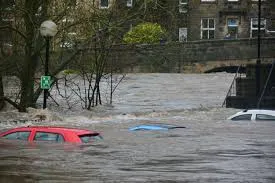
The Growing Threat of Flash Floods
Flash floods occur when intense rainfall overwhelms the ground’s ability to absorb water.
Unlike river floods that build gradually, flash floods can happen extremely quickly—sometimes within minutes after heavy rain begins.
These events are particularly dangerous because they often strike:
-
urban areas with poor drainage
-
mountainous regions with steep terrain
-
locations where storms develop rapidly
According to disaster researchers, flash floods account for a large percentage of flood-related deaths worldwide.
Climate change is also making the problem worse. As global temperatures rise, extreme rainfall events are becoming more frequent.
That makes improving early warning systems more important than ever.
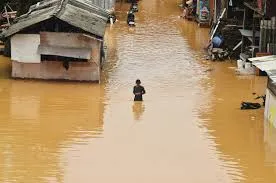
Why Flash Floods Are Hard to Predict
Traditional flood forecasting relies on a combination of weather models, rainfall measurements, and river monitoring systems.
However, flash floods present unique challenges.
Unlike large rivers, flash floods often occur in small drainage basins or dry channels where monitoring equipment may not exist.
Other complications include:
-
sudden storm formation
-
unpredictable rainfall patterns
-
limited historical data in many regions
Because of these factors, existing systems sometimes struggle to provide early warnings.
This is where artificial intelligence may offer an advantage.
Google’s Unusual Data Source: Old News Reports
Instead of relying solely on traditional meteorological data, Google researchers began looking at an unexpected resource: archived news reports about past floods.
For decades, newspapers and media outlets have documented flood events around the world.
These reports often include valuable information such as:
-
location of flooding
-
time and date of events
-
rainfall conditions
-
damage descriptions
While not originally designed as scientific data, these stories contain details that can help reconstruct historical flood patterns.
Google’s AI models analyze these reports and combine them with environmental data to identify patterns associated with flash floods.
How Artificial Intelligence Can Learn From News Archives
Artificial intelligence systems excel at recognizing patterns within large datasets.
By scanning thousands of historical articles, AI can extract structured information from unstructured text.
For example, the system may detect details like:
-
the specific city where flooding occurred
-
rainfall levels mentioned in reports
-
geographic features nearby
This information can then be linked with other environmental data such as:
-
terrain elevation
-
soil type
-
rainfall intensity
The AI uses these combined signals to learn what conditions typically lead to flash floods.
Over time, the model becomes better at predicting when similar patterns might occur again.
Turning Data Into Early Warning Systems
Once trained, the AI system can help forecast flash floods by analyzing current weather conditions in real time.
If the system detects patterns similar to past flood events, it can trigger warnings.
This type of predictive technology could support emergency management systems in several ways:
-
issuing alerts earlier
-
identifying high-risk regions
-
supporting evacuation planning
Even a few extra minutes of warning can make a significant difference during fast-moving disasters.
Why Historical Data Matters
One of the biggest obstacles in disaster prediction is the lack of detailed historical records.
Many smaller flood events were never officially documented in scientific databases.
However, they often appeared in local news coverage.
By mining these articles, AI models gain access to decades of previously underutilized information.
This expands the dataset used for flood prediction and helps improve model accuracy.
The Role of Machine Learning in Climate Technology
Google’s flood prediction work is part of a larger trend: using artificial intelligence to address climate-related challenges.
AI is increasingly being applied in areas such as:
-
wildfire detection
-
hurricane forecasting
-
drought monitoring
-
climate modeling
These systems can analyze vast quantities of data much faster than traditional methods.
As climate risks grow, machine learning may play an increasingly important role in disaster preparedness.
Google’s Expanding Flood Prediction Efforts
Google has already been working on flood prediction technology for several years.
The company previously launched flood forecasting tools designed to help communities in regions prone to flooding.
These systems combine:
-
satellite imagery
-
weather forecasts
-
river level data
The new approach—using historical news reports—adds another layer of information to improve accuracy.
This strategy could be particularly useful in countries where official monitoring systems are limited.
Why Flash Flood Prediction Saves Lives
Flash floods are especially dangerous because they leave little time for preparation.
Cars can be swept away in seconds, and rapidly rising water can trap people inside buildings.
Early warnings allow authorities to:
-
close roads
-
evacuate vulnerable areas
-
alert emergency services
Studies show that effective warning systems significantly reduce disaster casualties.
That makes improved prediction technology a critical public safety tool.

The Challenges of AI Disaster Prediction
While the potential is significant, AI flood forecasting still faces several challenges.
Machine learning models depend heavily on data quality.
News reports may sometimes contain incomplete or inconsistent information.
Other obstacles include:
-
verifying historical reports
-
adapting models for different geographic regions
-
integrating predictions with official weather systems
Despite these challenges, researchers believe the approach holds strong promise.
The Future of AI in Disaster Preparedness
As artificial intelligence continues evolving, its applications in disaster management are expanding rapidly.
Future systems may combine multiple sources of information, including:
-
satellite imagery
-
social media posts
-
weather radar
-
historical archives
Together, these data streams could provide highly accurate predictions of natural hazards.
The ultimate goal is to create systems capable of detecting disasters before they happen.
Why This Innovation Matters
The idea of using old news articles to train AI might sound unconventional.
But it reflects a broader shift in technology: turning everyday information into powerful datasets.
By reexamining historical records through machine learning, researchers can uncover patterns that humans might overlook.
In the case of flash floods, those insights could translate directly into saved lives.
A New Way to Learn From the Past
Google’s experiment highlights an important lesson about technology and history.
Information recorded decades ago—often by journalists documenting local events—may now help power cutting-edge AI systems.
As machine learning continues to advance, the past may become one of the most valuable resources for predicting the future.
And when it comes to disasters like flash floods, every new insight could mean the difference between chaos and preparation.