
What Is Startup Battlefield 200?
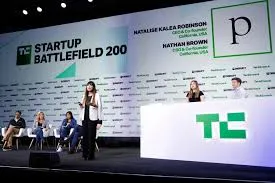
Startup Battlefield 200 is TechCrunch’s expanded version of its iconic pitch competition, bringing together 200 early-stage startups from around the world to showcase their ideas.
Unlike traditional demo days, Battlefield emphasizes:
-
Live pitching under pressure
-
Unfiltered feedback from judges
-
Global exposure through media and livestreams
Only a handful of finalists advance to the main stage, but every participating startup gains visibility that can change its trajectory.

Why 2026 Feels Like a Turning Point
The context surrounding startups has shifted dramatically.
Heading into 2026, founders are navigating:
-
More selective venture capital
-
Higher expectations for revenue and traction
-
Increased scrutiny around AI ethics and data use
-
A push toward sustainable, capital-efficient growth
Startup Battlefield is evolving to reflect this new reality.
From Growth-at-All-Costs to Proof-of-Value
One of the biggest changes expected in 2026 is a move
away from hype-driven storytelling.
Judges and investors are increasingly focused on:
-
Clear problem definition
-
Evidence of real customer demand
-
Sustainable unit economics
-
Defensible technology
A polished pitch still matters—but it must be backed by substance.
AI Will Still Dominate—But With Higher Standards
Artificial intelligence continues to dominate startup creation, and Battlefield 200 will almost certainly feature dozens of AI-driven companies.
However, the expectations have changed:
-
“AI-powered” is no longer enough
-
Judges want to see proprietary data or models
-
Responsible AI use is now part of the conversation
Founders must explain not just what their AI does—but why it matters and how it scales responsibly.
More Global, More Diverse Than Ever
Startup Battlefield 200 has steadily expanded its global reach, and 2026 is expected to push this even further.
Trends include:
-
More startups from emerging markets
-
Diverse founding teams solving local problems with global relevance
-
Solutions built for regions often overlooked by Silicon Valley
This global lens reflects where innovation is actually happening.
Hardware, Climate, and Deep Tech Are Making a Comeback
While software still dominates, TechCrunch notes renewed interest in categories that were once considered too capital-intensive.
Expect to see more:
-
Climate and energy startups
-
Robotics and hardware innovation
-
Biotech and health-focused platforms
-
Infrastructure and industrial tech
These sectors may not scale as fast—but they address fundamental global challenges.

What Judges Will Likely Look For in 2026
Based on recent trends, judges are expected to prioritize:
-
Founder clarity and conviction
-
Realistic go-to-market strategies
-
Evidence of early traction or pilots
-
Clear differentiation from competitors
Charisma still helps—but credibility matters more.
The Founder Experience Is Changing Too
Startup Battlefield has always been intense. But in 2026, the experience may feel more demanding—and more valuable.
Founders increasingly view the competition as:
-
A stress test for their narrative
-
A crash course in investor communication
-
A reality check on market assumptions
Even those who don’t advance often describe Battlefield as transformational.

Media Exposure Still Matters—But Differently
TechCrunch coverage can still put startups on the map. However, the media landscape is more fragmented.
In 2026, exposure means:
-
Articles, newsletters, and podcasts
-
Social media amplification
-
Long-tail discovery by niche investors
Founders who know how to tell their story across channels gain an edge.
Venture Capital’s Relationship With Battlefield
Venture capital firms continue to watch Battlefield closely—but with sharper filters.
Investors now use it to:
-
Identify disciplined founders early
-
Spot technical talent before hype builds
-
Track emerging market trends
Rather than chasing the loudest pitch, many VCs look for quiet signals of long-term potential.
Why Battlefield Still Matters in a Crowded World
In a world full of accelerators, demo days, and pitch competitions, Startup Battlefield retains its relevance because of its rigor.
It offers:
-
Editorial independence
-
Unscripted Q&A
-
Real-time public scrutiny
That combination is hard to replicate.
How Startups Can Prepare for Battlefield 200
For founders aiming to compete in 2026, preparation goes beyond slide decks.
Key advice includes:
-
Sharpening a clear one-sentence value proposition
-
Stress-testing assumptions with real customers
-
Practicing answers to uncomfortable questions
-
Focusing on clarity, not buzzwords
Battlefield rewards honesty as much as ambition.
Lessons From Past Battlefield Alumni
Alumni often cite Battlefield as the moment they:
-
Refined their pitch
-
Met their first major investor
-
Learned how the market truly perceived them
Even startups that didn’t win frequently credit the experience with accelerating their growth.
The Role of Community and Networking
Beyond pitching, Battlefield creates a temporary ecosystem of founders.
This environment fosters:
-
Peer learning
-
Honest conversations about failure
-
Unexpected partnerships
In 2026, that community aspect may be just as valuable as the stage time.
What Startup Battlefield Says About the Future of Tech
The themes that dominate Battlefield often foreshadow broader industry shifts.
In 2026, expect those signals to include:
-
Practical AI applications
-
Climate resilience solutions
-
Tools for decentralized work and infrastructure
-
Health tech focused on prevention and access
Battlefield remains a window into what founders believe the future should look like.
Final Thoughts: A Tougher Stage, a Stronger Signal

Startup Battlefield 200 is not getting easier—and that’s exactly the point.
As TechCrunch looks ahead to 2026, the competition reflects a maturing startup ecosystem that values:
-
Substance over spectacle
-
Impact over inflated valuations
-
Founders who can endure uncertainty
For the startups that make it onto that stage, Battlefield is more than a competition. It’s a moment of truth.
And in a world where attention is fleeting, passing that test still means something.