Why Letting Astronauts Bring Phones to the Moon Matters
At first glance, the idea sounds almost funny. Phones on the Moon? Isn’t that like bringing a toaster to a submarine?
But the decision highlights something serious: NASA is preparing for a new kind of lunar mission—one that’s longer, more complex, and more connected than Apollo ever was.
Phones are not being brought as personal gadgets for selfies (though let’s be honest, someone is definitely going to try).
They’re being treated as practical tools that can support:
-
communication
-
mission coordination
-
data collection
-
navigation
-
emergency backup systems
-
human comfort and routine
The Moon missions of 2026 and beyond are about building long-term capability—not just planting a flag.
The Artemis Era: A Moon Mission Isn’t Just a Moon Mission Anymore
NASA’s Artemis program is built around one ambitious idea: returning humans to the Moon and staying there longer.
Unlike Apollo, Artemis missions are expected to involve:
-
extended lunar surface operations
-
more crew movement across terrain
-
advanced science experiments
-
collaboration with commercial partners
-
preparation for eventual Mars missions
To do that, astronauts need communication infrastructure that functions more like Earth.
That’s where phones come in—not as consumer toys, but as adaptable mobile computing devices.
Phones in Space: Not New, But the Moon Changes Everything
Astronauts have used digital devices for years on the International Space Station, including tablets and computers.
But the Moon presents unique challenges:
-
harsh radiation exposure
-
extreme temperature swings
-
limited infrastructure
-
rugged terrain
-
communication delay and signal dropouts
If NASA is approving phones for lunar missions, it suggests that space-grade mobile networks and devices have reached a new level of reliability.
This is also a strong sign that NASA wants astronauts to have flexible tools that can operate outside traditional cockpit systems.
How Will Astronauts Use Smartphones on the Moon?
The most likely uses for astronaut phones include:
1. Portable Mission Checklists
Instead of flipping through printed pages or relying on fixed terminals, astronauts could use phones to access task lists, schedules, and procedures.
2. Navigation and Mapping
Phones could support GPS-like systems adapted for lunar exploration, helping astronauts track location and route planning.
3. Emergency Communication Backup
If a primary system fails, phones could provide a redundant communication pathway.
4. Equipment Monitoring
Astronaut suits and vehicles generate massive amounts of telemetry. Phones could display real-time vitals and system health.
5. Science Data Capture
Phones could record photos, video, environmental readings, or experimental notes.
Essentially, phones become a pocket-sized mission control interface.
But Will There Be Cell Service on the Moon?
One of the biggest questions people immediately ask is:
“Will astronauts have a signal?”
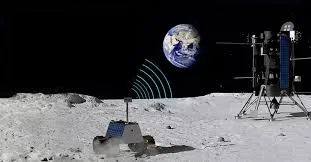
The answer is: not traditional cell service like Earth, but NASA and its partners are building lunar communication networks that operate similarly.
Future Moon missions are expected to rely on advanced infrastructure such as:
-
lunar surface relay stations
-
satellites orbiting the Moon
-
specialized radio-based communication networks
-
commercial lunar networking systems
In other words, the Moon is slowly being equipped with its own version of “coverage.”
It’s not about calling your friend back on Earth like normal—it’s about creating reliable communication inside a lunar mission ecosystem.
The Role of Commercial Tech in Lunar Communication
NASA is no longer operating alone.
In the modern space era, major private-sector partners are involved in building:
-
lunar landers
-
space suits
-
satellite relays
-
communication networks
-
scientific payload delivery systems
This partnership model speeds up innovation.
Phones are a natural part of that trend because they represent flexible, scalable hardware platforms that can be adapted quickly.
Instead of building every device from scratch, NASA can leverage existing mobile technology and harden it for lunar conditions.
The Security Challenge: Phones Are Powerful—and Vulnerable
Bringing phones into space raises major cybersecurity questions.
A smartphone is essentially a portable computer, and computers can be hacked.
NASA must ensure any phone brought to the Moon is:
-
locked down with strict security protocols
-
protected from unauthorized access
-
shielded from external interference
-
unable to connect to unapproved networks
-
resistant to malware and tampering
The Moon may feel far away, but digital threats don’t need physical proximity.
If astronauts are using phones as mission tools, cybersecurity becomes mission-critical.
The Human Side: Phones Bring Comfort and Familiarity
There’s also an emotional side to this story.
Space missions are stressful. Isolation, intense schedules, and distance from Earth can take a psychological toll.
Even if astronauts aren’t scrolling social media on the Moon, phones can provide:
-
familiar interfaces
-
personal photos and videos
-
music and media
-
journaling tools
-
communication logs
Small comforts matter when you’re living in an environment where everything is artificial and survival depends on systems functioning perfectly.
A phone may seem trivial—but psychologically, it’s a connection to normal life.

What About Taking Photos on the Moon?
Let’s be honest: people love the idea of astronauts snapping lunar photos on their phones.
And while NASA cameras are still far superior for professional documentation, phones could serve as quick capture devices for:
-
close-up equipment shots
-
surface detail images
-
troubleshooting visuals
-
quick team documentation
-
informal crew moments
Phones also make sharing easier. Images can be tagged, organized, transmitted, and referenced quickly.
In an operational sense, that could improve efficiency.
Could Astronauts Text Each Other on the Moon?
The concept sounds hilarious—two astronauts texting “u up?” while standing on the Moon.
But internal messaging could actually be extremely useful.
In a lunar base environment, messaging could allow:
-
silent coordination
-
fast task updates
-
location sharing
-
quick emergency alerts
In many high-risk workplaces on Earth, text-based communication is already essential. Space operations may follow the same model.
Phones could act as compact communication terminals that reduce reliance on bulky voice systems.
The Bigger Story: The Moon Is Becoming Digitally “Livable”
NASA allowing phones is part of a broader trend: the Moon is transitioning from a destination to an operational environment.
A livable environment requires:
-
stable communication
-
portable computing
-
easy access to mission data
-
systems that reduce human error
-
tools that adapt quickly
Phones fit that vision.
They’re not just devices—they’re a platform for apps, tools, navigation systems, and future lunar workflows.
The Moon isn’t being treated like a temporary stop anymore. It’s being treated like a workplace.
Why This Matters for Mars Missions Too
NASA’s long-term goal isn’t just the Moon—it’s Mars.
And Mars missions will require even more autonomy and flexibility because:
-
communication delays are longer
-
emergency response time is slower
-
crews must solve problems locally
Phones and mobile computing systems are ideal training tools for this future.
If NASA can make smartphones functional in harsh lunar conditions, it’s a major step toward creating personal tech ecosystems for deep-space exploration.
Could This Lead to Consumer Tech Innovations?
Whenever NASA develops new technology, there’s a long history of spinoffs that reach everyday consumers.
Space-hardened phones could contribute to innovations like:
-
stronger battery efficiency
-
advanced heat resistance
-
radiation shielding materials
-
better emergency satellite connectivity
-
improved rugged device engineering
The Moon is one of the harshest environments imaginable. If a phone can survive there, it can survive almost anywhere.
That could eventually influence future consumer devices on Earth.
The Future: Will the Moon Have Wi-Fi?
It may sound like science fiction, but lunar Wi-Fi isn’t impossible.
In fact, future lunar bases will likely need local networks to support:
-
scientific equipment
-
autonomous vehicles
-
drones and robotics
-
internal crew communications
-
medical monitoring systems
Whether it’s called Wi-Fi or something else, local wireless networks will almost certainly exist on the Moon.
And if networks exist, phones become even more useful.
Final Thoughts: Phones on the Moon Are a Sign the Future Has Arrived
NASA astronauts bringing phones to the Moon might sound like a small update, but it reflects a massive cultural and technological shift.
It means space exploration is becoming:
-
more connected
-
more practical
-
more human-centered
-
more integrated with modern tools
It also signals that the Artemis era is not just about returning to the Moon—it’s about building the foundation for long-term life beyond Earth.
Because once astronauts can pull a phone out of their pocket on the lunar surface, the Moon stops feeling like a distant dream.
It starts feeling like a real place humans can live, work, and explore—one notification at a time.