The global robotics industry just experienced a major strategic shift—one that could reshape how machines learn, move, and collaborate with humans for years to come.
Alphabet’s robotics software company Intrinsic is officially joining Google, marking a significant internal realignment within one of the world’s most influential technology ecosystems. While corporate restructuring is nothing new in Silicon Valley, this move signals something deeper: robotics is no longer a side bet—it’s becoming central to the future of intelligent computing.
By bringing robotics software development directly into Google’s core operations, the company is positioning itself to accelerate innovation at the intersection of artificial intelligence, machine learning, and real-world automation.
For engineers, manufacturers, startups, and investors alike, the implications could be profound.
What the Move Actually Means
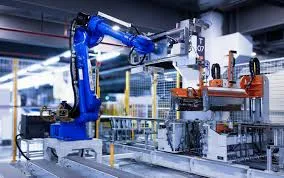
Intrinsic has operated under Alphabet’s innovation umbrella, focusing specifically on software that makes robots easier to program, deploy, and adapt.
Its mission has been straightforward but ambitious: simplify robotics development so machines can perform complex tasks with less custom engineering.
Now, by integrating directly into Google, Intrinsic’s tools, research, and talent will sit closer to the company’s massive AI infrastructure and cloud ecosystem.
That proximity matters.
It means robotics development can tap into:
-
advanced machine learning models
-
large-scale computing resources
-
data processing capabilities
-
global developer platforms
This isn’t just a structural change—it’s a technological multiplier.
The Strategic Role of Intrinsic Inside Alphabet
Intrinsic originally emerged from Alphabet’s broader strategy of exploring emerging technologies through semi-independent units.
Operating separately allowed experimentation without immediate commercial pressure. But as robotics becomes more practical—and more profitable—the logic shifts toward integration.
By moving closer to Google’s core operations, robotics transitions from experimental research to scalable infrastructure.
That signals confidence in real-world deployment.
Why Robotics Software Matters More Than Hardware
Public fascination with robotics often focuses on physical machines—robot arms, autonomous vehicles, humanoid assistants.
But industry insiders know the real power lies in software.
Robots are only as capable as the intelligence guiding them. Without adaptable software, machines remain rigid, single-purpose tools.
Intrinsic specializes in solving exactly this challenge.
Key Problems Robotics Software Must Solve
-
Programming complexity
Traditional robot programming requires deep expertise. -
Task variability
Real-world environments change constantly. -
Sensor interpretation
Machines must understand visual and spatial data. -
Motion planning
Robots must calculate safe and efficient movement paths. -
Learning and adaptation
Systems must improve over time.
Simplifying these functions dramatically lowers the barrier to robotics adoption across industries.
Why Google Wants Robotics Closer to Its AI Engine
Google already leads in several foundational technologies essential to advanced robotics:
-
computer vision
-
machine learning frameworks
-
cloud computing infrastructure
-
large-scale data processing
-
natural language interaction
Integrating Intrinsic directly into this environment creates synergy between physical automation and digital intelligence.
Imagine robots trained using the same AI systems that power search algorithms, language models, and visual recognition tools.
That convergence could unlock unprecedented capabilities.
What This Means for the Future of Industrial Automation
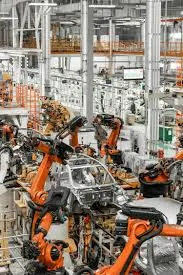
Manufacturing has long relied on robotics, but adoption has historically been limited to large-scale operations with specialized engineering teams.
Simplified robotics software changes that equation.
With more accessible programming and adaptive intelligence, smaller companies could deploy automation without massive technical overhead.
Potential outcomes include:
-
flexible production lines
-
rapid manufacturing reconfiguration
-
collaborative human-robot workflows
-
reduced labor shortages
-
increased supply chain resilience
In other words, robotics becomes democratized.
The Rise of “Software-Defined Robotics”
A growing concept in the industry is software-defined robotics—the idea that machines become general-purpose platforms rather than fixed tools.
Instead of purchasing a robot designed for one task, companies could install new capabilities through software updates.
This mirrors how smartphones evolved from single-function devices into multi-purpose computing platforms.
Intrinsic’s technology is designed to support exactly that model.
The Competitive Landscape: Why This Matters Globally
Google is not alone in pursuing robotics innovation. Major technology players worldwide are investing heavily in automation.
Competition spans:
-
industrial robotics manufacturers
-
AI research organizations
-
logistics automation companies
-
autonomous mobility developers
-
consumer robotics startups
By consolidating robotics software expertise, Google strengthens its position in a rapidly expanding market expected to grow dramatically over the next decade.
Implications for Developers and Engineers
For software developers, the integration could create new opportunities.
Google’s ecosystem is built around developer accessibility—APIs, frameworks, and scalable cloud services. If robotics tools become similarly accessible, programming physical machines could become as routine as building mobile apps.
That would reshape technical education, workforce training, and innovation pipelines.
The Human Impact: Work, Labor, and Collaboration
Automation discussions often focus on job displacement. But modern robotics increasingly emphasizes collaboration rather than replacement.
Advanced robots excel at:
-
repetitive tasks
-
precision handling
-
hazardous environments
-
heavy lifting
-
high-speed operations
Humans remain essential for creativity, oversight, and complex decision-making.
By lowering the cost of deployment, robotics may expand human-machine collaboration across industries rather than eliminate human roles entirely.
Cloud Robotics: The Next Frontier
One of the most significant long-term implications involves cloud robotics.
Instead of each robot operating independently, machines could connect to shared cloud intelligence—learning collectively from vast datasets.
Benefits include:
-
real-time updates
-
shared learning across fleets
-
centralized optimization
-
predictive maintenance
-
continuous improvement
Google’s cloud infrastructure makes this model highly feasible.
Why This Move Signals Industry Maturity
Technology ecosystems often follow a pattern:
-
Experimental research phase
-
Independent innovation units
-
Commercial validation
-
Strategic integration
Intrinsic’s transition into Google represents stage four—robotics has matured enough to become operational infrastructure rather than experimental exploration.
That marks a turning point.
Potential Consumer Applications Down the Line
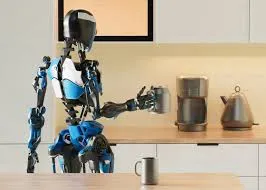
While industrial use dominates today, long-term possibilities extend into consumer environments.
Future applications could include:
-
smart home automation systems
-
personalized assistance robots
-
healthcare support devices
-
elder care robotics
-
service industry automation
Improved software intelligence is the prerequisite for all of these.
Investor and Market Reactions
Industry analysts view the integration as a signal of accelerating robotics investment.
When major technology companies consolidate resources, it often precedes:
-
product launches
-
platform expansion
-
ecosystem partnerships
-
commercialization strategies
Investors interpret such moves as indicators of strategic priority.
The Broader Vision: Intelligence in the Physical World
Much of modern AI exists purely in digital environments—data centers, servers, and virtual interfaces.
Robotics extends intelligence into the physical world.
Machines must perceive space, manipulate objects, and respond to unpredictable conditions.
Integrating robotics software with advanced AI bridges digital cognition and physical action.
That transformation represents one of the most ambitious frontiers in computing.
How This Could Reshape Innovation Cycles
If robotics development becomes easier and more scalable, innovation could accelerate dramatically.
Instead of years-long hardware redesign cycles, improvements could emerge through software iteration.
Faster iteration leads to:
-
rapid prototyping
-
continuous performance optimization
-
evolving machine capabilities
-
adaptive production systems
The pace of automation advancement could increase significantly.
Challenges Still Ahead
Despite the optimism, major technical and practical challenges remain:
-
safety standards and regulation
-
hardware compatibility across manufacturers
-
real-world environmental unpredictability
-
workforce training requirements
-
ethical deployment concerns
Integration alone does not solve these issues—but it provides greater resources to address them.
The Long-Term Significance
The decision to bring Intrinsic directly into Google’s operational framework is more than an organizational adjustment.
It reflects a strategic belief:
Robotics will become as fundamental to computing’s future as search, mobile devices, and cloud infrastructure once were.
Machines that can perceive, learn, and act in the physical world represent the next major technological platform.
Final Takeaway: A Defining Moment for Robotics
Technology history is shaped not just by invention, but by integration—moments when experimental ideas become operational reality.
By consolidating robotics software development within its core ecosystem, Google signals that intelligent automation is no longer a distant ambition.
It is an active priority.
For industry leaders, developers, and everyday consumers, the message is clear:
The era of truly intelligent machines working seamlessly in the real world is moving closer—and this strategic shift may help bring it into focus faster than many expected.