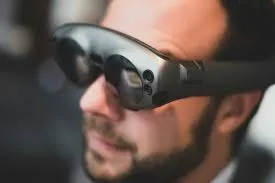
The race to dominate the future of augmented reality just took an unexpected turn.
At a moment when innovation, competition, and investor expectations are all converging, Snap Inc. has lost a key executive responsible for one of its most ambitious hardware initiatives. The departure comes as the company pushes forward with its long-term vision of wearable computing—particularly its smart glasses platform, Spectacles.
Leadership changes are not uncommon in the technology sector. But timing matters. And in this case, the timing has raised eyebrows across the industry.
With augmented reality moving from experimental novelty toward mainstream consumer technology, the exit of a top Spectacles executive signals a moment of uncertainty—and possibly transformation—inside one of the most closely watched innovation programs in Silicon Valley.

Why This Leadership Departure Matters Now
The executive exit arrives at what analysts widely consider a pivotal stage in Snap’s hardware evolution.
Spectacles have long represented more than just a product line. They are the physical manifestation of the company’s belief that augmented reality will reshape how people interact with the digital world.
Unlike traditional social media platforms, Snap has consistently positioned itself as a camera-first company—one that sees hardware as essential to unlocking immersive communication.
That makes leadership continuity particularly important.
When a top figure overseeing such a critical initiative departs, it raises immediate questions:
-
Will product timelines shift?
-
Will strategy change direction?
-
Will innovation slow or accelerate?
-
Is this a routine transition—or a deeper internal reset?
The answers will shape how investors, developers, and competitors interpret Snap’s trajectory in the coming years.
The Bigger Vision Behind Spectacles
To understand the impact of the executive departure, it’s important to understand what Spectacles represent strategically.
Snap’s smart glasses are not just accessories. They are part of a broader technological framework built around three pillars:
-
Augmented Reality Integration
-
Wearable Computing
-
Camera-Based Social Interaction
The company’s long-term ambition is clear: move computing away from handheld devices and into always-on visual experiences layered over the real world.
That vision places Spectacles at the center of Snap’s innovation roadmap.
The Evolution of Smart Glasses at Snap
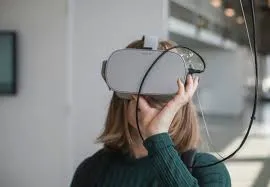
Snap’s hardware journey began with relatively simple camera-enabled glasses. But over time, the company dramatically expanded its ambitions.
Each generation has brought more advanced capabilities:
-
Improved AR rendering
-
Spatial mapping
-
Gesture controls
-
Developer tools
-
Real-time environment interaction
Today, Spectacles are positioned not just as consumer gadgets, but as developer platforms—tools that allow creators to build immersive digital experiences anchored to physical environments.
This shift mirrors broader industry movement toward spatial computing.
The Competitive Landscape Is Intensifying
Snap is far from alone in pursuing augmented reality hardware.
Major technology companies are investing billions into wearable ecosystems, spatial computing environments, and immersive digital platforms.
Competition is emerging across several fronts:
-
Enterprise AR solutions
-
Consumer smart glasses
-
Mixed reality headsets
-
AI-powered visual interfaces
In such a high-stakes environment, leadership stability can be a competitive advantage.
A sudden executive departure, therefore, inevitably draws attention—not just from investors, but from rival firms closely watching for strategic shifts.
What Industry Analysts Are Watching Closely
Observers across the technology sector are focusing on several key indicators following the leadership change.
Product Roadmap Continuity
Will upcoming hardware launches remain on schedule?
Technical Direction
Will engineering priorities shift under new leadership?
Developer Engagement
Will the ecosystem continue to grow at its current pace?
Investment Commitment
Will Snap maintain its long-term funding strategy for AR hardware?
Leadership transitions can either disrupt momentum—or accelerate transformation.
Which outcome emerges often depends on internal alignment and clarity of vision.
Leadership Transitions in High-Innovation Environments
Innovation-heavy companies experience executive turnover differently from traditional businesses.
In hardware-driven tech sectors, leadership changes can influence:
-
Engineering philosophy
-
Design priorities
-
Risk tolerance
-
Partnership strategies
-
Market positioning
When the departing executive has played a foundational role in shaping product direction, the ripple effects can extend far beyond organizational charts.
This is particularly true for experimental technologies still evolving toward mass adoption.
Snap’s Long-Term Commitment to AR
Despite the leadership shift, industry observers widely believe Snap remains deeply committed to augmented reality as a core strategic pillar.
This commitment reflects broader trends in digital interaction:
-
Increasing demand for immersive experiences
-
Integration of AI and visual computing
-
Growth of spatial interfaces
-
Declining reliance on traditional screens
For Snap, abandoning this trajectory would represent a fundamental shift in identity—something analysts view as unlikely.
The Role of Executive Leadership in Product Identity
In many technology companies, individual leaders shape not just strategy—but product philosophy.
Hardware innovation requires balancing:
-
Technical feasibility
-
User experience
-
Manufacturing constraints
-
Market readiness
An executive overseeing these elements often becomes the central architect of long-term direction.
Their departure can therefore represent either:
-
Completion of a development phase
-
Strategic realignment
-
Organizational restructuring
-
Personal career transition
Each possibility carries different implications for future innovation.
Market Reaction and Investor Sentiment
Leadership news often triggers immediate financial and strategic interpretation.
Investors typically evaluate executive departures through several lenses:
-
Stability of ongoing projects
-
Strength of succession planning
-
Clarity of corporate vision
-
Confidence of remaining leadership
In emerging technology sectors, perception can influence momentum as much as product performance.
The Broader Wearable Technology Movement
Snap’s situation reflects a wider industry transition toward wearable computing.
Smart glasses are increasingly seen as potential successors—or complements—to smartphones.
Key drivers of this shift include:
-
Hands-free interaction
-
Persistent digital overlays
-
Context-aware computing
-
Real-time environmental data
As hardware improves and software ecosystems mature, the boundary between physical and digital experiences continues to blur.
Snap’s Spectacles program sits squarely within this transformation.
Organizational Adaptation and Innovation Cycles
Major technology initiatives often move through distinct phases:
-
Vision development
-
Prototype experimentation
-
Platform building
-
Market scaling
Leadership needs can change across these stages.
An executive ideally suited to early experimentation may differ from one optimized for global expansion or mass production.
This perspective helps explain why leadership transitions sometimes occur precisely when programs reach critical inflection points.
Strategic Implications for the Future of Snap
Looking forward, several possible outcomes could emerge:
-
Accelerated product development under new leadership
-
Strategic repositioning of Spectacles
-
Expanded partnerships
-
Greater focus on developer ecosystems
-
Integration with AI-driven interfaces
The company’s next announcements will provide important signals about direction and priorities.
The Human Dimension of Corporate Transformation
Behind every corporate shift are individual career paths, personal ambitions, and evolving professional landscapes.
Technology leaders frequently move between companies, startups, and research environments as innovation ecosystems evolve.
These movements can spread knowledge across the industry—sometimes accelerating progress overall.
Why the Timing Feels Especially Significant
The departure feels notable not simply because of the executive role—but because of broader technological context.
We are entering an era defined by:
-
Spatial computing platforms
-
AI-enhanced perception
-
Persistent digital environments
-
Wearable-first interfaces
Few companies have invested as consistently in consumer-facing AR hardware as Snap.
That makes any leadership change during this transition period particularly consequential.
What This Means for the Future of Augmented Reality
Regardless of internal shifts, the trajectory of augmented reality remains clear.
Industry momentum continues to build around:
-
Immersive communication
-
Real-world digital integration
-
Visual AI interfaces
-
Wearable computing
Snap remains one of the most visible pioneers pursuing these goals at scale.
Leadership transitions may influence pace—but the direction of technological evolution appears firmly set.
Final Thoughts: A Turning Point or Natural Evolution?
Executive departures often generate speculation. But in fast-moving innovation sectors, change is part of progress.
For Snap, the loss of a top Spectacles executive comes at a moment when augmented reality is moving from concept to competitive marketplace.
Whether this marks disruption, renewal, or simply organizational evolution will become clearer in the months ahead.
What is certain, however, is this:
The race to define the future of wearable computing is accelerating.
And every leadership decision—especially at companies shaping the frontier of augmented reality—has the potential to influence how that future unfolds.