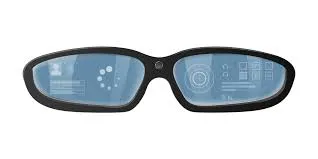
At a pivotal moment for augmented reality innovation, Snap Inc. has lost a senior executive tied to its Spectacles hardware initiative — a move that has sparked industry-wide speculation about the future of its ambitious wearable technology roadmap.
The leadership change, first reported by TechCrunch, arrives as Snap intensifies its push into immersive computing. With augmented reality rapidly evolving from novelty to platform-level technology, the timing of this departure could have meaningful implications for Snap’s long-term hardware strategy.
For years, Spectacles has been more than just a product line. It represents Snap’s bold attempt to redefine how people interact with digital environments — not through screens, but through the world around them.
Now, with a key architect stepping away during a crucial development phase, observers are asking a pressing question: Can Snap maintain momentum in one of the most competitive technological races of the decade?

Why This Leadership Exit Matters Right Now
Executive departures happen regularly in the tech industry. But context determines impact.
In this case, the timing is particularly significant because Snap is navigating a transition from experimental hardware to scalable AR platform development. Spectacles has evolved through multiple generations, each iteration moving closer to a fully immersive computing experience.
Leadership continuity is especially critical during phases of:
-
Product refinement
-
Manufacturing scale-up
-
Developer ecosystem expansion
-
Market positioning
When an executive deeply involved in shaping product direction leaves mid-cycle, it can disrupt strategic alignment, delay execution timelines, or trigger broader organizational shifts.
Even when projects continue uninterrupted, leadership transitions often reshape priorities — sometimes subtly, sometimes dramatically.
Spectacles: More Than Just Smart Glasses
To understand why this matters, it’s essential to recognize what Spectacles represents within Snap’s broader vision.
From the beginning, Snap has positioned itself not just as a social media company, but as a camera company — one focused on redefining visual communication.
Spectacles sits at the center of that philosophy.
Rather than simply overlaying digital information, Snap’s AR strategy aims to:
-
Blend physical and digital interaction
-
Enable persistent shared virtual experiences
-
Support spatial computing environments
-
Expand creator-driven augmented content
This vision aligns with what many analysts believe is the next computing paradigm: wearable-first interaction replacing smartphone-first interaction.
If that future materializes, the companies building AR hardware today could define the dominant platforms of tomorrow.

The Competitive Landscape Is Intensifying
Snap is far from alone in pursuing augmented reality hardware leadership.
Major technology companies are investing billions into spatial computing, wearable interfaces, and immersive environments. Among the most prominent competitors are:
-
Meta Platforms, which is aggressively developing mixed reality ecosystems
-
Apple, expanding its presence in spatial computing hardware
-
A growing field of startups exploring lightweight AR optics and contextual computing
The competition is not just about hardware specifications. It’s about ecosystem dominance — controlling the software, developer tools, and content layers that define user experience.
That’s why leadership stability inside hardware teams matters so much. Product design decisions made today can determine platform viability years into the future.
The Strategic Role of Spectacles in Snap’s Ecosystem
Spectacles is not a standalone product. It is part of a broader architecture connecting hardware, software, creators, and social interaction.
Snap’s long-term AR framework includes:
1. Creator Tools
Developers build lenses, effects, and immersive experiences.
2. Hardware Interface
Spectacles provides a persistent wearable display and sensing system.
3. Social Integration
Shared experiences connect users in real time.
4. Spatial Mapping
Environmental understanding enables contextual digital overlays.
This layered ecosystem approach mirrors how smartphones evolved — not just as devices, but as platforms for apps, services, and digital economies.
Disruptions at any layer can ripple through the entire system.
Leadership Transitions and Product Vision
In hardware innovation, leadership shapes more than operational execution — it shapes philosophy.
Key questions leadership teams define include:
-
Should hardware prioritize minimalism or capability?
-
How visible should AR overlays be?
-
What level of autonomy should devices have?
-
How quickly should products reach consumers?
When leadership changes, answers to these questions may shift.
Even small philosophical adjustments can influence:
-
Design language
-
User interface strategy
-
Developer support models
-
Market launch timelines
In emerging technology sectors, these decisions can determine whether a product becomes foundational infrastructure or remains niche experimentation.
The Risk of Momentum Loss in Emerging Technology
AR hardware development requires sustained momentum.
Unlike software updates, hardware innovation involves:
-
Complex supply chains
-
Specialized manufacturing
-
Long testing cycles
-
Significant capital investment
Momentum is often built through multi-year roadmaps. Interruptions can slow progress — or create opportunities for competitors to advance.
In high-growth technology sectors, timing is everything.
A six-month delay can shift:
-
Market perception
-
Developer engagement
-
Investment confidence
-
Consumer anticipation
When leadership changes coincide with development milestones, maintaining forward velocity becomes a strategic priority.
What Happens Inside Companies During Executive Departures
Public announcements rarely capture the full internal impact of executive transitions.
Within organizations, leadership changes can trigger:
-
Team restructuring
-
Responsibility redistribution
-
Strategic reassessment
-
Cultural recalibration
In innovation-driven environments, teams often rely heavily on vision alignment. When that alignment changes, internal priorities can shift rapidly.
However, executive departures do not always signal instability. Sometimes they represent natural evolution — new leadership for new phases of development.
The key question is continuity of vision.
Investor and Industry Reactions
Markets tend to interpret leadership changes through a strategic lens.
Analysts typically assess:
-
Whether the departing executive was central to product direction
-
How advanced the development pipeline is
-
Whether a successor is already identified
-
How the company communicates its roadmap
Confidence depends less on the departure itself and more on perceived strategic clarity afterward.
Companies that articulate a strong forward plan often stabilize quickly. Those that appear uncertain may face prolonged scrutiny.
The Future of Wearable AR Is Still Wide Open
Despite rapid progress, the wearable AR market remains in early stages.
Key technological challenges remain:
-
Battery efficiency
-
Display brightness and clarity
-
Device weight and comfort
-
Environmental awareness accuracy
-
Social acceptance of wearable cameras
No company has fully solved all of these simultaneously.
That means the competitive field remains fluid — and leadership decisions today could influence which platforms eventually dominate.
Why Snap’s AR Ambition Is Still Significant
Even with leadership changes, Snap remains one of the most persistent innovators in consumer AR experimentation.
Unlike many competitors focused primarily on enterprise or productivity use cases, Snap emphasizes:
-
Social interaction
-
Creative expression
-
Everyday experiences
-
Lightweight wearable design
This consumer-first perspective could prove strategically important if mass adoption depends on cultural acceptance rather than purely technical capability.
Snap’s core strength has always been user behavior insight — understanding how people communicate visually and socially.
If AR becomes a mainstream communication medium, that expertise could be a powerful advantage.
The Broader Shift Toward Spatial Computing
The Spectacles program reflects a larger technological transformation: the transition from flat interfaces to spatial interfaces.
Instead of interacting with devices, users interact with environments.
Instead of opening apps, digital information surrounds them.
This paradigm shift could redefine:
-
Workspaces
-
Education environments
-
Navigation systems
-
Social interaction
-
Entertainment experiences
Companies building hardware for this future are not just launching products — they are building new computing foundations.
What Comes Next for Snap
The immediate focus for Snap will likely involve maintaining operational continuity while reinforcing its AR strategy.
Key areas to watch include:
-
New leadership appointments
-
Product roadmap updates
-
Developer platform expansion
-
Partnerships with hardware suppliers
-
Public demonstrations of next-generation Spectacles
Consistency of messaging will be critical. Investors, developers, and consumers will all be watching closely for signals about direction and pace.
Final Thoughts: A Defining Moment in AR Innovation
The departure of a top Spectacles executive comes at a time when augmented reality is transitioning from experimental concept to strategic platform.
Leadership changes during such moments are never trivial.
Yet innovation rarely follows a straight line. Emerging technologies evolve through cycles of acceleration, adjustment, and reinvention.
For Snap, this moment represents both challenge and opportunity:
A challenge to maintain momentum in a fiercely competitive field.
An opportunity to refine vision and strengthen long-term strategy.
The future of wearable computing is still being written — and Snap remains one of the companies helping shape its first chapters.