
Introduction: The New Era of Artificial Intelligence
Artificial intelligence is no longer just a buzzword—it’s the driving force behind one of the most transformative periods in modern technology. In 2026, AI is reshaping industries at a pace that rivals the early days of the internet boom. From autonomous systems and generative models to custom AI chips and fully automated workflows, the global tech ecosystem is undergoing a massive shift.
Recent coverage from TechCrunch highlights a wave of innovation fueled by startups, Big Tech, and venture capital. The narrative is clear: AI is becoming the foundation of nearly every digital experience, business model, and infrastructure layer.
The Rise of AI Infrastructure: Chips, Cloud, and Compute Wars
One of the most significant developments in 2026 is the intensifying competition around AI infrastructure. Companies are racing to build faster, more efficient systems capable of training and deploying large-scale AI models.
At events like Nvidia’s GTC conference, executives emphasized the enormous market potential, projecting up to $1 trillion in AI chip revenue by 2027. This staggering figure underscores the central role hardware now plays in AI dominance.
Major players are no longer relying solely on third-party providers. Instead, they are building custom silicon to control costs and performance. For example:
- OpenAI is reportedly developing its own AI chips to reduce reliance on Nvidia
- Amazon and Google continue expanding proprietary chip ecosystems
- Startups are entering the space with specialized accelerators
This shift marks the beginning of what many analysts call the “AI compute wars”—a battle not just for software supremacy, but for the hardware that powers it.

AI Startups Are Redefining Innovation
While Big Tech dominates infrastructure, startups are driving innovation at the application layer. Venture capital is flowing heavily into AI-first companies, many of which are disrupting traditional industries.
One standout trend is the emergence of vertical AI solutions—tools designed for specific sectors like healthcare, finance, and retail. For example:
- AI inventory platforms integrating directly into enterprise systems
- Virtual try-on solutions transforming fashion e-commerce
- Autonomous agents performing complex workflows
Companies like SpreeAI are revolutionizing online shopping by allowing users to visualize outfits digitally before purchasing.
Meanwhile, funding rounds are getting larger and more frequent, signaling investor confidence in AI’s long-term potential.
The Age of Autonomous AI Agents
Perhaps the most groundbreaking development in 2026 is the rise of autonomous AI agents—systems capable of performing tasks independently with minimal human intervention.
This shift is often described as moving from “AI assistants” to “AI coworkers.”
A phenomenon known as the “Patil Effect” highlights how advanced AI models are beginning to replace entire workflows rather than simply augment them. These systems can:
- Write and deploy code
- Analyze legal documents
- Manage business operations
In some cases, companies are experimenting with AI agents that operate continuously, handling tasks that previously required entire teams. This has sparked both excitement and चिंता across industries, as businesses rethink productivity and workforce structures.

AI-Only Platforms and the Next Social Frontier
In a surprising twist, 2026 has also seen the emergence of platforms designed specifically for AI agents rather than humans.
One notable example is Moltbook, a social network where only AI systems can post and interact. Humans can observe but not participate directly.
The platform gained rapid attention after attracting hundreds of thousands of AI “users” within weeks.
While still experimental, this concept raises fascinating questions:
- Can AI systems develop their own communication norms?
- What happens when machines interact without human oversight?
- Could AI-native ecosystems become a new digital frontier?
These developments blur the line between tool and participant, pushing AI into entirely new territory.
Robotics and AI Integration Accelerates
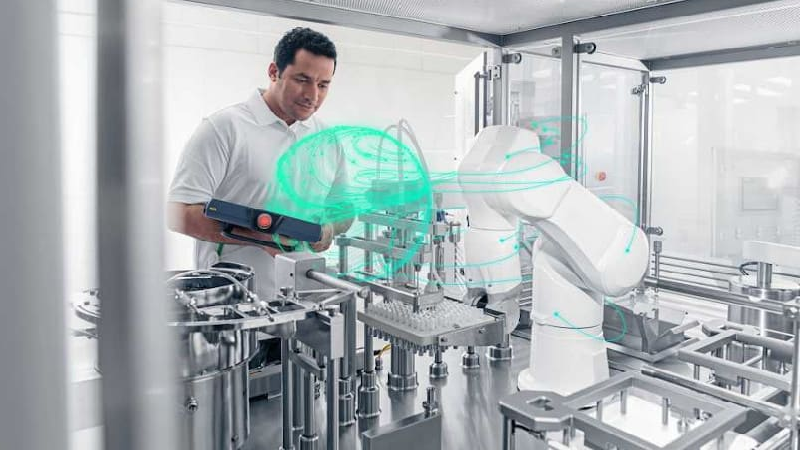
AI is no longer confined to software—it’s increasingly embedded in physical systems. Robotics is experiencing a resurgence thanks to advancements in machine learning and real-time decision-making.
Recent developments include:
- Partnerships between robotics firms and AI research labs
- Autonomous machines operating in warehouses, restaurants, and logistics
- Humanoid robots capable of interacting in dynamic environments
The convergence of AI and robotics is unlocking new use cases, from industrial automation to consumer-facing applications.
This trend signals a future where AI is not just something we use—but something that physically interacts with the world around us.
Ethics, Regulation, and Growing Concerns
As AI capabilities expand, so do concerns about misuse and unintended consequences.
One of the most controversial issues in recent months involves the misuse of generative AI for creating harmful content, including deepfakes. Reports indicate thousands of inappropriate AI-generated images being produced at alarming rates, prompting global backlash.
Governments are responding with stricter regulations:
- Temporary bans on certain AI tools in multiple countries
- Investigations into platform accountability
- New policies targeting AI-generated misinformation
At the same time, companies are implementing safeguards to prevent abuse, though critics argue that enforcement remains inconsistent.
The challenge is clear: balancing innovation with responsibility.
AI and the Future of Work
The impact of AI on jobs is one of the most debated topics in 2026.
A widely discussed essay titled “Something Big Is Happening” argues that AI has crossed a critical threshold, becoming capable of self-improving systems and complex decision-making.
This has led to several key trends:
1. Job Transformation, Not Just Replacement
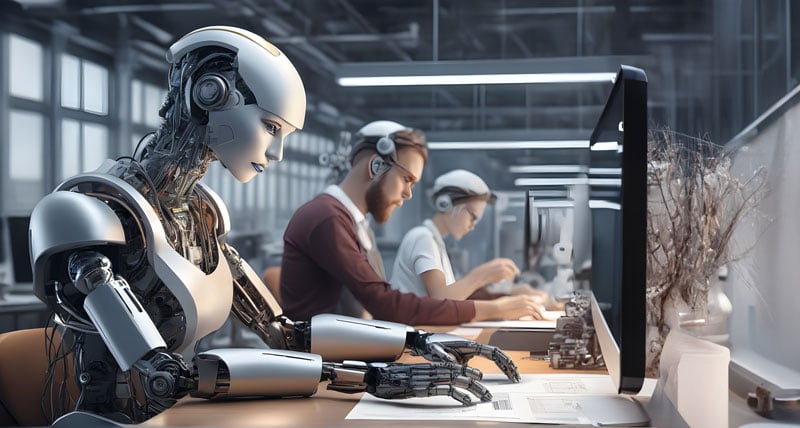
AI is changing how work is done, automating repetitive tasks while creating demand for new skills.
2. Rise of AI-Augmented Professionals
Workers who leverage AI tools are becoming significantly more productive and competitive.
3. Skills Shift
There is growing demand for:
- Prompt engineering
- AI system management
- Data literacy
While some roles may disappear, new opportunities are emerging just as quickly.
Big Tech’s Expanding Role in AI Dominance
Tech giants are doubling down on AI investments, shaping the direction of the industry.
Key strategies include:
- Acquiring promising AI startups
- Building proprietary models and ecosystems
- Expanding AI integration across products
Companies like Google, Amazon, and Meta are embedding AI into everything from search engines to cloud platforms.
This consolidation raises questions about competition, innovation, and the long-term balance of power in the tech industry.
What Comes Next: The Future of AI
Looking ahead, several trends are likely to define the next phase of AI:
1. AI Becomes Invisible Infrastructure
Just like electricity or the internet, AI will become a background layer powering everyday experiences.
2. More Human-Like Systems
Advances in natural language, vision, and reasoning will make AI interactions more intuitive and seamless.
3. Decentralized AI Ecosystems
Open-source models and distributed networks could challenge Big Tech dominance.
4. Increased Regulation
Governments will play a larger role in shaping how AI is developed and deployed.
Conclusion: A Defining Moment for Technology
Artificial intelligence in 2026 is at a turning point. The technology has moved beyond experimentation and into large-scale deployment across industries.
From AI chips and autonomous agents to ethical challenges and workforce disruption, the changes are profound—and just getting started.
As highlighted by TechCrunch, the AI revolution is not a distant future—it’s happening right now.
The question is no longer whether AI will transform the world—but how quickly, and who will lead the way.