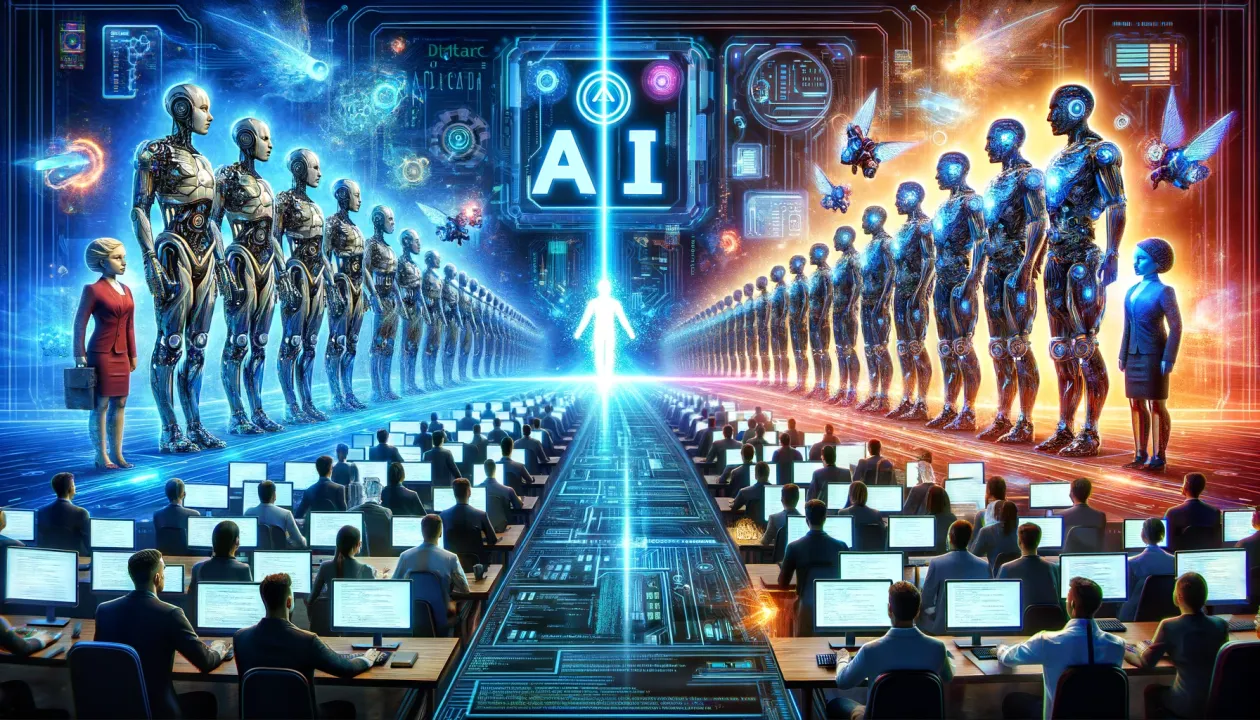
Introduction: A New Era of Tech Dominance
The technology landscape in 2026 is moving at a breathtaking pace. From artificial intelligence breakthroughs to record-breaking startup funding, the industry is undergoing one of its most transformative periods yet. Insights from TechCrunch reveal a clear pattern: innovation is no longer just about disruption—it’s about scale, efficiency, and real-world impact.
The past few years laid the groundwork for AI-driven growth, but 2026 is proving to be the year when that growth becomes fully operationalized. Startups are not just experimenting anymore; they are building scalable, revenue-generating products that are reshaping industries from finance to entertainment.
The AI Funding Explosion
One of the most defining trends of 2026 is the massive influx of capital into artificial intelligence startups. According to TechCrunch reporting, nearly 20 U.S.-based AI startups have already raised $100 million or more in early 2026 alone.
This surge follows an already explosive 2025, where AI startups collectively raised tens of billions of dollars. The momentum shows no signs of slowing down, signaling that investors remain deeply confident in AI’s long-term potential.
What’s driving this surge?
-
Enterprise demand for automation
-
Breakthroughs in generative AI
-
Growing reliance on data-driven decision-making
Investors are no longer funding AI as a concept—they are backing companies that can deliver measurable ROI. This marks a major shift from hype-driven investment cycles to performance-driven capital allocation.

From Experimentation to Implementation
In previous years, enterprises were primarily experimenting with AI tools. In 2026, that phase is ending. Businesses are now consolidating their tech stacks and focusing on solutions that actually work.
Instead of testing dozens of tools, companies are narrowing down to a few high-performing platforms. This shift is forcing startups to differentiate themselves more clearly.
Key changes include:
-
Fewer vendors, stronger partnerships
-
Higher expectations for product performance
-
Increased focus on proprietary data advantages
This evolution mirrors what happened in the SaaS industry years ago. Only the most effective and scalable solutions will survive, while others fade away.
The Rise of “Build-Your-Own AI”
Another emerging trend highlighted by TechCrunch is the rise of customizable AI systems. Companies are increasingly interested in building their own AI models rather than relying entirely on third-party solutions.
This “build-your-own AI” approach allows businesses to:
-
Maintain control over data
-
Customize outputs for specific use cases
-
Improve long-term cost efficiency
Startups that enable this flexibility are gaining traction quickly. Instead of offering one-size-fits-all products, they provide platforms that can be tailored to individual business needs.
Mega-Rounds and Market Concentration
While funding is abundant, it is also highly concentrated. A small number of companies are capturing a disproportionate share of investment dollars.
In 2025, just a handful of AI giants raised over $5 billion each, accounting for a significant portion of total venture funding.
This concentration creates both opportunities and challenges:
Opportunities:
-
Faster innovation at scale
-
Increased competition among top players
-
Stronger infrastructure development
Challenges:
-
Smaller startups struggle to compete
-
Market barriers become higher
-
Innovation may become centralized
Despite these challenges, smaller startups still play a crucial role by focusing on niche markets and specialized solutions.
The Evolution of Startup Teams
One of the most fascinating shifts in 2026 is the emergence of “tiny teams.” With the help of AI tools, startups can now achieve massive output with minimal staff.
Instead of hiring large teams, companies are leveraging:
-
AI coding assistants
-
Automated marketing tools
-
Intelligent customer support systems
This allows startups to:
-
Reduce operational costs
-
Scale faster
-
Reach profitability sooner
In some cases, startups are achieving millions in revenue with fewer than 10 employees—a scenario that would have been unimaginable just a decade ago.
AI Agents: From Tools to Digital Workers
AI is no longer just a tool—it’s becoming a workforce.
In 2026, AI agents are evolving into autonomous systems capable of handling complex tasks. These agents can:
-
Manage workflows
-
Analyze data
-
Execute business operations
This shift is redefining productivity. Instead of augmenting human work, AI is beginning to replace entire job functions in certain industries.
For businesses, this means:
-
Increased efficiency
-
Lower labor costs
-
Faster decision-making
For workers, however, it raises important questions about the future of employment and skill requirements.

Creator Economy Meets Artificial Intelligence
The creator economy is also undergoing a major transformation. AI-powered tools are enabling creators to produce high-quality content faster than ever before.
Startups in this space are developing technologies for:
-
AI-generated video
-
Voice synthesis
-
Automated editing
Companies like Synthesia are leading the charge, offering tools that allow businesses and creators to generate realistic video content using AI avatars.
This trend is attracting significant investment, as brands and individuals seek more efficient ways to produce content at scale.
Vertical Innovation: The Next Frontier
As the AI market matures, startups are increasingly focusing on vertical-specific solutions rather than general-purpose tools.
Examples include:
-
Healthcare AI for diagnostics
-
Fintech AI for fraud detection
-
Retail AI for personalized shopping
One notable example is SpreeAI, which uses AI to create virtual try-on experiences for online shoppers.
Vertical AI solutions offer several advantages:
-
Higher accuracy
-
Better user experience
-
Stronger competitive differentiation
This trend suggests that the future of AI will be less about general intelligence and more about specialized expertise.

The Global Race for AI Dominance
The competition for AI leadership is becoming increasingly global. While the United States remains a dominant force, other regions are rapidly catching up.
Countries in Asia and Europe are investing heavily in:
-
AI infrastructure
-
Talent development
-
Startup ecosystems
This global competition is accelerating innovation but also raising concerns about regulation, data privacy, and geopolitical tensions.
Challenges Facing the Tech Industry
Despite the optimism, the tech industry faces several challenges in 2026:
1. Market Saturation
With thousands of AI startups entering the market, differentiation is becoming more difficult.
2. Regulatory Pressure
Governments are beginning to introduce stricter regulations around AI, particularly in areas like data privacy and ethics.
3. Talent Shortage
The demand for skilled AI professionals continues to outpace supply.
4. Security Risks
As AI systems become more powerful, they also become more vulnerable to misuse and cyber threats.
These challenges will play a critical role in shaping the next phase of technological development.
What Investors Are Looking For Now
Investors in 2026 are more selective than ever. According to industry insights, they are no longer just looking for “AI startups”—they want companies that can apply AI effectively to solve real-world problems.
Key factors influencing investment decisions include:
-
Clear business models
-
Proven revenue streams
-
Scalable technology
-
Strong leadership teams
This shift marks a maturation of the startup ecosystem, where execution matters more than vision alone.
The Road Ahead
Looking forward, several trends are expected to define the tech industry in the coming years:
-
Increased consolidation as larger companies acquire smaller startups
-
More efficient startups with lean teams and high output
-
Wider adoption of AI across industries
-
Greater focus on ethical and responsible AI
The next wave of innovation will likely come from companies that can balance technological advancement with practical application.
Conclusion: Innovation Meets Reality
The tech industry in 2026 is no longer driven solely by ideas—it’s driven by results. The AI gold rush is real, but it’s also evolving into a more disciplined and mature market.
Startups that succeed will be those that:
-
Deliver real value
-
Adapt quickly
-
Focus on efficiency and scalability
As highlighted by TechCrunch, the future of technology isn’t just about building smarter systems—it’s about building systems that truly work.
In this new era, innovation is no longer optional. It’s essential.