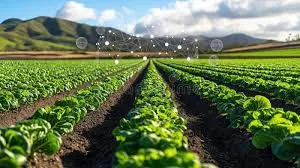
Why Identifying Plants Is Harder Than It Sounds
To the human eye, distinguishing a weed from a crop can be intuitive—especially for experienced farmers. For machines, it’s far more complex.
Plants vary by:
-
Growth stage
-
Lighting conditions
-
Soil quality
-
Weather damage
-
Genetic variation
Two plants of the same species can look very different, while weeds can closely resemble crops at early stages. Traditional rule-based systems fail in these messy, real-world conditions.
Carbon Robotics set out to solve that complexity with AI.

What Carbon Robotics Actually Built
Carbon Robotics developed a machine learning model trained on massive datasets of plant imagery. The system doesn’t just see “green shapes.” It classifies plants based on subtle visual cues—leaf shape, vein patterns, spacing, texture, and growth structure.
In practice, the model can:
-
Detect individual plants at high speed
-
Identify species in real time
-
Distinguish crops from weeds
-
Operate in uncontrolled outdoor environments
This level of accuracy allows robots to make decisions on the fly, directly in the field.

How the AI Learns to Recognize Plants
Training an AI to identify plants requires more than just feeding it pictures.
Carbon Robotics’ approach involved:
-
Millions of labeled plant images
-
Data collected across seasons and geographies
-
Continuous retraining as plants evolve
-
Feedback loops from real-world deployment
By exposing the model to endless variations, the system learns patterns that generalize beyond any single farm or crop type.
This is crucial in agriculture, where conditions are never static.
Why This Matters for Weed Control
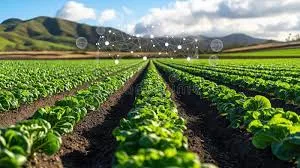
Weeds are one of the biggest threats to crop yields worldwide. Traditionally, farmers rely on herbicides or manual removal—both costly in different ways.
AI-driven plant identification enables:
-
Targeted weed removal
-
Minimal or zero herbicide use
-
Reduced labor dependence
-
Healthier soil ecosystems
Instead of spraying entire fields, robots can act surgically—removing only the unwanted plants.
The Environmental Impact: Less Chemicals, Healthier Soil
One of the most promising outcomes of this technology is environmental.
By identifying and removing weeds precisely, farms can:
-
Reduce herbicide runoff
-
Protect nearby ecosystems
-
Improve biodiversity
-
Lower long-term soil degradation
This aligns with growing pressure on agriculture to become more sustainable without sacrificing productivity.
How This Fits Into Carbon Robotics’ Bigger Vision
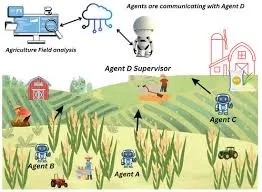
Carbon Robotics isn’t just building an AI model—they’re building an ecosystem.
Plant identification is a foundational capability that enables:
-
Autonomous weeding
-
Crop monitoring
-
Yield optimization
-
Early disease detection
Once a machine understands what’s growing and where, it can perform a wide range of intelligent actions.
Real-Time Decisions in the Field
One of the most impressive aspects of Carbon Robotics’ AI is speed.
The system operates in real time, meaning:
-
No cloud dependency mid-operation
-
Immediate responses to visual input
-
High throughput across large fields
This is essential for large-scale farming, where delays translate directly into lost efficiency.
Why General AI Models Aren’t Enough
You might wonder: why not use a general-purpose vision model?
The answer is specificity.
Agriculture presents challenges like:
-
Variable lighting
-
Dust and debris
-
Motion blur
-
Occlusion from overlapping plants
Carbon Robotics’ AI is purpose-built for these conditions, trained on agricultural reality rather than curated datasets.
The Labor Problem AI Is Addressing
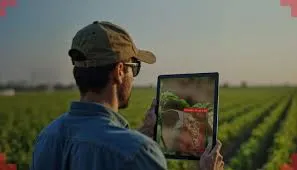
Farming faces a growing labor shortage worldwide. Seasonal labor is harder to secure, and costs continue to rise.
AI-powered robotics helps by:
-
Reducing dependence on manual weeding crews
-
Operating longer hours than humans
-
Providing consistency regardless of labor availability
This doesn’t eliminate human roles—it shifts them toward oversight and higher-skill tasks.
What Farmers Care About Most: Reliability
Farmers are pragmatic. New technology must work—consistently and predictably.
Key adoption factors include:
-
Accuracy across conditions
-
Minimal downtime
-
Easy integration with existing equipment
-
Clear return on investment
Carbon Robotics’ focus on real-world performance, not lab demos, is critical for acceptance.
Scaling Across Crops and Regions
A major challenge for plant identification AI is generalization.
Carbon Robotics is working to ensure the system can:
-
Adapt to new crop types
-
Learn regional weed varieties
-
Improve through continuous updates
As the dataset grows, so does the model’s versatility—unlocking broader use cases globally.
Beyond Weeds: What Comes Next
Once machines can identify plants, the next step is understanding plant health.
Future applications could include:
-
Detecting nutrient deficiencies
-
Identifying early disease symptoms
-
Predicting yield outcomes
-
Optimizing irrigation and fertilizer use
Plant identification is the gateway to fully intelligent farming systems.
Why This Is a Turning Point for AgTech
Agriculture has historically lagged behind other industries in AI adoption due to environmental complexity. Carbon Robotics’ work shows that barrier is breaking.
Teaching machines to see and understand plants marks a shift from automation to intelligence.
That distinction matters.
The Broader Climate Implications
As global food demand rises and climate pressures intensify, efficiency is no longer optional.
AI-powered plant identification contributes to:
-
Lower emissions from chemical production
-
Reduced resource waste
-
More resilient food systems
It’s a rare case where technology benefits farmers, consumers, and the environment simultaneously.
Challenges Still Ahead
Despite the promise, challenges remain:
-
High upfront costs
-
Training and maintenance requirements
-
Adoption barriers for small farms
Scaling responsibly and affordably will determine how transformative this technology becomes.
Final Thoughts: Teaching Machines to Understand Nature
Carbon Robotics’ AI model doesn’t just detect plants—it represents a new relationship between technology and agriculture.
For the first time, machines are beginning to understand the living complexity of fields, not just manipulate them.
If widely adopted, this technology could help usher in a future where farming is:
-
More precise
-
More sustainable
-
Less wasteful
And in a world facing both food insecurity and environmental strain, that kind of intelligence may be exactly what agriculture needs next.