What Is Agentic Coding?
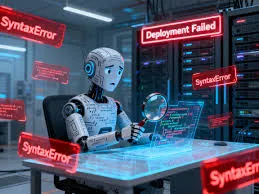
Agentic coding goes beyond autocomplete and inline suggestions. Instead of simply responding to prompts, AI agents can:
-
Understand high-level goals
-
Break tasks into steps
-
Modify multiple files autonomously
-
Run tests and fix errors
-
Iterate until objectives are met
In this model, developers shift from writing every line to supervising intelligent systems that execute intent.
Xcode’s evolution suggests Apple believes this approach is the future of programming.
Why Xcode’s Shift Matters
Xcode is more than an IDE—it’s the backbone of Apple’s app economy. Millions of developers rely on it to build apps for iOS, macOS, watchOS, and visionOS.
By embracing agentic coding, Apple is:
-
Redefining developer workflows
-
Competing directly with AI-first coding tools
-
Signaling long-term commitment to AI-assisted development
This isn’t a side experiment. It’s a foundational shift.

Deeper Integrations With OpenAI and Anthropic
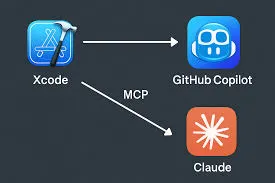
At the core of Xcode’s transformation are deeper connections with OpenAI and Anthropic.
These integrations allow Xcode to:
-
Access more advanced reasoning models
-
Support multi-step task execution
-
Handle longer code contexts
-
Perform complex refactors and debugging
Rather than locking into a single AI provider, Apple appears to be building a flexible, multi-model future.
Why Apple Is Taking a Multi-Model Approach
By integrating both OpenAI and Anthropic models, Apple avoids putting all its chips on one technology stack.
This approach offers:
-
Redundancy and resilience
-
The ability to route tasks to the best-suited model
-
Faster adoption of future breakthroughs
It also gives developers more confidence that Xcode won’t stagnate as AI advances.
From Code Completion to Code Execution
Traditional coding assistants help developers write code faster. Agentic systems aim to help developers build software faster.
With agentic coding, Xcode can:
-
Generate entire features from natural language descriptions
-
Scan projects for architectural issues
-
Propose performance optimizations
-
Refactor legacy codebases
The role of the developer shifts from typist to director.

How This Changes the Developer Workflow
Instead of focusing on syntax, developers may spend more time:
-
Defining constraints
-
Reviewing AI-generated changes
-
Validating logic and security
-
Making architectural decisions
This could dramatically reduce time spent on boilerplate and repetitive tasks.
Competing in an AI-First IDE Landscape
Xcode’s move places Apple in direct competition with AI-native tools like Cursor, Replit, and GitHub Copilot-powered environments.
However, Xcode has a unique advantage:
-
Deep integration with Apple platforms
-
Access to system-level APIs
-
Tight hardware-software alignment
Agentic coding gives Apple a way to defend—and expand—its developer moat.

Trust, Safety, and Apple’s Philosophy
Apple has historically emphasized privacy, safety, and control. That philosophy carries over into agentic coding.
Key concerns include:
-
Preventing unintended code changes
-
Ensuring explainability of AI actions
-
Maintaining human oversight
Apple’s cautious rollout reflects awareness that autonomous coding comes with real risks.
What Developers Are Excited About
Early reactions from developers highlight several appealing possibilities:
-
Faster prototyping
-
Easier onboarding for new team members
-
Reduced technical debt through automated refactoring
-
Improved test coverage
For solo developers and small teams, agentic coding could feel like hiring a virtual engineering assistant.
What Developers Are Worried About
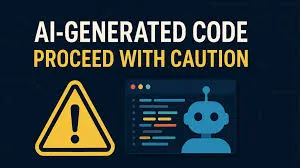
At the same time, concerns remain:
-
Overreliance on AI-generated code
-
Loss of deep technical understanding
-
Debugging AI-written logic
-
Security vulnerabilities introduced by automation
Apple’s challenge is empowering developers without deskilling them.
The Long-Term Impact on Software Engineering
Agentic coding doesn’t eliminate the need for engineers—but it may change what being an engineer means.
Future developers may focus more on:
-
System design
-
Product thinking
-
Ethics and safety
-
Human-AI collaboration
Xcode’s evolution suggests Apple sees this future coming fast.
Education and the Next Generation of Developers
As agentic tools become standard, coding education may shift:
-
Less memorization of syntax
-
More emphasis on problem decomposition
-
Stronger focus on reasoning and review
Xcode’s role in classrooms and bootcamps could expand as it becomes more approachable for beginners.
Why This Move Is Happening Now
Several forces converged to make this moment inevitable:
-
Rapid improvements in large language models
-
Developer demand for productivity gains
-
Competitive pressure from AI-native tools
-
Apple’s need to future-proof its ecosystem
Waiting longer would have risked making Xcode feel outdated.
What Comes Next for Xcode
Looking ahead, we may see:
-
Multiple specialized AI agents within Xcode
-
Deeper integration with testing and CI pipelines
-
AI-assisted app store compliance checks
-
More natural language-driven development
Agentic coding is likely to expand incrementally—but relentlessly.
A Broader Signal From Apple
This move isn’t just about developers. It’s about Apple acknowledging that AI agents will become central to creative and technical work.
By bringing agentic coding into Xcode, Apple is:
-
Normalizing AI collaboration
-
Setting expectations for professional tools
-
Framing AI as augmentation, not replacement
That framing matters in a world anxious about automation.
Final Thoughts: A New Chapter for Coding
Xcode’s shift into agentic coding represents a watershed moment for software development. With deeper OpenAI and Anthropic integrations, Apple is betting that the future of programming is collaborative—humans and intelligent agents working side by side.
For developers, this means more power, more responsibility, and a chance to redefine how software is built.
For the industry, it’s a clear signal: coding is no longer just about writing instructions for machines. It’s about guiding machines that can reason, act, and improve alongside us.
And with Xcode stepping boldly into that future, the way we build apps may never look the same again.