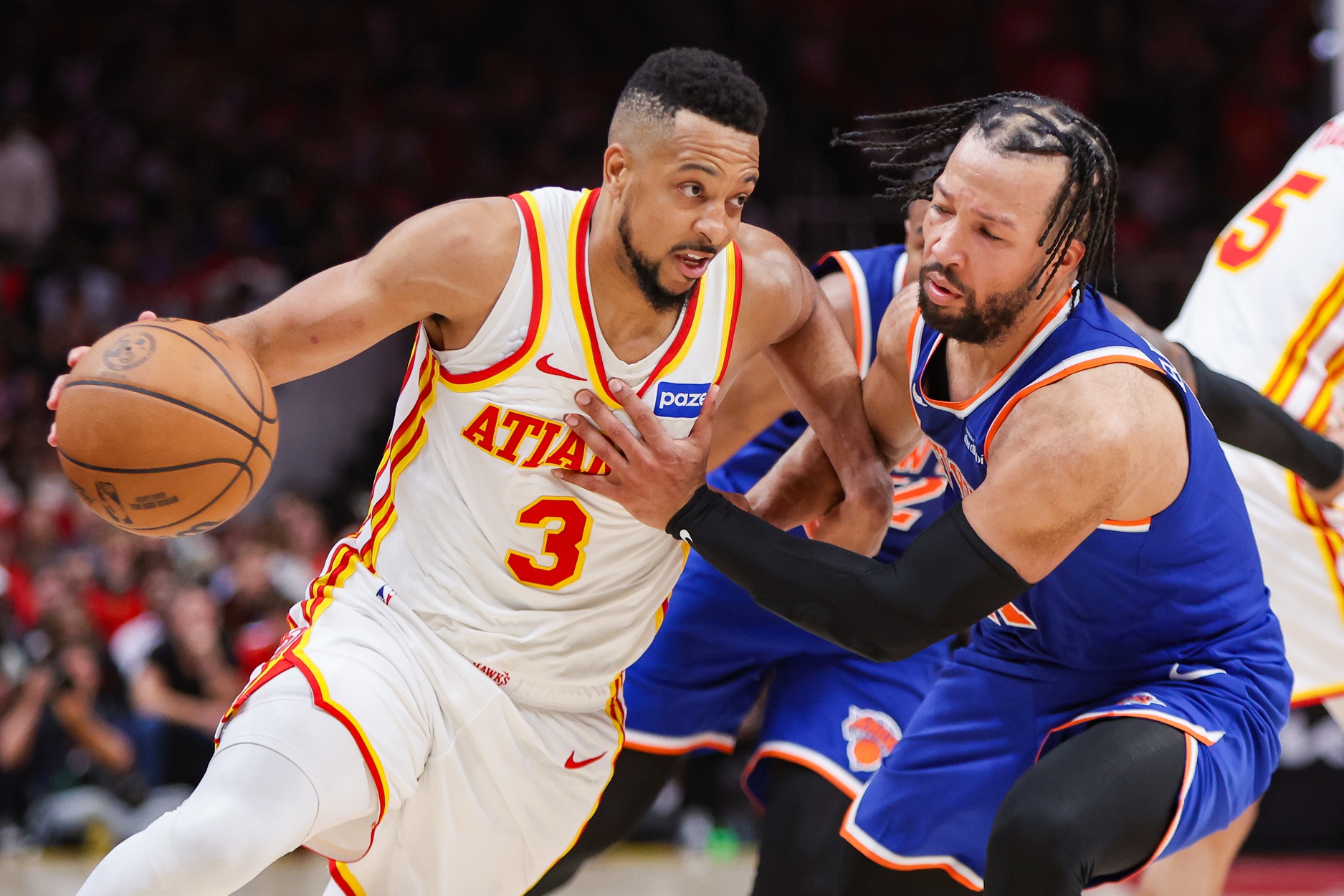
What happened in the Atlanta Hawks vs NY Knicks game?
The New York Knicks defeated the Atlanta Hawks 140-89 in Game 6 of the Eastern Conference first round, securing a 4-2 series victory and the largest playoff win in franchise history. This game was defined by a Knicks' 50-point lead against Hawks that began in the second quarter, resulting in the elimination of Atlanta from the postseason. New York dominated every statistical category, posting an elite 138.6 Offensive Rating while holding Atlanta to a dismal 88.1 Defensive Rating.
Game at a Glance: Key Performance Indicators
Final Score: Knicks 140, Hawks 89
Largest Lead: 61 points (3rd Quarter)
Effective Field Goal %: Knicks 64.2% | Hawks 41.5%
Turnovers: Hawks 22 | Knicks 8
Points in the Paint: Knicks 62 | Hawks 34
How did the Knicks build a 50-point lead against the Hawks?
The Knicks built their insurmountable lead through a combination of elite transition execution and a historically dominant second-quarter stretch. After a competitive first six minutes, New York initiated a 43-6 scoring run that spanned 11 minutes of game time. This was not merely a result of hot shooting; the Knicks leveraged 14 first-half turnovers to create 26 points in transition.
New York’s offense functioned with a Pace of 102.5, significantly higher than their season average. By pushing the ball before Atlanta could set its half-court defense, the Knicks generated 18 "wide-open" three-point attempts in the first half alone. By the time the Knicks' 50-point lead against Hawks hit the scoreboard, Atlanta had already surrendered 30 points in the paint, signaling a total collapse of their interior rotations.

Why was the Atlanta Hawks’ offense so ineffective in Game 6?
The Hawks' offense failed because the Knicks' defensive scheme neutralized Atlanta’s primary pick-and-roll triggers. New York utilized a "Hedge and Recover" strategy, forcing the Hawks' ball-handlers toward the sidelines and away from the middle of the floor. This limited the "vertical gravity" of Atlanta’s lob threats and forced their guards into low-percentage, contested mid-range jumpers.
Atlanta’s True Shooting Percentage (TS%) plummeted to 44.2% during the game. When a team’s efficiency drops this low, it usually stems from poor shot selection and high turnover rates. The Hawks recorded a 21.6% turnover percentage, meaning more than one out of every five possessions ended without a shot attempt. This inefficiency allowed the Knicks vs Hawks game 6 to spiral out of control, as Atlanta could not find a secondary scoring option once their primary sets were disrupted.
Which players had the greatest impact on the Knicks vs Hawks Game 6?
OG Anunoby (NYK):
Anunoby was the statistical outlier of the game. He finished with 29 points and a +42 plus-minus rating in just 27 minutes. His impact was felt most on the perimeter, where he held Atlanta’s primary scorers to 2-of-11 shooting when acting as the closest defender. Anunoby’s ability to "switch" across four positions dismantled the Hawks' offensive rhythm.
Karl-Anthony Towns (NYK):
Towns acted as the offensive hub, recording a triple-double (12 PTS, 11 REB, 10 AST). His Usage Rate was lower than usual, but his gravity pulled Atlanta’s rim protectors out to the perimeter. This created "4-on-3" advantages for New York’s cutters. Towns’ passing from the high post was the catalyst for the Knicks' 38 total assists.
Jalen Johnson (ATL):
While Johnson scored 21 points, his impact was negated by a lack of defensive support. He struggled with a 118.0 Defensive Rating, as the Knicks repeatedly targeted him in off-ball screens. Johnson’s performance highlights the Hawks' core issue: individual scoring cannot compensate for a systemic defensive failure.
How did the Knicks embarrass the Hawks in the paint and on the glass?
The Knicks controlled the physical narrative of the game by dominating the "four factors" of basketball, specifically offensive rebounding and shot volume. New York grabbed 15 offensive rebounds, leading to 22 second-chance points. In contrast, the Hawks managed only 5 offensive boards, failing to create extra possessions to mitigate their poor shooting.
New York’s frontcourt exploited Atlanta’s lack of size. By using high-low sets, the Knicks forced smaller Hawks defenders into the Restricted Area, where New York shot 78%. This physical dominance is a primary reason why the Knicks embarrass Hawks headlines dominated the post-game cycle; it was a victory achieved through superior strength and effort.
What tactical adjustments did Tom Thibodeau make for Game 6?
Tom Thibodeau adjusted the Knicks' defensive rotations to prioritize "No-Middle" principles. In previous games, the Hawks found success driving into the lane and kicking to corner shooters. In Game 6, the Knicks "iced" every side pick-and-roll, effectively trapping the ball-handler against the sideline.
This adjustment forced the Hawks to play "East-West" rather than "North-South." By limiting paint touches, the Knicks reduced Atlanta’s Free Throw Rate to a season-low. Furthermore, Thibodeau staggered his rotations to ensure that either OG Anunoby or Josh Hart was always on the floor to maintain point-of-attack pressure. These coaching decisions turned a potential closeout game into a historical blowout.
What are the playoff standings and seeding implications of this win?
The Knicks' victory secures their spot in the Eastern Conference Semifinals, where they will face the winner of the Celtics vs. 76ers series. This 51-point win significantly boosts New York’s Net Rating for the postseason, a metric often used by analysts to predict championship viability.
For the Hawks, this loss necessitates a roster evaluation. Eliminating a team in this fashion often leads to "blow-up" scenarios in the offseason. Atlanta now faces questions regarding their defensive identity and whether their current core can compete with the physical, defensive-minded elites of the East.
Future Outlook: Can the Knicks maintain this level of play?
While a 51-point margin is not sustainable, the Knicks' defensive process is. Their ability to limit turnovers and dominate the glass are "sticky" stats that translate across different matchups. If New York maintains a Defensive Rating under 105.0, they possess the floor to compete with any team in the NBA.
What to watch next:
Knicks' Shooting Regression: New York shot 48% from deep in Game 6; will they stay above 38% in the next round?
Rotational Health: Can the Knicks' starters maintain this intensity with Thibodeau’s typically heavy minute loads?
Hawks' Offseason: Will the front office prioritize defensive wings to prevent another Knicks' 50-point lead against Hawks scenario?
Conclusion: Why this Game 6 matters for the NBA landscape
The Atlanta Hawks vs NY Knicks series finale was a masterclass in modern basketball execution. It proved that a disciplined defensive system, paired with elite floor spacing and rebounding, can completely neutralize star-heavy offenses. The Knicks have transitioned from a "scrappy underdog" to a "statistical powerhouse."
Fans should pay attention to the Knicks' Assist-to-Turnover ratio moving forward. If they continue to value the ball while maintaining this level of defensive aggression, the road to the Eastern Conference Finals may very well run through Madison Square Garden.
NBA Stats Reference:
Offensive Rating: 138.6 (NYK)
Defensive Rating: 88.1 (ATL)
Effective Field Goal Percentage: 64.2% (NYK)
True Shooting Percentage: 44.2% (ATL)