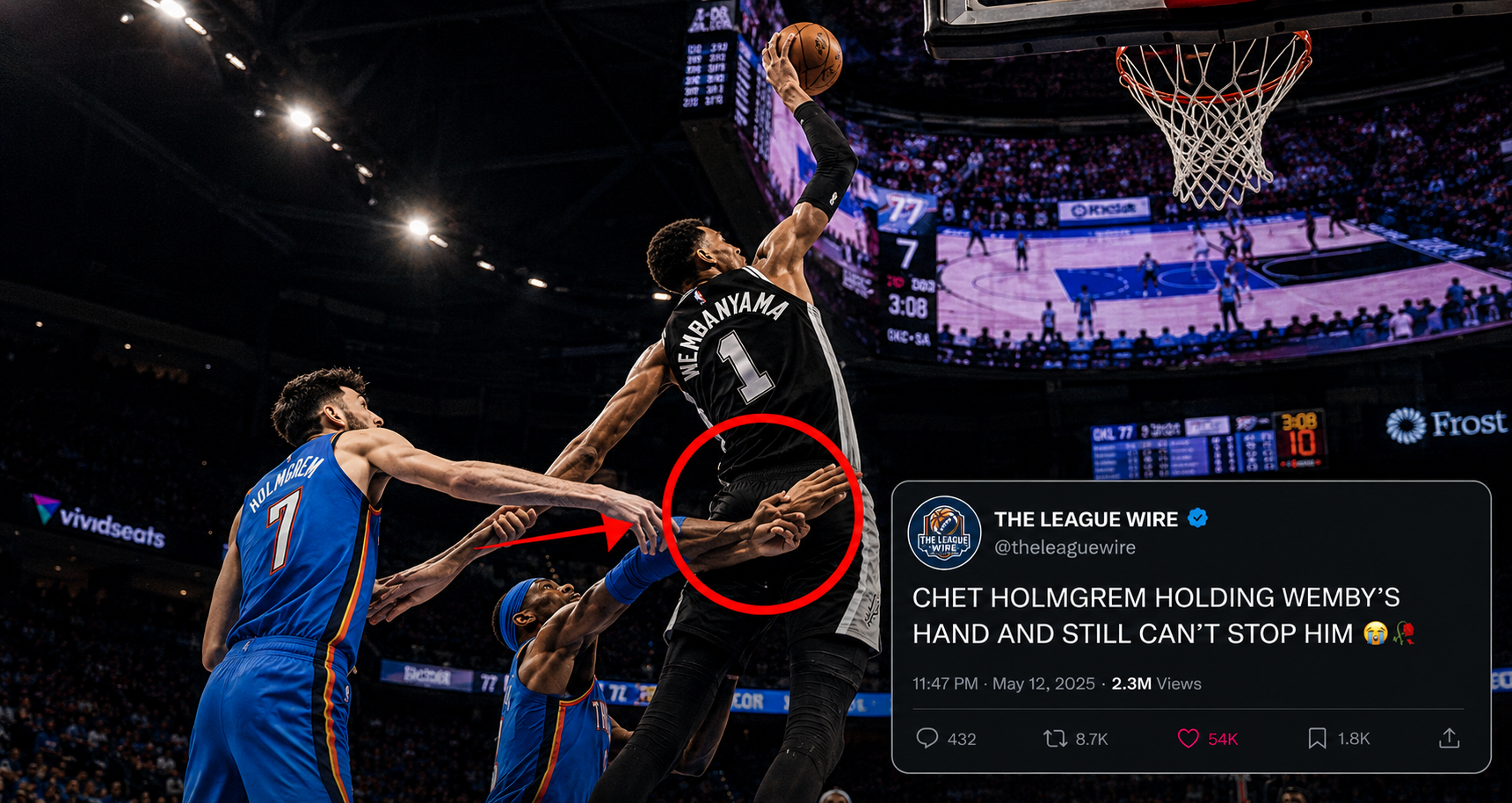
Western Conference Finals Game 1: How the Spurs Stunned OKC?
The San Antonio Spurs defeated the Oklahoma City Thunder 122–115 in double overtime, overcoming a 1st-half deficit by forcing the Thunder into an inefficient half-court offense.
Victor Wembanyama’s 41 points and 24 rebounds neutralized OKC’s interior, while Dylan Harper’s franchise-record 7 steals disrupted Shai Gilgeous-Alexander’s playmaking during the decisive 2OT stretch.
Why did the Thunder’s #1-ranked transition offense collapse?
The Thunder’s loss was a direct result of San Antonio’s "Offensive Glass Sacrifice." In the first half, OKC generated 18 fast-break points. In the second half and overtimes, that number dropped to 4.
The Result: This forced OKC into 5-on-5 half-court sets. Against a set Spurs defense featuring Wembanyama at the rim, OKC’s Offensive Rating plummeted from 118.4 (transition) to 94.2 (half-court).
The Impact: Shai Gilgeous-Alexander was forced to hunt contested mid-range jumpers rather than layups, leading to a 53% True Shooting percentage—well below his season average.
How did Victor Wembanyama’s gravity dictate the Shot Profile?
Wembanyama’s 41-point, 24-rebound performance was a "Shot Quality" heist. By occupying the paint, he didn't just block shots; he erased the intent to shoot at the rim.
Rim Deterrence: OKC attempted only 12 shots at the rim while Wembanyama was on the floor, compared to 22 when he rested.
Offensive Rebounding as a Dagger: Wembanyama’s 8 offensive boards created "reset" possessions. These 2nd-chance opportunities allowed the Spurs to bleed the clock and tire out Chet Holmgren, who finished with a -12 net rating.
Sustainability: While 41 minutes is a heavy load, Wembanyama’s "Drop Coverage" positioning allowed him to conserve energy by roaming the paint rather than chasing shooters on the perimeter.
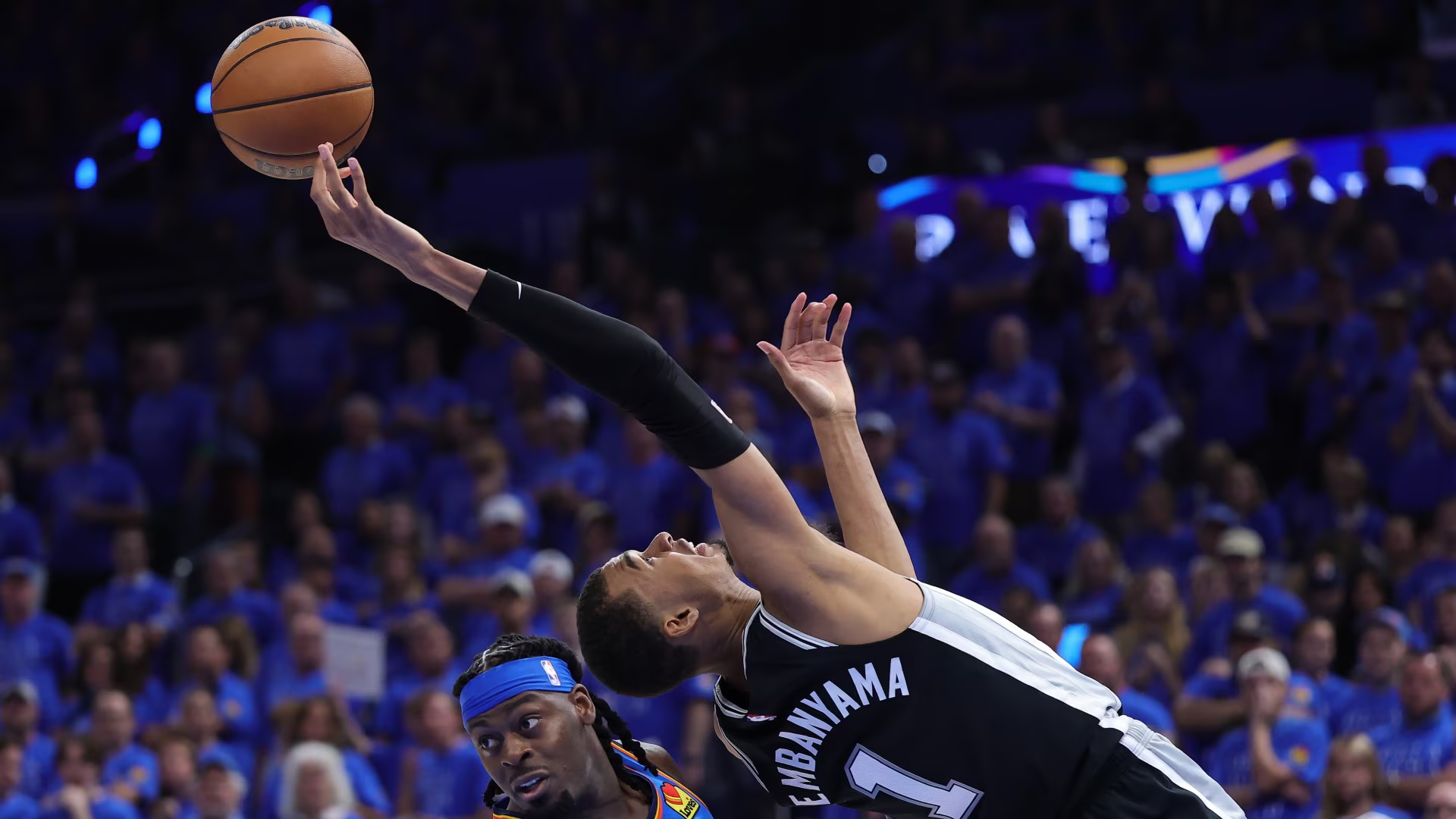
The Dylan Harper Record: Analyzing the 7-Steal Defensive Anatomy
Dylan Harper’s 7 steals were not Gambler’s Luck; they were the result of "Matchup Hunting" in reverse. The Spurs used Harper as a "Free Safety" to jump OKC’s predictable pocket passes.
Metric
Dylan Harper (2OT)
Shai Gilgeous-Alexander (2OT)
Steals
7 (Spurs Playoff Record)
2
Deflection Rate
12.0
4.0
Turnovers Forced
9
2
Points off TOs
14
4
Why Harper’s Defense Won 2OT:
With Wembanyama resting to start the second overtime, Harper switched to a "Full-Front" defense on Shai Gilgeous-Alexander. By denying the initial catch, Harper forced OKC’s secondary playmakers (Lu Dort and Josh Giddey) to initiate the offense. This led to three consecutive turnovers in a 90-second span, fueling a 10-0 Spurs run that sealed the game.
Coaching Failure: Why didn't OKC adjust to the Spurs' Zone?
The Thunder’s late-game stagnation was a failure of rotation trust. Mark Daigneault leaned into "Star-Ball," which played directly into San Antonio's defensive scheme.
The Over-Reliance on Isolation: OKC ran 24 isolation plays in the 4th quarter and OTs combined. They averaged a dismal 0.72 points per possession (PPP) on those plays.
The Chet Holmgren Misuse: Despite Wembanyama’s fatigue, OKC failed to run 5-out sets to pull Victor away from the hoop. By keeping Holmgren in the dunker spot, they allowed Wembanyama to remain a stationary rim-protector.
The Fatigue Factor: Shai Gilgeous-Alexander played 51 minutes. His late-game "Short-Arm" misses on mid-range jumpers suggest that the Spurs' physical perimeter pressure successfully drained his legs before the final overtime.
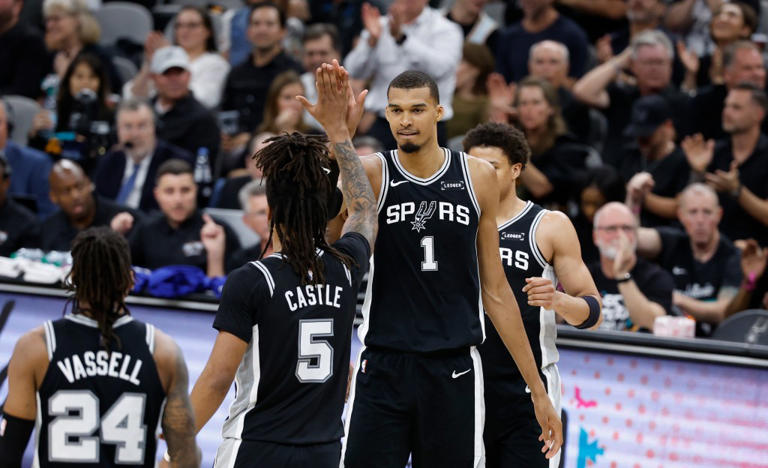
The "Math Problem" for Game 2: Can OKC rebound?
For the Thunder to tie the series, they must solve the Efficiency Gap. In Game 1, the Spurs took 15 more shots in the "Restricted Area" than the Thunder.
The Betting Angle: Expect the Under on OKC’s total points if San Antonio continues to limit transition. The Spurs have found a way to turn a high-octane series into a half-court wrestling match.
Fantasy Watch: Dylan Harper is no longer a "rookie flyer." His high deflection rate makes him a top-tier DFS play for Game 2, as the Spurs will continue to use him as the Point-of-Attack disruptor.
Playoff Implications: Road teams that win Game 1 of the WCF go on to win the series 72% of the time. The Thunder are no longer fighting for a title; they are fighting for their identity.
Final Takeaway: The "Arrival" is Systemic
The media will highlight Wembanyama’s stats, but the strategic reality is that San Antonio has built a Defensive Paradox: they have the league's tallest rim protector and its most aggressive perimeter ball-hawk. Oklahoma City’s 64-win system was built to beat teams with one or the other. They haven't yet shown they can beat both.