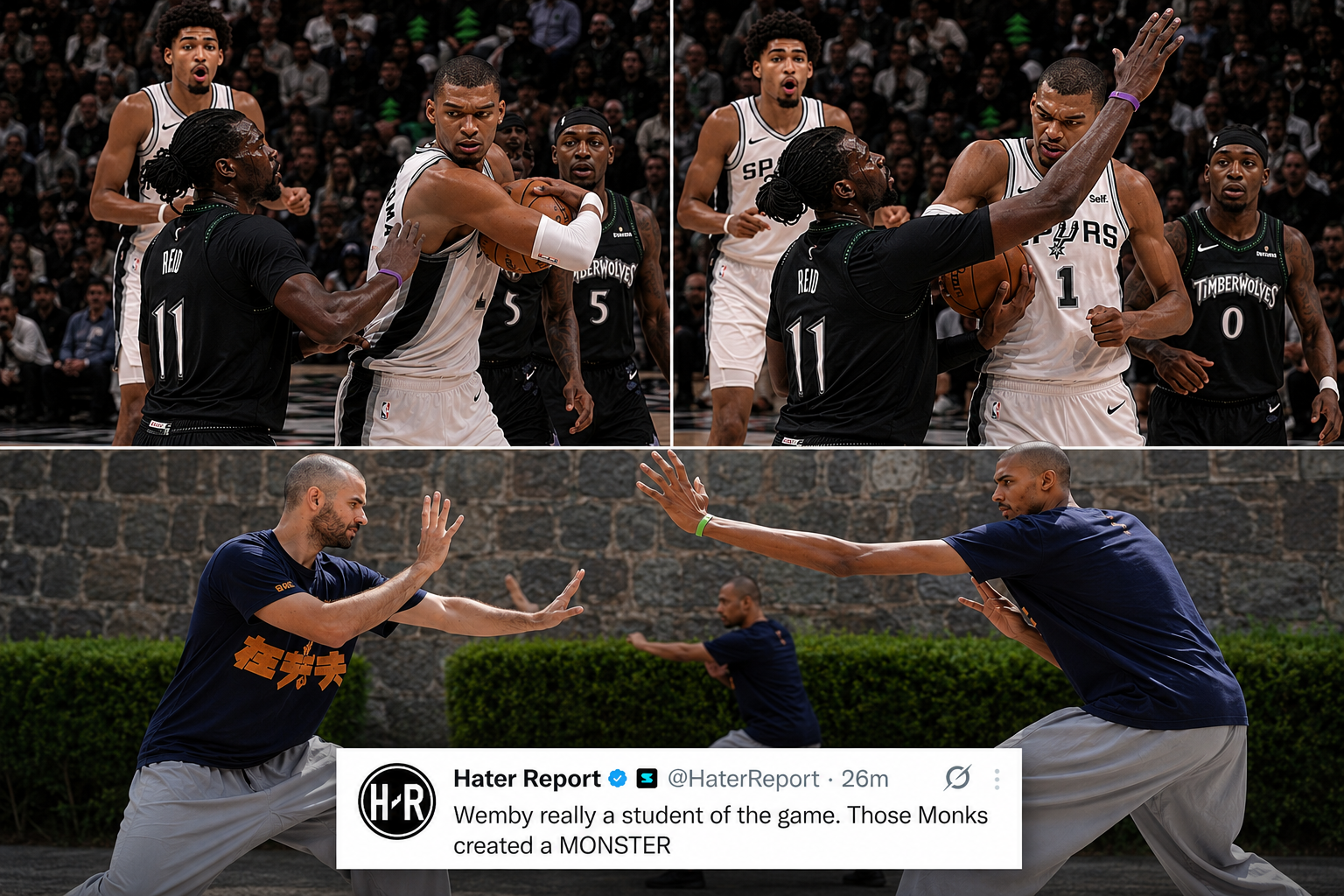
Victor Wembanyama Ejected: Why the Spurs Star Was Tossed and How it Flipped Game 4
The Minnesota Timberwolves baited Victor Wembanyama into a Flagrant 2 ejection at the 8:39 mark of the second quarter, fueling a 114-109 comeback victory that tied the Western Conference Semifinals at 2-2.
By utilizing a high-leverage physical swarm led by Naz Reid and Jaden McDaniels, Minnesota forced a composure lapse in the Spurs' star, effectively neutralizing San Antonio’s rim protection and allowing Anthony Edwards to dominate the paint for a 36-point performance.
The ejection of Wembanyama, his first in the NBA, represents a massive shift in the series' tactical landscape. Entering the game with a 2-1 lead, San Antonio appeared poised to take control.
Instead, the loss of Wembanyama’s 7'4" defensive gravity exposed a lack of frontcourt depth and a fragility in the Spurs' half-court execution. For bettors and analysts, the game serves as a data point on how physical "denial defense" can disrupt high-usage young stars in a playoff environment.
Why was Victor Wembanyama ejected against the Timberwolves?
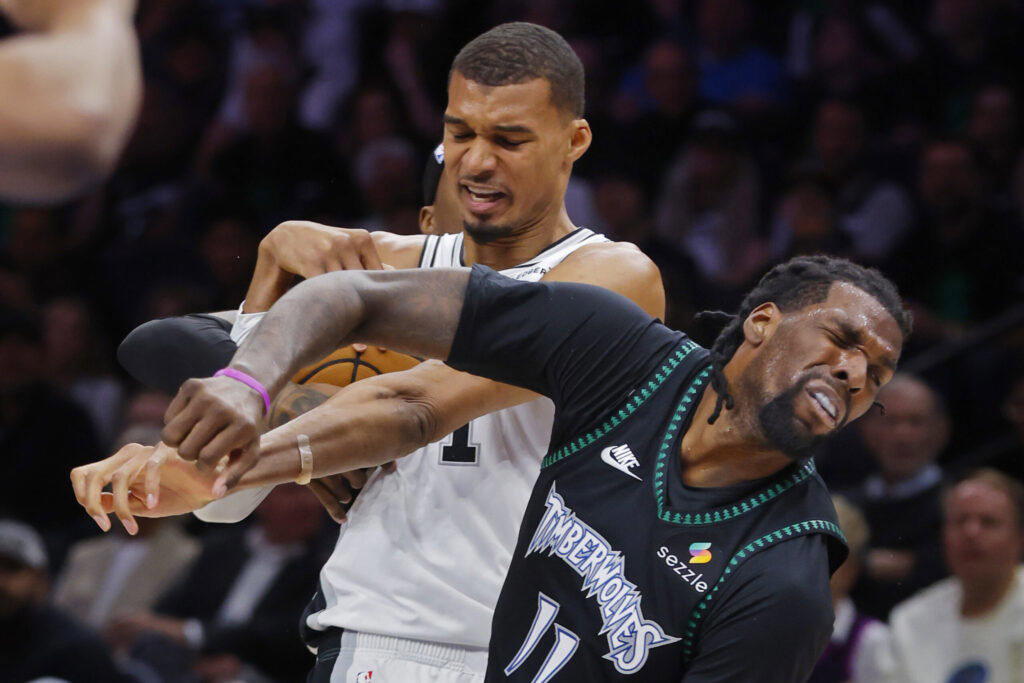
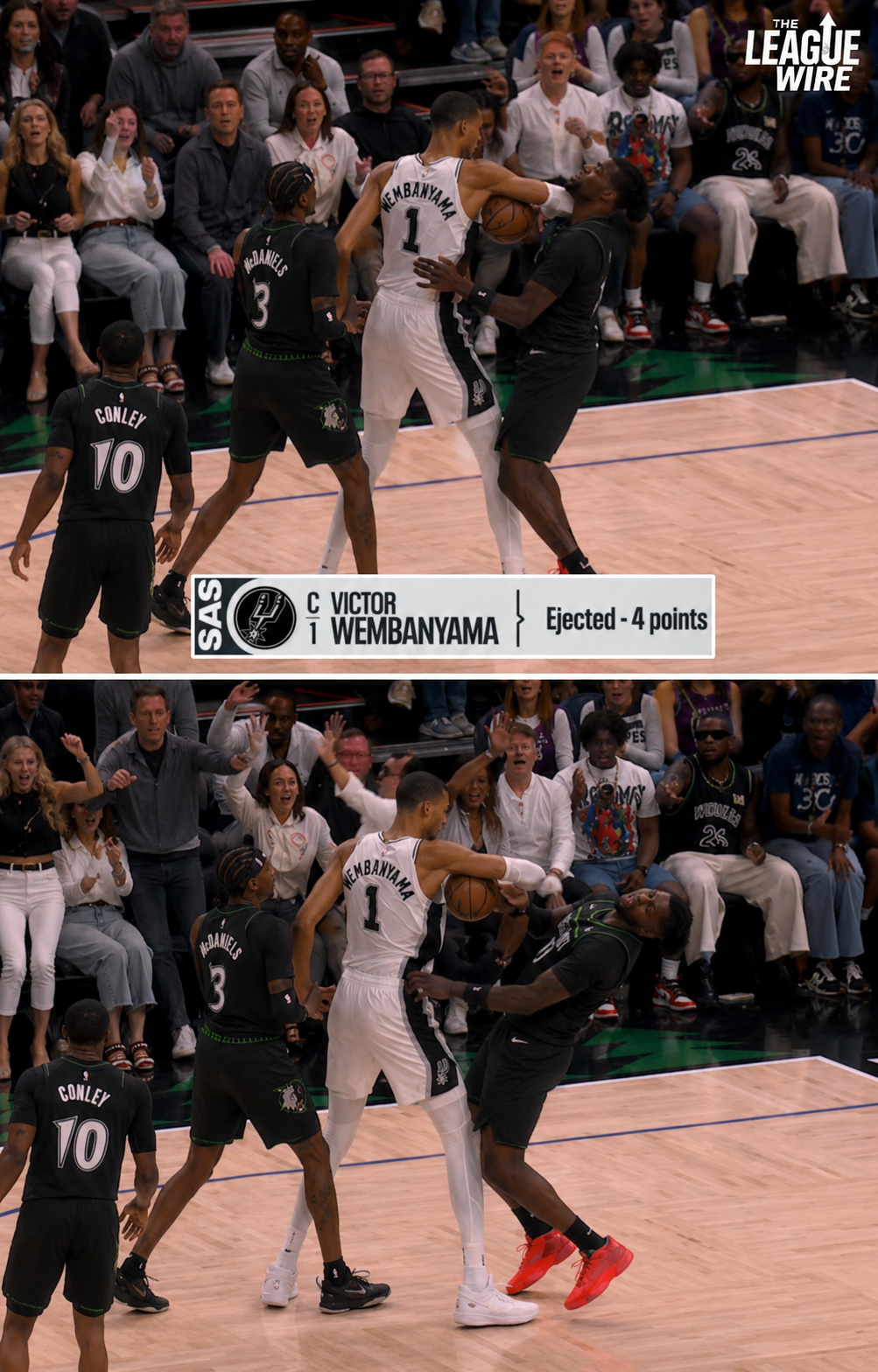
Victor Wembanyama was ejected because he struck Naz Reid in the neck and throat area with a high elbow during a dead-ball rebounding scrum. Under NBA Rule No. 12, Section IV, any contact above the shoulders that is deemed "unnecessary and excessive" results in an automatic Flagrant 2 foul and immediate ejection.
The Tactical Provocation Behind the Foul
The elbow was the result of a deliberate "irritant" strategy employed by Minnesota head coach Chris Finch:
The "Jersey Tug" Sequence: Replay footage showed Jaden McDaniels pulling Wembanyama’s jersey during the jump, preventing a clean lift.
Off-Ball Physicality: In the three possessions leading up to the ejection, Wembanyama was subjected to two uncalled hip-checks and a "sandwich" box-out by Naz Reid and Rudy Gobert.
The Breaking Point: Wembanyama’s "wind-up and follow-through" was a reactive attempt to clear space, but the height differential meant his elbow landed at Reid’s throat level rather than the chest.
How did the ejection change the game’s statistical profile?
The ejection triggered an immediate 16-4 Minnesota run over a 4:46 span that flipped a Spurs lead into a Timberwolves advantage they would never fully relinquish.
Defensive Rating (DRtg) Collapse
With Wembanyama on the floor, the Spurs maintained a 102.5 DRtg, holding Minnesota to contested mid-range looks. Post-ejection, the Spurs' DRtg ballooned to 121.8, as San Antonio lacked a vertical threat to alter shots at the apex.
Paint Dominance Shift
Pre-Ejection: Minnesota shot 42% in the restricted area.
Post-Ejection: Minnesota shot 68% in the restricted area.
The "Ant-Man" Factor: Anthony Edwards recorded 22 of his 36 points in the paint or at the free-throw line, specifically targeting Zach Collins in high-screen-and-roll actions.
Why did the Spurs’ bench fail to maintain the lead?
Despite shooting 50% from the field in the first half, the Spurs’ offense became "process-poor" without Wembanyama’s gravity.
Loss of Spacing: Wembanyama’s ability to pull Rudy Gobert out of the paint disappeared. Gobert was able to "park" in the lane, forcing Spurs guards into low-efficiency floaters and contested pull-ups.
The Zach Collins Mismatch: Collins, while a capable backup, lacked the lateral quickness to execute "Show and Recover" defense against Anthony Edwards. Edwards exploited this 14 times in the second half, resulting in 18 points directly off those switches.
Turnover Margin: San Antonio committed 9 turnovers in the second half alone, leading to 13 Minnesota points. Without a primary "safety valve" in Wembanyama, the Spurs' ball-handlers struggled against Minnesota’s "full-court press" looks.
Will Victor Wembanyama be suspended for Game 5?
Based on NBA precedent for Flagrant 2 fouls involving "unnatural basketball motions," a suspension for Game 5 is unlikely but a significant fine is certain.
The league office typically reserves suspensions for "non-basketball acts" (punches or kicks). Because Wembanyama’s strike occurred during a rebounding motion, the league is expected to uphold the ejection as sufficient punishment. However, if the NBA determines there was "malicious intent" during the post-game review, the Spurs could face a catastrophic Game 5 without their franchise player.
What are the playoff implications for the remainder of the series?
The series is now a "Best of 3" with Game 5 shifting back to San Antonio. The data from Game 4 suggests three critical trends:
The Physicality Blueprint: Minnesota has proven that "borderline fouls" and high-leverage bumping can rattle Wembanyama. Expect the Timberwolves to double-down on this in Game 5.
Edwards’ Efficiency: Anthony Edwards has found his rhythm. His 36-point performance was his most efficient of the series (62.4% True Shooting), suggesting he has solved the Spurs' perimeter containment.
Spurs' Composure Test: The Spurs are the youngest team in the remaining playoff field. Their ability to respond to "dirty" play without retaliating will determine if they can reclaim the series lead.
What to Watch Next:
Adjustment: Look for Gregg Popovich to implement "Early Seal" post-ups for Wembanyama in Game 5 to get him easy buckets before the Minnesota swarm can arrive.
Officiating: The Game 5 officiating crew will be under intense scrutiny. A "tight whistle" early in the game will favor the Spurs; a "loose whistle" favors Minnesota’s physical frontcourt.
The Final Conclusion:
Game 4 wasn't won by a better basketball strategy; it was won by a superior psychological one. Minnesota successfully "removed the king from the board," and San Antonio’s secondary pieces weren't ready for the spotlight. Game 5 will be a definitive test of Wembanyama’s maturity and the Spurs’ structural resilience.