What happened in the Spurs vs Timberwolves Game 2?
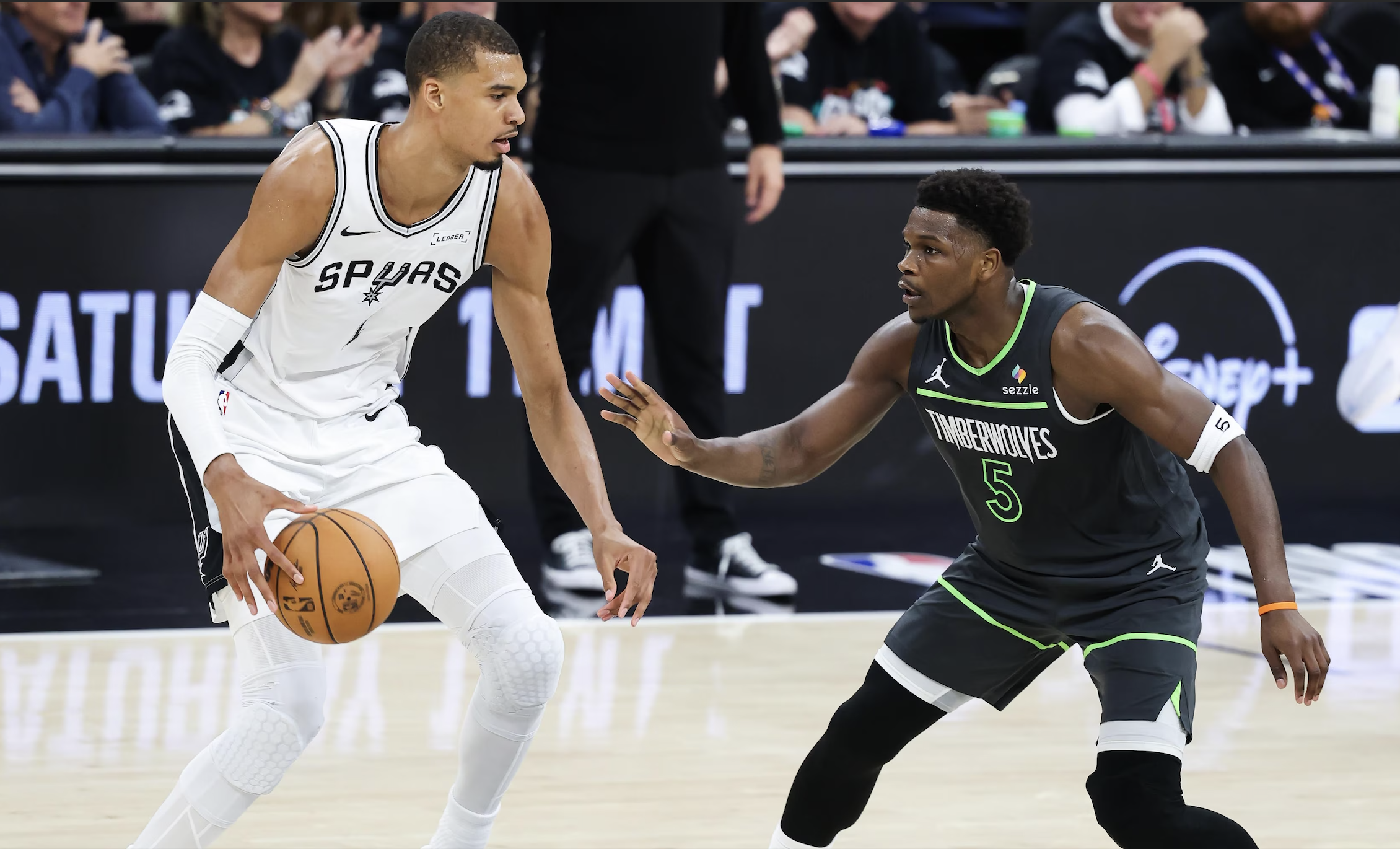
The San Antonio Spurs defeated the Minnesota Timberwolves 133-95 in Game 2 of the Western Conference Semifinals, evening the series at 1-1.
This 38-point margin stands as the largest postseason victory in Spurs' history since 1983 and represents the worst playoff loss in Timberwolves' franchise history. The result shifts home-court momentum back toward San Antonio and forces a complete re-evaluation of Minnesota’s defensive scheme.
Key Game Stats at a Glance:
Final Score: Spurs 133, Timberwolves 95
Peak Lead: 47 points
Spurs Shooting: 48% FG / 41% 3PT
Rebounding Margin: Spurs +14
Turnover Points: San Antonio 22, Minnesota 9
Why did the San Antonio Spurs dominate Game 2?
The Spurs won because they successfully increased the game’s pace to neutralize Minnesota’s half-court defensive sets. By pushing the transition game, San Antonio prevented the Timberwolves from established their "Twin Towers" rim protection, resulting in a significantly higher offensive rating compared to Game 1.
San Antonio’s coaching staff prioritized ball movement over isolation. They recorded 31 assists on 49 made field goals, a metric that highlights their ability to exploit Minnesota’s late defensive rotations. This strategy forced Minnesota’s bigs to defend on the perimeter, creating wide-open lanes for Stephon Castle and De'Aaron Fox to attack the basket. Consequently, the Spurs’ effective Field Goal percentage (eFG%) spiked to 56.4%, an unsustainable number for a defense as highly rated as Minnesota’s.
How did Victor Wembanyama and Stephon Castle impact the blowout?
Victor Wembanyama dominated the interior by recording 19 points and 15 rebounds. His presence functioned as a defensive deterrent; Minnesota’s players shot only 32% in the paint when Wembanyama was the primary defender. This interior gravity allowed the Spurs to stay home on shooters, limiting Minnesota’s kick-out opportunities.
Stephon Castle provided the offensive spark with a team-high 21 points. Castle attacked the rim early, forcing Anthony Edwards into early foul trouble and disrupting Minnesota's backcourt rhythm. By shooting 8-of-12 from the floor, Castle proved that San Antonio’s secondary scoring is potent enough to punish teams that over-index on Wembanyama. This player performancesuggests that Castle’s development as a downhill threat is a critical factor in the Spurs’ championship ceiling.
What went wrong for Anthony Edwards and the Timberwolves?
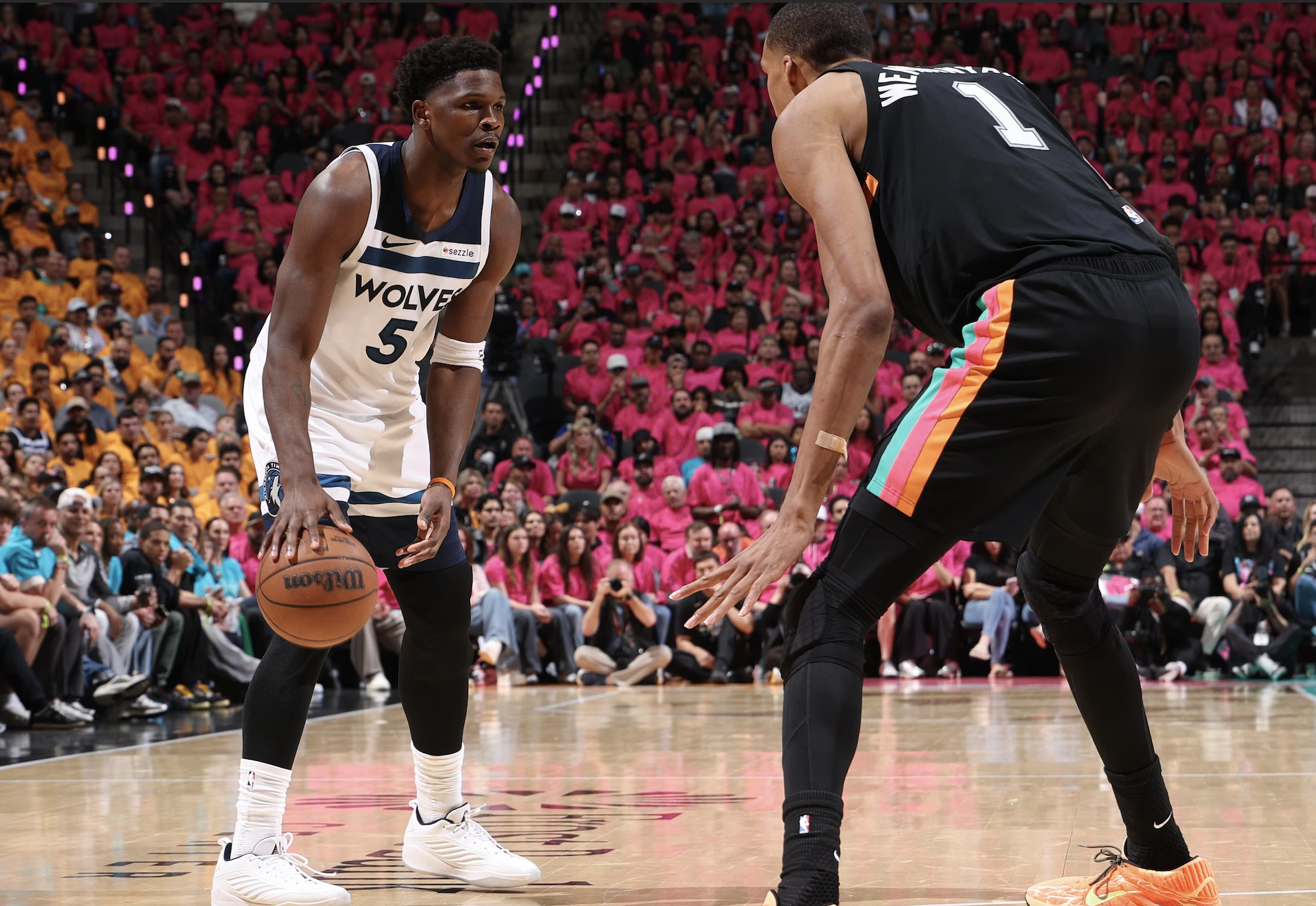
The Timberwolves lost because their primary offensive engine, Anthony Edwards, was held to just 12 points. San Antonio utilized a "box-and-one" variation and heavy blitzing on screens to force the ball out of Edwards' hands. This forced Minnesota’s role players to become playmakers, a role they struggled to fill as they committed 17 turnovers.
Minnesota’s defensive rating collapsed under the pressure of San Antonio's 47-point peak lead. The Wolves failed to contest corner threes, allowing the Spurs to shoot 41% from beyond the arc. Furthermore, Minnesota’s lack of bench production meant the starters had no reprieve during San Antonio’s 16-2 second-quarter run. If Minnesota cannot improve their True Shooting percentage (TS%), which hovered at a dismal 42% in this contest, they risk losing the series in five games.
What are the tactical implications for the Western Conference Semifinals?
The Spurs blowout wolves by 38 exposes a major flaw in Minnesota’s roster: a lack of foot speed against high-pace offenses. San Antonio’s ability to turn defensive rebounds into immediate transition points (24 fast-break points) suggests that Minnesota’s transition defense is their "Achilles' heel."
For San Antonio, this win validates their small-ball lineups featuring De'Aaron Fox and Stephon Castle. These lineups generated a pace factor of 104.5, which is significantly higher than the league average. This tactical evolution forces Minnesota to decide between staying big to rebound or going small to match San Antonio’s speed. In the playoff standings, this game serves as a psychological reset, stripping Minnesota of the "invincible" aura they built during the regular season.
Is the Spurs’ offensive efficiency sustainable?
While a 38-point margin often involves an element of statistical variance, the Spurs’ shot quality data suggests their performance was not a fluke. They generated 22 "wide-open" looks (defined by the nearest defender being 6+ feet away), a result of elite screen-setting and drive-and-kick execution.

However, fans should monitor the Spurs' 41% three-point shooting. While the Spurs are a capable shooting team, repeating that efficiency on the road in Minnesota will be difficult. The deeper takeaway is not the shooting itself, but the points per possession San Antonio generated by simply playing faster. Even if the shooting cools down, the Spurs’ ability to create high-percentage looks in transition remains a sustainable advantage.
Conclusion: What should fans watch for in Game 3?
The primary narrative heading into Game 3 is Minnesota’s mental resilience. Losing by 38 points in the postseason can either fracture a team’s chemistry or serve as a wake-up call for defensive intensity.
What to watch for:
Minnesota’s Adjustment: Expect the Wolves to drop their bigs deeper in the paint to prevent Castle’s rim runs.
De'Aaron Fox’s Usage: If Fox continues to dictate the pace, Minnesota will struggle to keep up.
The First 6 Minutes: In blowouts of this magnitude, the start of the next game usually determines if the losing team has "quit" or recalibrated.
If you look at the NBA stats, the Spurs have all the momentum. However, the NBA playoffs are defined by zig-zag adjustments. Minnesota must find a way to slow the game down, or they will find themselves on the brink of elimination against a San Antonio team that has finally found its rhythm.