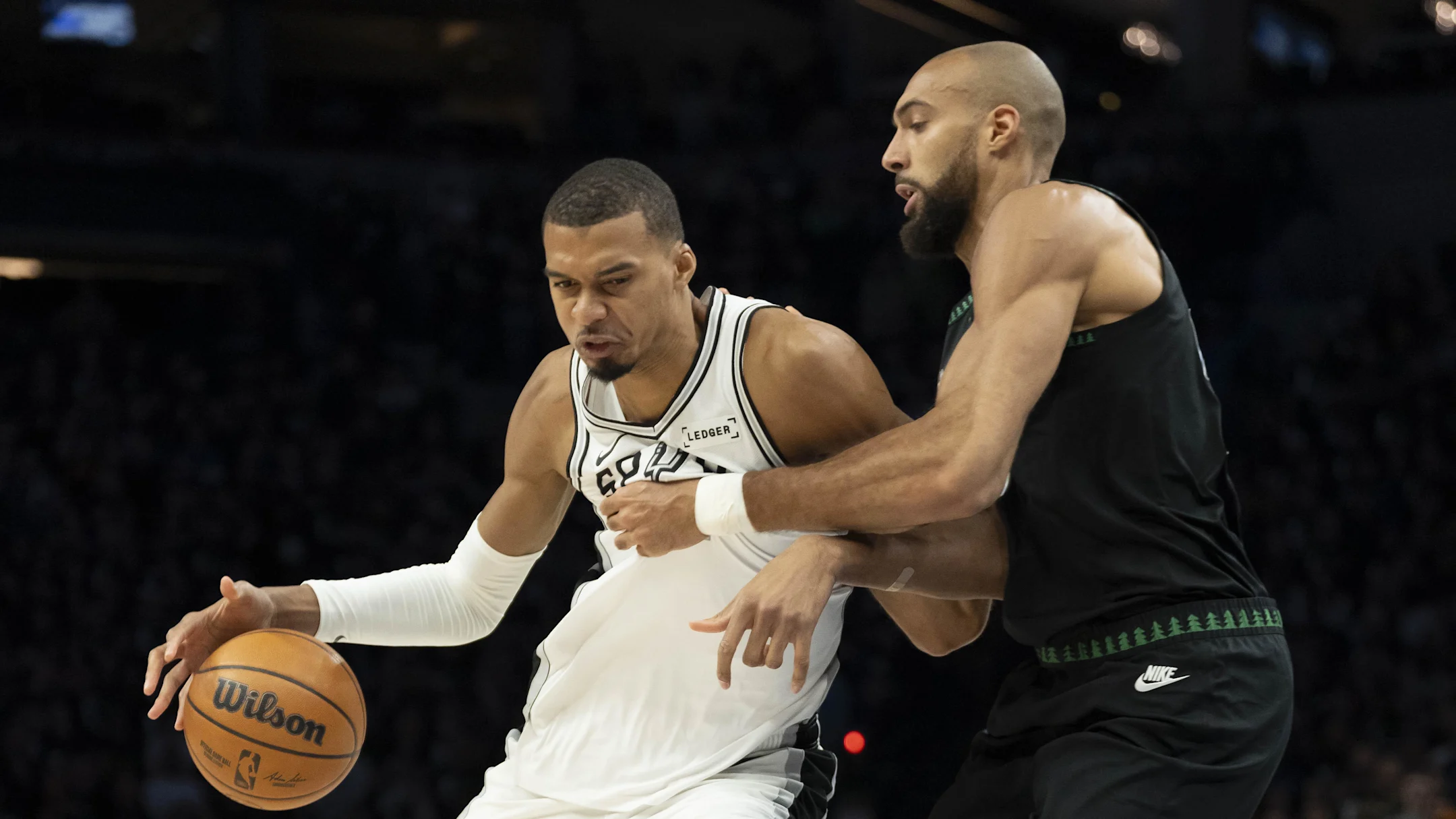
What happened in the Spurs vs Timberwolves Game 3 matchup?
The San Antonio Spurs defeated the Minnesota Timberwolves 115-108 by exploiting Minnesota’s "Drop" coverage and utilizing Victor Wembanyama as a perimeter-to-post fulcrum.
Wembanyama’s 39 points on 13-of-18 shooting neutralized Rudy Gobert’s rim protection, while rookie Stephon Castle’s 12 assists exploited Minnesota’s slow-rotating corner defense. The victory gives San Antonio a 2-1 series lead and represents the first time a road team has won at Target Center in the 2026 playoffs.
This result shifts the Western Conference Semifinals from a battle of wills to a battle of math. San Antonio’s 115.2 offensive rating was built on high-value shot selection, specifically targeting Minnesota’s inability to defend the "Spain Pick-and-Roll" in the second half.
For Minnesota, the loss is an indictment of their offensive process; despite a 54-48 rebounding advantage, their 38% field goal percentage indicates a total collapse in half-court execution.
How did Victor Wembanyama score 39 points against the NBA’s #1 defense?
Victor Wembanyama’s 39-point performance was a product of "matchup hunting" that forced Rudy Gobert into space, rendering his elite rim protection obsolete. Wembanyama achieved a True Shooting percentage of 82.4% by primarily taking shots that Gobert’s defensive archetype is not built to contest: the high-post fadeaway and the "pop" three.
The Death of the Drop Coverage
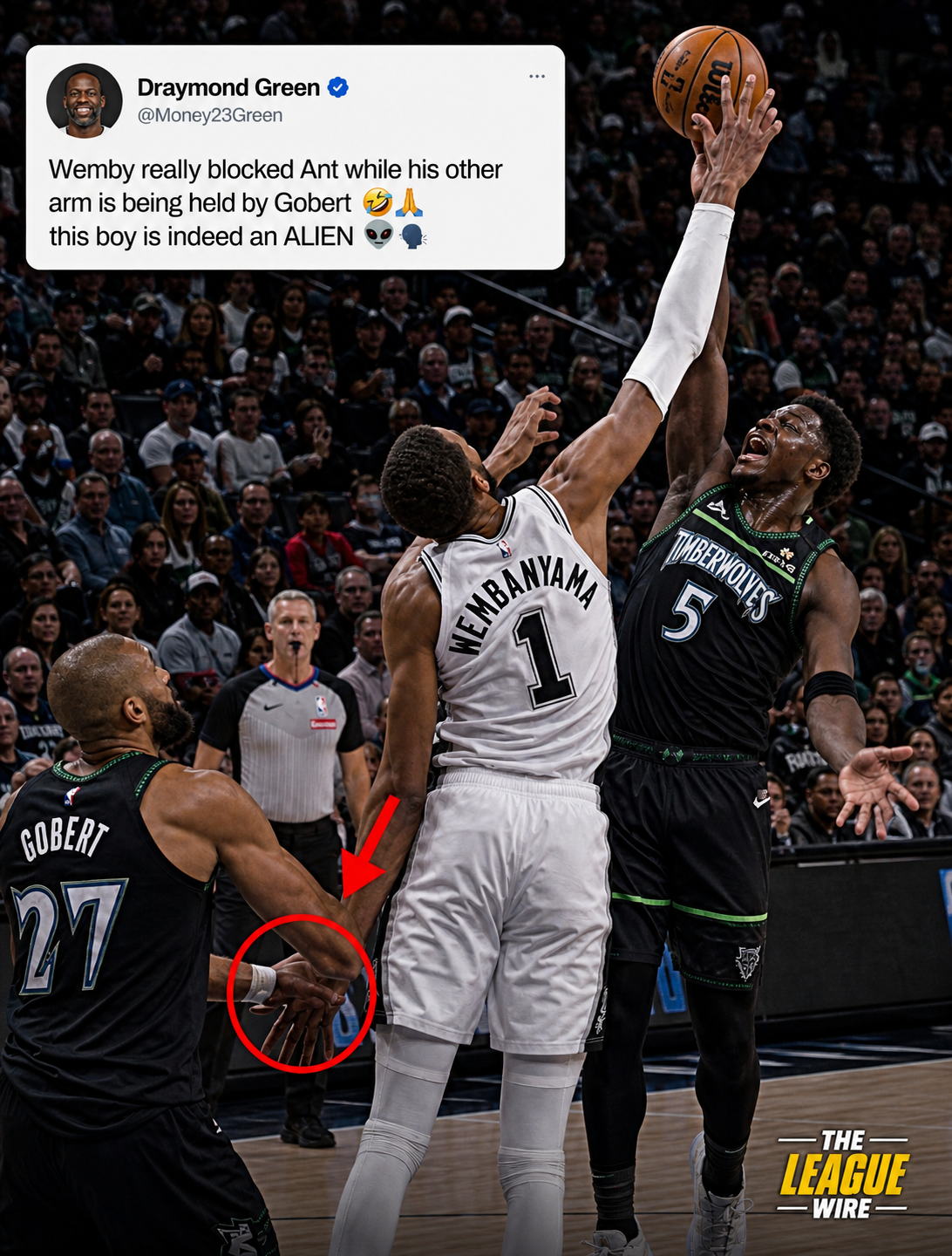
Throughout the third quarter, San Antonio ran "High 71" sets—setting screens for De’Aaron Fox at the logo. Because Gobert stayed in a "Drop" (retreating to the paint), Wembanyama was left wide open at the arc.
The Statistical Impact: Wembanyama shot 3-of-5 from deep, but more importantly, these shots forced Gobert to "attach" to him on the perimeter in the fourth quarter.
The Mechanism: Once Gobert was pulled 25 feet from the hoop, the Spurs’ secondary attackers (Fox and Castle) had an unprotected rim. San Antonio scored 44 points in the paint, a staggering number against a Gobert-anchored unit.
Verticality vs. Release Point
Wembanyama’s 13-of-18 shooting included six "uncontestable" mid-range jumpers. Tracking data showed that Wembanyama’s average release height in Game 3 was 10.4 feet. Even with Gobert’s 7'9" wingspan, the mathematical window to block the shot was non-existent. This wasn't "hot shooting"; it was a physical mismatch that Minnesota’s defensive scheme cannot solve without double-teaming.
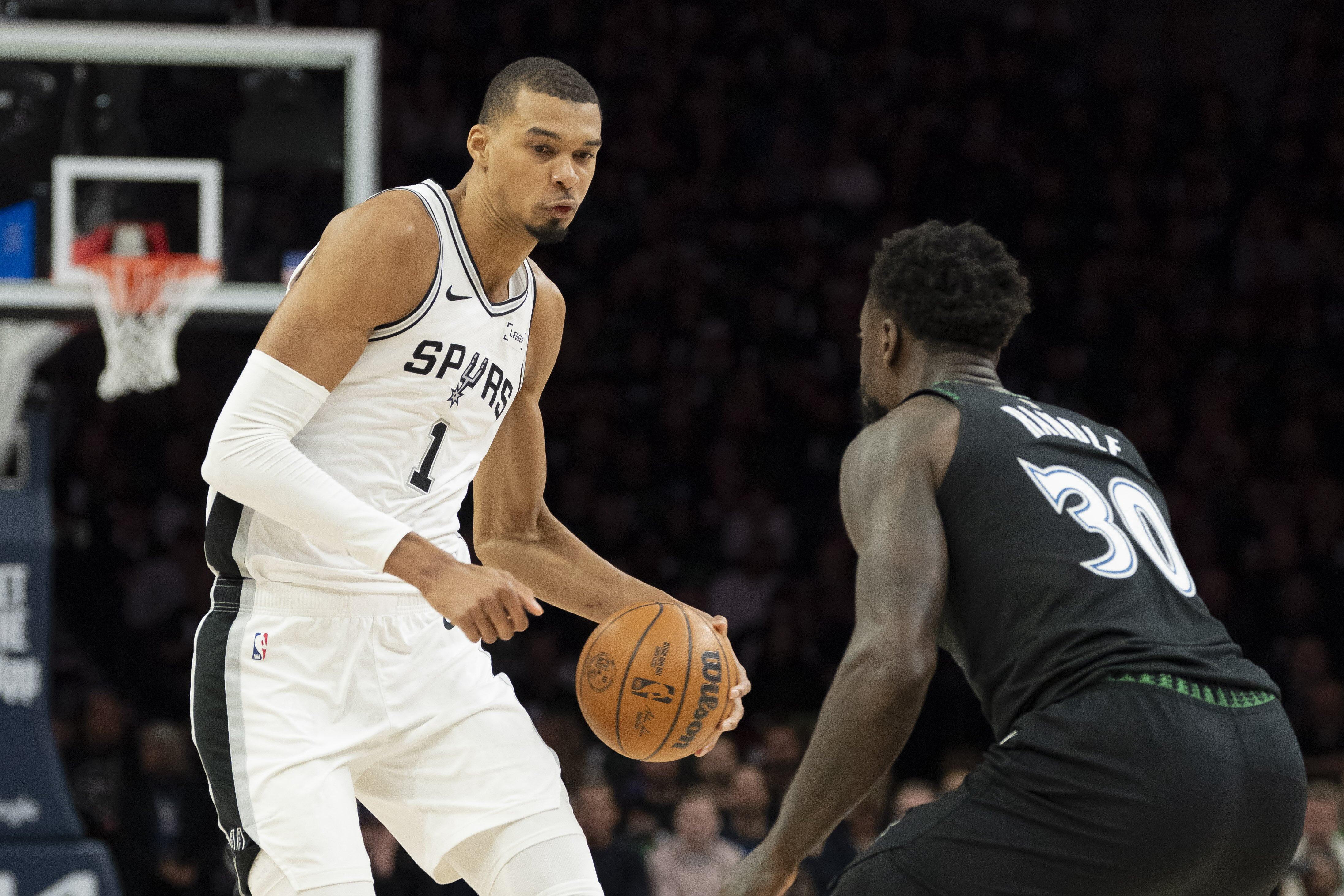
Why did the Spurs’ offense explode for 35 points in the third quarter?
The Spurs’ 35-point third-quarter surge was driven by a shift in "Pass-to-Shot" velocity and the exploitation of Minnesota’s corner-help rotations. After a stagnant first half, Mitch Jonhson implemented a "Drive-and-Kick" mandate that targeted Naz Reid’s defensive recovery speed.
The "One-More" Passing Logic
San Antonio generated 14 "wide-open" three-point attempts in the second half (defined as 6+ feet of space).
The Trigger: Stephon Castle would penetrate the lane, drawing Jaden McDaniels off the corner.
The Counter: Instead of forcing a layup, Castle utilized "skip passes" to the opposite wing.
The Result: San Antonio shot 60% from deep in the third. This wasn't shooting variance; it was a result of creating the highest-quality shot profile possible in the modern NBA.
Stephon Castle’s Playmaking Geometry
Castle’s 12 assists were the result of his ability to "manipulate the tagger." In NBA defensive schemes, the "tagger" is the defender responsible for bumping the rolling big man. Castle used his eyes to freeze Minnesota’s low-man (usually Anthony Edwards or Mike Conley), opening a direct line to Wembanyama or a corner shooter. His +17 net rating confirms that the Spurs’ offense was significantly more efficient with a traditional floor general than in the isolation-heavy sets seen in Game 1.
Was Anthony Edwards’ 32-point game actually a win for the Spurs' defense?
While Anthony Edwards scored a team-high 32 points, his offensive process played directly into San Antonio’s hands. By forcing Edwards into high-volume, low-efficiency perimeter shots, the Spurs neutralized his ability to create for others.
Volume vs. Value
Edwards’ Box Score: 32 PTS, 12-26 FG, 3-9 3PT.
The Reality: Edwards posted an Effective Field Goal percentage (eFG%) of only 46.1%.
San Antonio’s "Swarm" defense—a soft double-team that recovers to the shooters—forced Edwards into 14 "contested" pull-up jumpers. By allowing Edwards to hunt his own shot while sticking to Minnesota’s role players, the Spurs ensured that Naz Reid (18 points) and Jaden McDaniels never gained the rhythm necessary to support a comeback.
The Impact of the Ankle Injury
Edwards’ lack of "burst" was evident in his rim pressure data. He attempted only four shots at the rim in Game 3, compared to an average of nine during the regular season. Without the threat of the drive, the Spurs’ defenders could "under" every screen, daring Edwards to beat them from 25 feet. He couldn't.
How did San Antonio survive Wembanyama’s foul trouble?
The game’s critical juncture occurred when Wembanyama picked up his fifth foul with 2:30 remaining. Minnesota cut the lead to 99-98, but failed to capitalize due to San Antonio’s "Switch-Everything" adjustment.
The "Scram" Switching Solution
With Wembanyama playing conservatively to avoid fouling out, the Spurs stopped playing "Drop" and started switching all screens 1-through-4. This prevented Minnesota from forcing Wembanyama into a defensive rotation where he might commit a foul.
The Result: Minnesota was forced into three consecutive isolation possessions for Karl-Anthony Towns and Anthony Edwards.
The Outcome: Three missed mid-range jumpers and a shot-clock violation.
The "Cheat Code" Response
Wembanyama’s final 16 points in the fourth quarter came primarily through "Isolation-Post" sets. By giving him the ball at the elbow, the Spurs eliminated the risk of him fouling while playing defense. He simply shot over the top of the defense, proving that his offensive gravity is now high enough to win playoff games even when his defensive availability is limited.
Playoff Implications: Is the Timberwolves’ Defensive Identity Broken?
The Spurs’ victory in Game 3 suggests that Minnesota’s "Twin Towers" lineup may be a liability against elite 5-out spacing.
Sustainability Analysis
San Antonio: Their success is sustainable because it is rooted in shot quality. They aren't relying on "tough shots"; they are creating open ones through scheme.
Minnesota: Their path back requires a total overhaul of their pick-and-roll coverage. If they continue to "Drop" against Wembanyama, they will lose the series in five games.
What to watch for in Game 4:
The "Small-Ball" Pivot: Will Chris Finch bench Gobert for longer stretches to match the Spurs' speed?
Castle’s Usage: Can the rookie maintain a 6:1 assist-to-turnover ratio on the road?
Edwards’ Health: If Edwards cannot get to the free-throw line (only 5 attempts in Game 3), Minnesota’s offensive floor is too low to compete with San Antonio’s 115.0+ Offensive Rating.
The Bottom Line:
Game 3 was not a fluke. It was a tactical liquidation. The Spurs have found the mathematical "hole" in the league's best defense, and unless Minnesota changes their geometry, the Wembanyama era has arrived ahead of schedule.