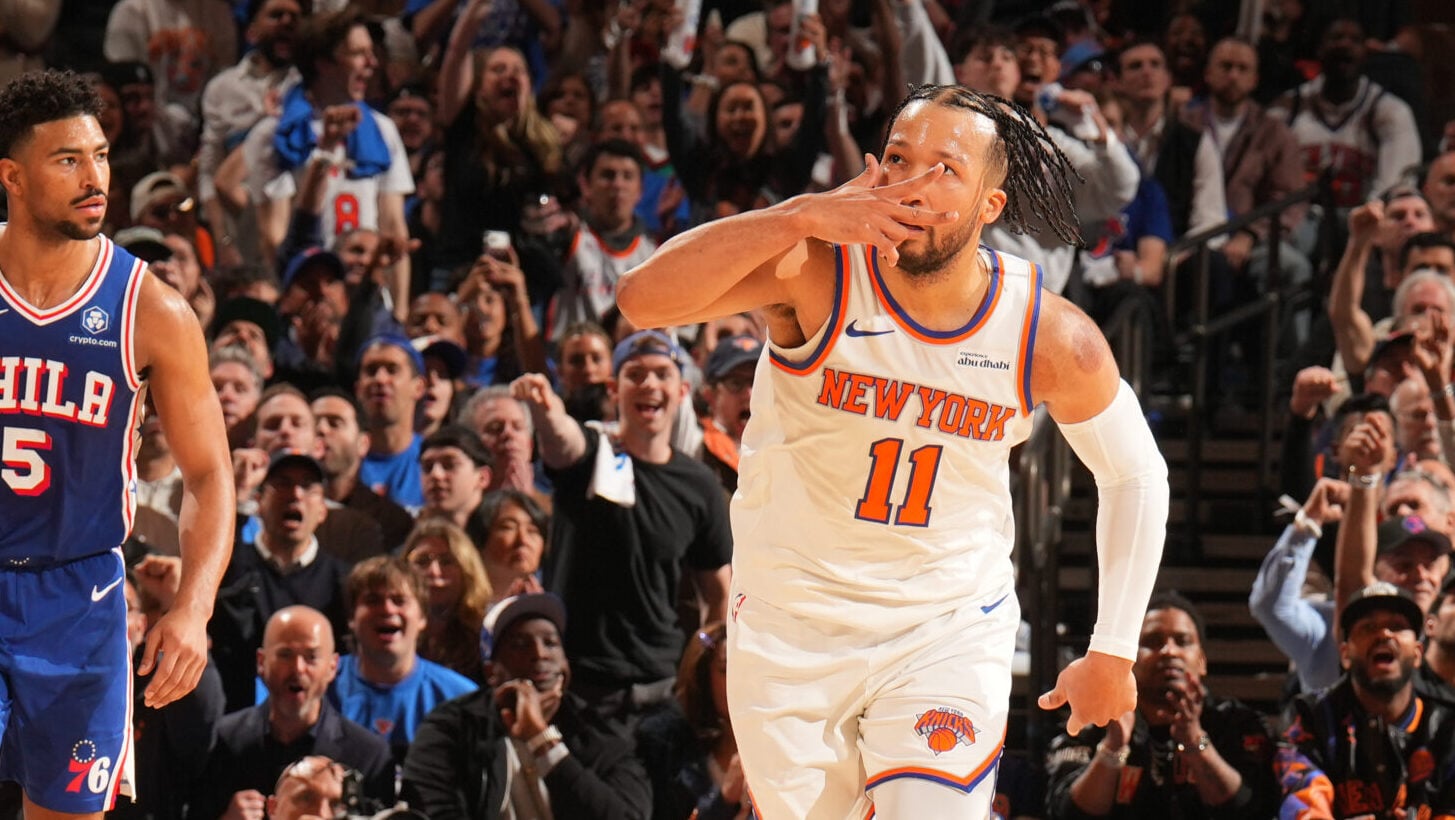
The New York Knicks defeated the Philadelphia 76ers 108-94 by exploiting Joel Embiid’s limited lateral mobility through high-frequency high-screens and dominating the glass to create a +26 paint scoring advantage.
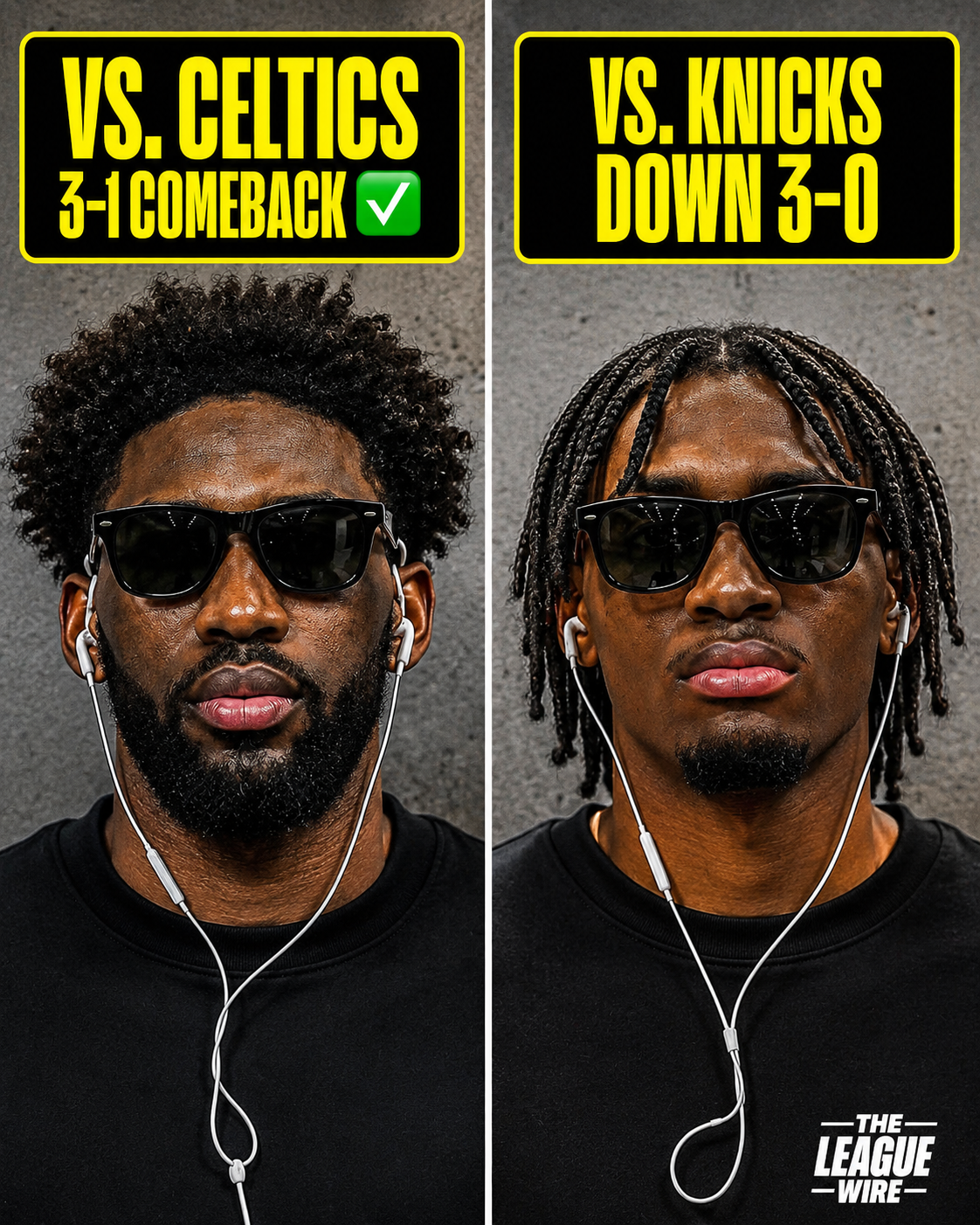
This victory grants New York a 3-0 series lead, a deficit from which no team in NBA history has ever recovered, effectively ending Philadelphia’s 2026 title aspirations.
The win is particularly significant because New York achieved it without OG Anunoby, their primary defensive stopper. By shifting to a scheme that prioritized rim deterrence via Mitchell Robinson (+16 net rating) and late-clock isolation efficiency from Jalen Brunson (33 points), Tom Thibodeau outmaneuvered Nick Nurse in the half-court.
For Philadelphia, the loss exposes a fatal reliance on a compromised Joel Embiid and a lack of secondary rim protection that has haunted the 76ers through out the series.
How did the Knicks shoot 59% in the final 7 seconds of the shot clock?
The Knicks’ elite late-clock efficiency was the result of deliberate mismatch hunting, specifically targeting Tyrese Maxey and an immobile Joel Embiid in high pick-and-roll actions.
When the 76ers’ initial defensive shell held, Jalen Brunson utilized "snaking" dribble paths to keep defenders on his hip, forcing Embiid to decide between stepping up or conceding the mid-range. Because Embiid’s hip and ankle injuries limited his "closing speed," Brunson and Mikal Bridges found uncontested windows in the "short-mid" area.
The Tactical Mechanism: New York ran "Empty Corner" sets, clearing the weak side to prevent Philly’s "Low Man" from helping on Brunson’s drives.
The Statistical Result: New York went 13-22 on possessions ending with under 7 seconds on the clock.
The Sustainability Reality: While 59% shooting is an outlier, the Shot Quality (qSQ) was high because Philly’s "scram rotations" (switching a small back onto a big) were consistently late, leading to high-percentage looks rather than contested heaves.
Why did Philadelphia lose the paint battle by 26 points despite Embiid’s return?
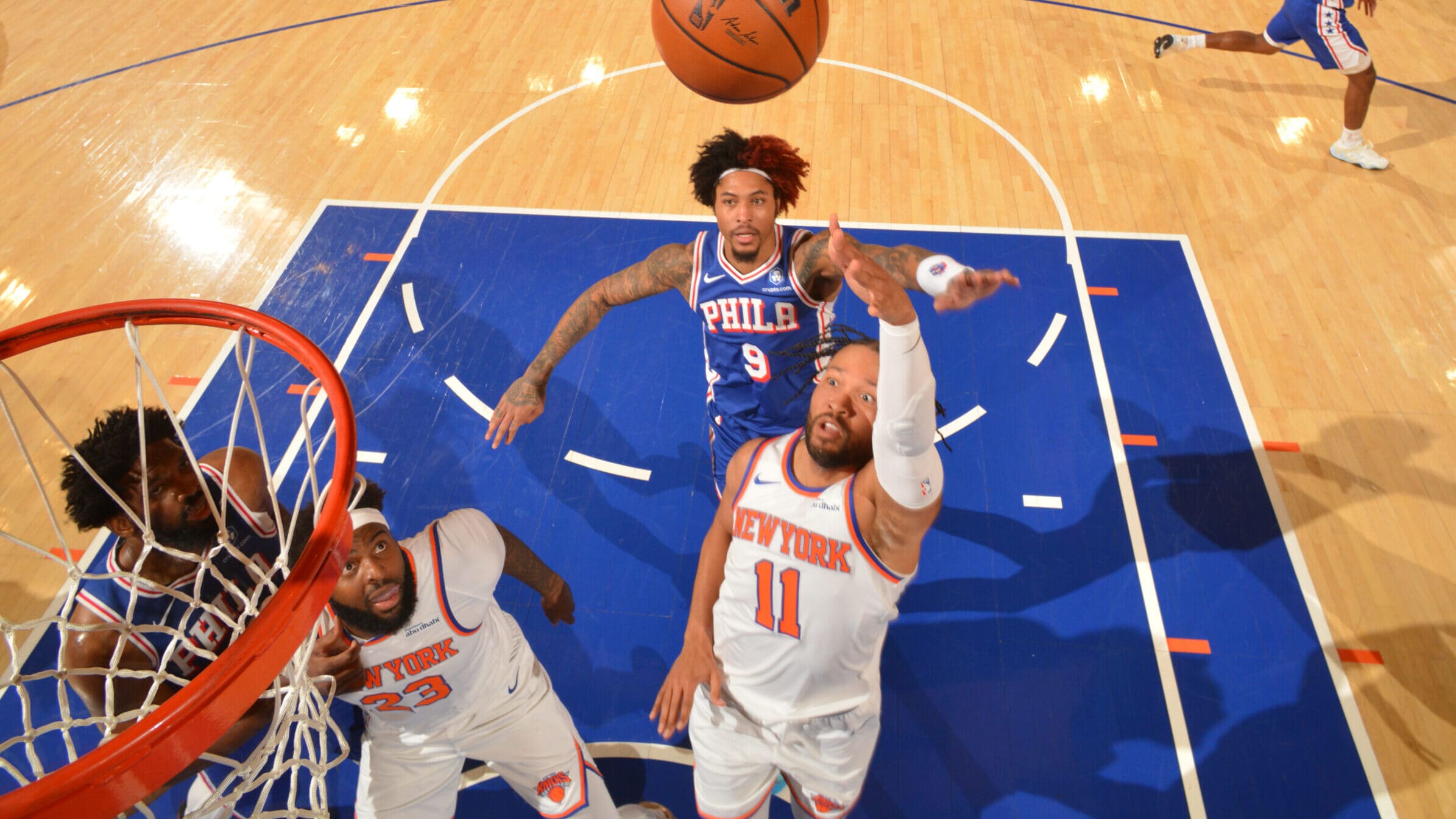
Philadelphia lost the interior battle 56-30 because their defensive scheme failed to account for the Knicks' offensive rebounding gravity and Joel Embiid’s inability to "verticalize" at the rim.
While Embiid provided a nominal presence, his 35 minutes of play were characterized by a lack of "second-jump" capability. The Knicks leveraged Karl-Anthony Towns as a "stretch" threat, pulling Embiid 25 feet from the hoop. This vacated the restricted area for Josh Hart and Mitchell Robinson to punish Philadelphia on the glass.
Mitchell Robinson’s Impact: In just 19 minutes, Robinson’s presence led to a +16 net rating. His ability to anchor the "Drop" coverage allowed New York’s perimeter defenders to stay home on Philly’s shooters, forcing the 76ers into 32 three-point attempts (of which they made only nine).
The Transition Gap: New York turned Philadelphia’s 13 turnovers into immediate "rim runs." Philly’s transition defense—ranked in the bottom quartile this postseason—collapsed as Embiid struggled to retreat downcourt, leading to 18 fast-break points for the Knicks.
Is Joel Embiid’s 18-point performance a result of rust or New York’s defense?
Joel Embiid’s inefficiency (18 points in 35 minutes) was caused by a "Soft Blitz" defensive scheme that forced him to become a playmaker rather than a finisher.
Tom Thibodeau instructed his defenders to "show" early on Embiid’s post-ups, doubling from the baseline to force the ball out of his hands. This strategy exploited Embiid’s post-appendectomy fatigue, as he lacked the explosive first step to split the double teams.
The Maxey Disconnect:
The Knicks effectively "iced" the side pick-and-rolls featuring Tyrese Maxey, forcing him toward the sideline and away from the middle of the floor. By neutralizing Maxey’s paint touches, the Knicks forced Philadelphia into a "stagnant" half-court offense.
Maxey’s inability to find a rhythm meant Embiid was often forced to take "bail-out" jumpers at the end of possessions, leading to a True Shooting percentage (TS%) well below his season average.
What are the coaching adjustments Nick Nurse failed to make?
Nick Nurse failed to adjust to the Knicks’ "Inverted Screens," which consistently put Philadelphia’s smallest defenders in "conflict" actions at the rim.
Failure to "Pre-Switch": Philly allowed the Knicks to dictate matchups, letting Brunson "hunt" Maxey on almost every critical third-quarter possession.
Over-Reliance on Post-Ups: Despite the Knicks' clear success doubling the post, Nurse continued to run sets through a stationary Embiid rather than utilizing him as a "short-roll" playmaker in the 4-on-3 scenarios created by Maxey’s gravity.
Rotation Rigidity: Nurse kept Embiid on the floor for 35 minutes despite visible signs of "gasping" and late-game defensive lapses. The failure to utilize small-ball lineups to increase the pace played directly into the Knicks’ preferred grind-it-out tempo.
What does the 3-0 lead mean for the Knicks’ playoff trajectory?
The Knicks are now statistically locked into an Eastern Conference Finals trajectory, as no NBA team has ever lost a series after leading 3-0.
Sustainability Analysis:
The Anunoby Factor: If OG Anunoby returns for Game 4 or the start of the next round, the Knicks’ defensive ceiling rises significantly. His ability to switch 1-through-5 makes New York the most versatile defensive unit remaining in the East.
The Bridges/Brunson Synergy: The "Nova-Knicks" chemistry has created an offensive floor that is remarkably high. Their low turnover rate (TO%) in high-leverage moments makes them a nightmare matchup for high-variance teams like the Boston Celtics.
The 76ers’ Future:
Philadelphia is facing an offseason of "existential reconstruction." With Embiid’s health a recurring postseason liability and the Maxey/Embiid duo failing to solve New York’s physicality, the 76ers may be forced to look at aggressive roster changes or a shift in their tactical identity under Nurse.
Final Takeaways of Knicks-76ers Game 3?
Knicks’ Edge: Look for New York to continue "hunting" Maxey in Game 4. Their process is built on high-probability paint touches and elite rebounding, which travel well on the road.
Philly’s Fade: Betting against a 3-0 team is historically unwise, but the "Under" remains attractive as both teams emphasize slow, half-court execution.
Key Stat to Watch: Offensive Rebound Percentage (ORB%). If New York continues to win the second-chance point battle (+12 in Game 3), the sweep is inevitable.
What to watch next: Game 4 in Philadelphia. Expect Nick Nurse to try a "Zone" defense to protect Embiid from pick-and-roll hunting, but unless the 76ers can find a way to stop Mitchell Robinson on the glass, the Knicks’ "fingerprint" win in Game 3 will be the blueprint for the series clincher.