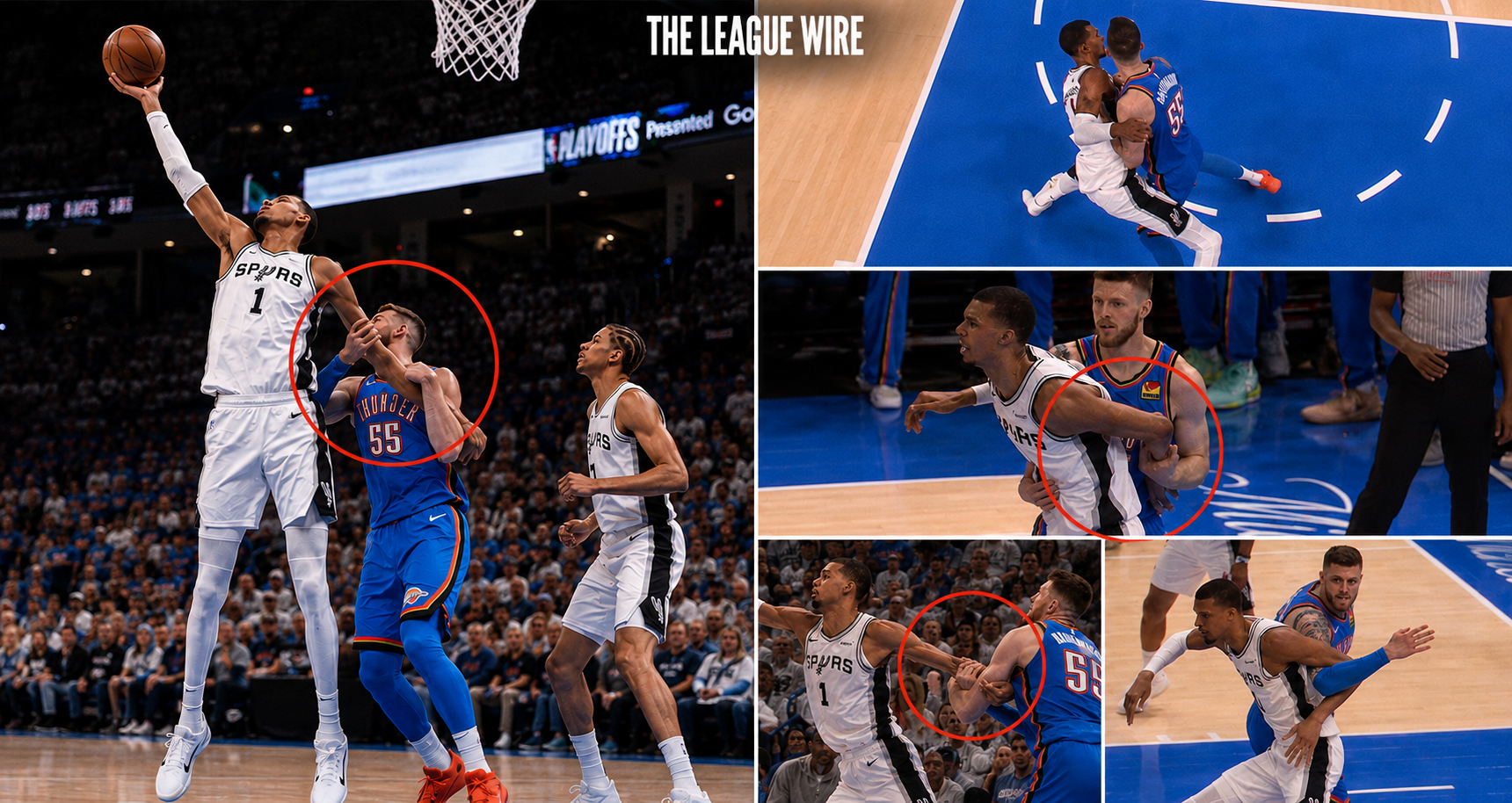
What happened in Game 2 of the Western Conference Finals between the Oklahoma City Thunder and the San Antonio Spurs?
The Oklahoma City Thunder secured a 122-113 victory to tie the series at 1-1 by weaponizing Isaiah Hartenstein’s physical aggression to disrupt Victor Wembanyama’s rhythm and exploiting an emotional collapse from the San Antonio roster following the controversial Stephon Castle hair pull non-call.
By shifting the officiating threshold from a skill-based contest to a high-friction "street fight," the Thunder successfully "de-platformed" the Spurs' offensive geometry and exposed the psychological vulnerabilities of a young team navigating its first deep playoff run.
The implications of this result extend far beyond a simple series equalizer. For Oklahoma City, the game served as a definitive proof-of-concept for their frontline investment, proving that a high-leverage "bruiser" can effectively negate Wembanyama’s extraterrestrial length.
For the Spurs, the loss is a harsh lesson in playoff composure; they allowed a single officiating sequence, and the subsequent SGA Flop vs Spurs Game 2 controversy, to derail their half-court execution for nearly two full quarters. As the series moves to San Antonio, the narrative has pivoted from Wembanyama’s individual dominance to the sustainability of Hartenstein’s borderline physicality and whether the Spurs' tactical leadership can restore order.
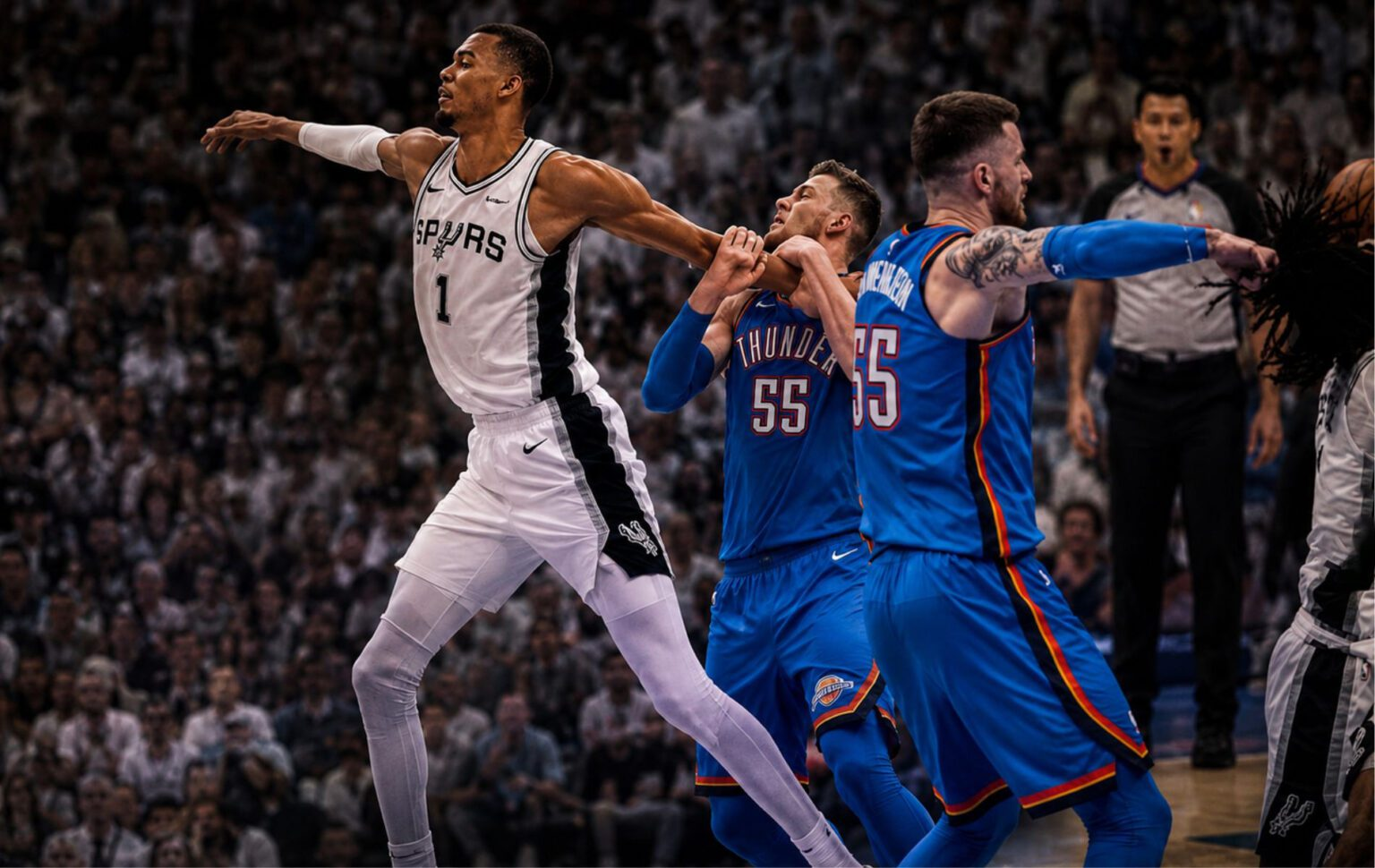
The Flashpoint: Why was the Stephon Castle hair pull not called a foul?
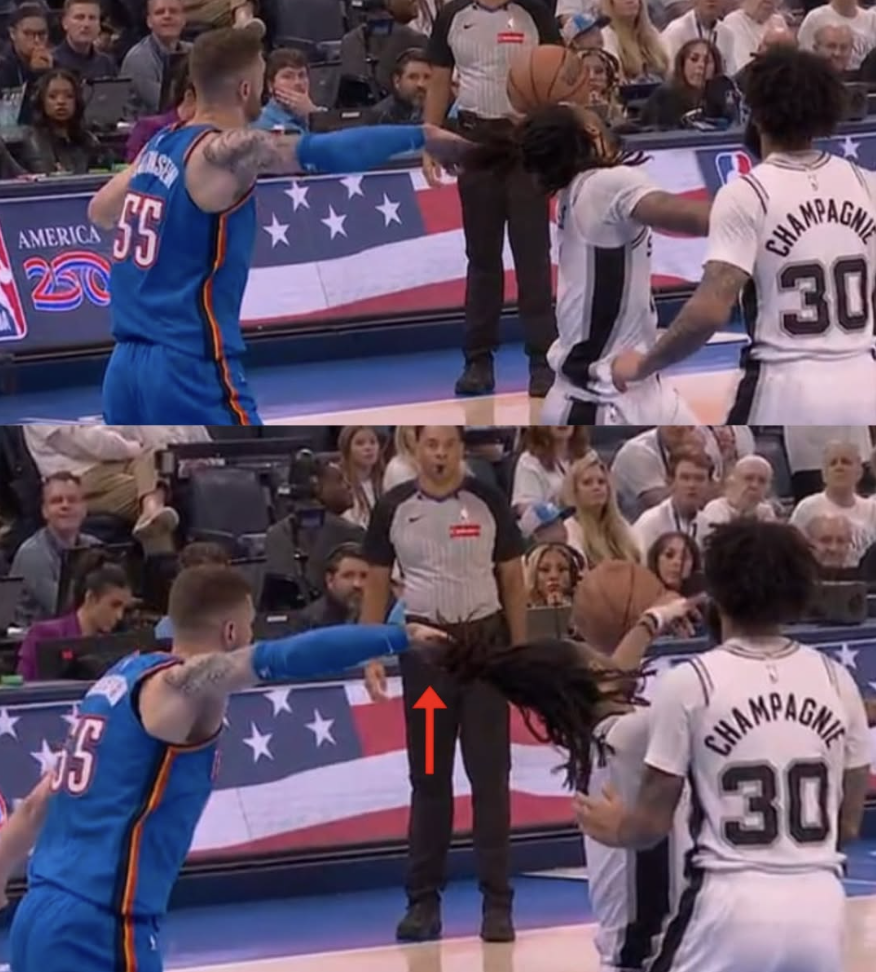
The officiating crew ruled the Stephon Castle hair pull as incidental contact, viewing the entanglement as a byproduct of natural rebounding motion rather than a deliberate non-basketball act. Under current NBA officiating criteria, hand-to-hair contact is often treated similarly to jersey entanglement; if the hand becomes caught while a player is legally vying for a rebound or position, it is rarely upgraded to a flagrant or even a common foul unless a clear "pulling" or "jerking" motion is identified.
The Anatomy of a No-Call: Breaking Down the Sequence
The incident occurred during a high-speed transition sequence in the second quarter. After Stephon Castle converted an explosive dunk, the momentum was firmly in San Antonio’s favor. However, as the ball went through the net and players tangled for positioning in the restricted area, Hartenstein’s fingers became caught in Castle’s dreadlocks.
The resulting "drag" brought Castle to the hardwood, but because Hartenstein’s eyes were on the ball and his arm was moving in a standard rebounding arc, the whistles remained silent. While the Thunder vs Spurs Game 2 highlights show a clear disruption of the player, the "intent" metric used by officials favored Hartenstein. This moment served as the emotional catalyst for the remainder of the game, shifting the Spurs' focus from the scoreboard to the officiating crew.
The Psychological Fallout: How One Play Broke the Spurs’ Composure
The true damage of the Stephon Castle hair pull was not the missed foul, but the Spurs' reaction to it. Following the sequence, San Antonio’s Offensive Rating (ORtg) plummeted from a crisp 114.2 to a dismal 91.5 over the next eight minutes of play. The team began "ref-hunting"—anticipating whistles that never came—which led to:
Transition Vulnerability: Players lingering in the backcourt to argue, leading to 4-on-5 advantages for OKC.
Forced Isolation: A departure from the Spurs' "Motion-Strong" sets in favor of frustrated, low-efficiency drives.
Emotional Contagion: A visible loss of focus that allowed OKC to mount a 14-2 run that effectively decided the game.
Tactical Masterclass: How Hartenstein Caged the Alien
While the hair-pulling controversy dominated social media, the structural reason for the Thunder victory was the "Hartenstein Blueprint"—a tactical approach designed to minimize Victor Wembanyama’s impact through physical displacement.
Neutralizing Wembanyama: The "Leverage and Lean" Strategy
To defend Wembanyama, Hartenstein utilized a "Center of Gravity" strategy. Rather than trying to contest Wembanyama at his 10-foot apex, Hartenstein focused on the "pre-catch" phase. By using his 250-pound frame to "bump" Wembanyama off his preferred spots on the low block, Hartenstein forced the 7'4" phenom to catch the ball three to four feet further from the rim than his season average.
This "Leverage and Lean" approach neutralized Wembanyama’s height by attacking his base. When Wembanyama attempted to drive, Hartenstein maintained a "wall-up" verticality that forced the rookie into difficult, fading jumpers. The data supports this: Wembanyama shot just 38.5% from the field when Hartenstein was the primary defender, a significant dip from his Game 1 efficiency.
The Rebounding War: 13 Boards and Area Denial
Hartenstein’s 13 rebounds were a masterclass in "Second-Chance Suppression." In Game 1, the Spurs thrived on put-backs and offensive glass activity. In Game 2, Hartenstein prioritized the "box-out over the board." By sealing Wembanyama early in the flight of the ball, he allowed OKC’s guards to swoop in for long rebounds, effectively ending San Antonio’s possessions after one shot. This technical discipline limited the Spurs to just 8 second-chance points, a critical delta in a nine-point game.
The Jared McCain Factor: Capitalizing on the Chaos
While Hartenstein provided the grit, rookie Jared McCain provided the "dagger" that capitalized on the Spurs' emotional lapses.
The 3-Pointer That Sealed the Vibe
In the third quarter, while the Spurs were still visibly frustrated by the officiating, Jared McCain exploited the defensive transition lag. As San Antonio players lingered to argue about an SGA Flop vs Spurs Game 2 sequence, McCain sprinted to the corner. Hartenstein’s presence in the paint drew the gravity of the Spurs' interior help, leaving McCain wide open for a transition three that pushed the lead to double digits.
McCain’s ability to space the floor acts as the "force multiplier" for Hartenstein’s physicality. When Hartenstein "mucks up" the paint, the defense naturally collapses, creating high-value looks for shooters. McCain finished the game with a +12 net rating, proving that OKC’s bench can sustain—and even expand—leads generated by the starters' defensive pressure.
Data Deep Dive: The "Hidden" Impact of Hartenstein’s Performance
The box score (10 PTS, 13 REB) is a conservative estimate of Hartenstein's actual impact. To understand the "Physicality ROI," we must look at the advanced metrics.
Metric
With Hartenstein (On-Court)
Hartenstein Off-Court
OKC Defensive Rating
104.2
118.5
Spurs FG% at Rim
44.2%
62.1%
Wembanyama Usage Rate
32.4%
26.8%
OKC Net Rating
+14.1
-2.4
Beyond the Box Score: Defensive Rating Delta
The Defensive Rating Delta of 14.3 points is the most telling statistic of the night. Hartenstein didn’t just defend Wembanyama; he altered the entire shot profile of the San Antonio Spurs. With Hartenstein on the floor, the Spurs were forced into 14% more mid-range jumpers than their season average. By eliminating the "easy" looks at the rim, Hartenstein turned the Spurs into a jump-shooting team—a role they are not yet equipped to win with in a high-stakes playoff environment.
The Sustainability of Physicality
The primary concern for OKC moving forward is Hartenstein’s foul trouble. He finished Game 2 with five fouls, several of which were "strategic" fouls used to stop transition or send a message early in the shot clock. While effective in a home-court win, this level of aggression carries significant risk on the road. The league review of the Stephon Castle hair pull is unlikely to result in a suspension, but it will undoubtedly put Hartenstein on a "short leash" with officiating crews in Game 3.
Narrative vs. Reality: Is it Dirty or Just "Playoff Basketball"?
The post-game discourse has centered on whether Hartenstein is a "dirty" player. However, a tactical analysis suggests this is a miscategorization of "High-Stakes Physicality."
In the modern NBA, where "freedom of movement" is prioritized, Hartenstein’s throwback style feels jarring. However, his actions in Game 2 fall under the category of "enforcement." Historically, every championship-level team has required a player willing to "muck up" the game. Hartenstein isn't seeking to injure; he is seeking to intimidate. The Spurs' frustration suggests the intimidation worked.
The Wembanyama Learning Curve
This series is a necessary "rite of passage" for Victor Wembanyama. To reach the pantheon of NBA greats, he must learn to punish over-aggression. In Game 2, he allowed Hartenstein to dictate the physical terms. In Game 3, the counter-adjustment will likely involve Wembanyama using his face-up game to draw Hartenstein into foul trouble early, forcing the Thunder to rely on their smaller, less physical backup rotations.
The Road to San Antonio: Game 3 and Series Outlook
The series is now a best-of-five, and the emotional landscape has shifted entirely toward the "Battle for San Antonio."
Tactical Adjustments for the Spurs
Protect the Rookies: The Spurs' tactical leadership must find ways to shield Stephon Castle from Hartenstein’s "bully ball" by using more high-screen actions that pull Hartenstein out of the paint and into space.
Secondary Scoring: The Spurs cannot rely on Wembanyama to solve the "Hartenstein Puzzle" alone. Devin Vassell and the Spurs' bench must punish the Thunder for over-helping on the interior.
Emotional Discipline: The Spurs lost Game 2 because they stopped playing after the Stephon Castle hair pull. San Antonio must maintain its offensive "flow state" regardless of the officiating.
Long-Term Implications: Hartenstein’s Free Agency Value
Isaiah Hartenstein is playing himself into a massive contract. By proving he can act as a "Star-Stopper" against a generational talent like Wembanyama, he has increased his market value exponentially. For the Thunder, the 1-1 tie is a win; they have established a physical identity that travels. If the Spurs cannot find a way to counter the "Hartenstein Blueprint," the Thunder’s interior toughness may be the deciding factor that sends them to the NBA Finals.
What to Watch in Game 3: Watch the first five minutes of the first quarter. If Hartenstein picks up two quick fouls, the Spurs will have successfully adjusted their offensive entry points. If he is allowed to "bump and lean" without a whistle, San Antonio is in for a long night in the Frost Bank Center.