KEY TAKEAWAYS
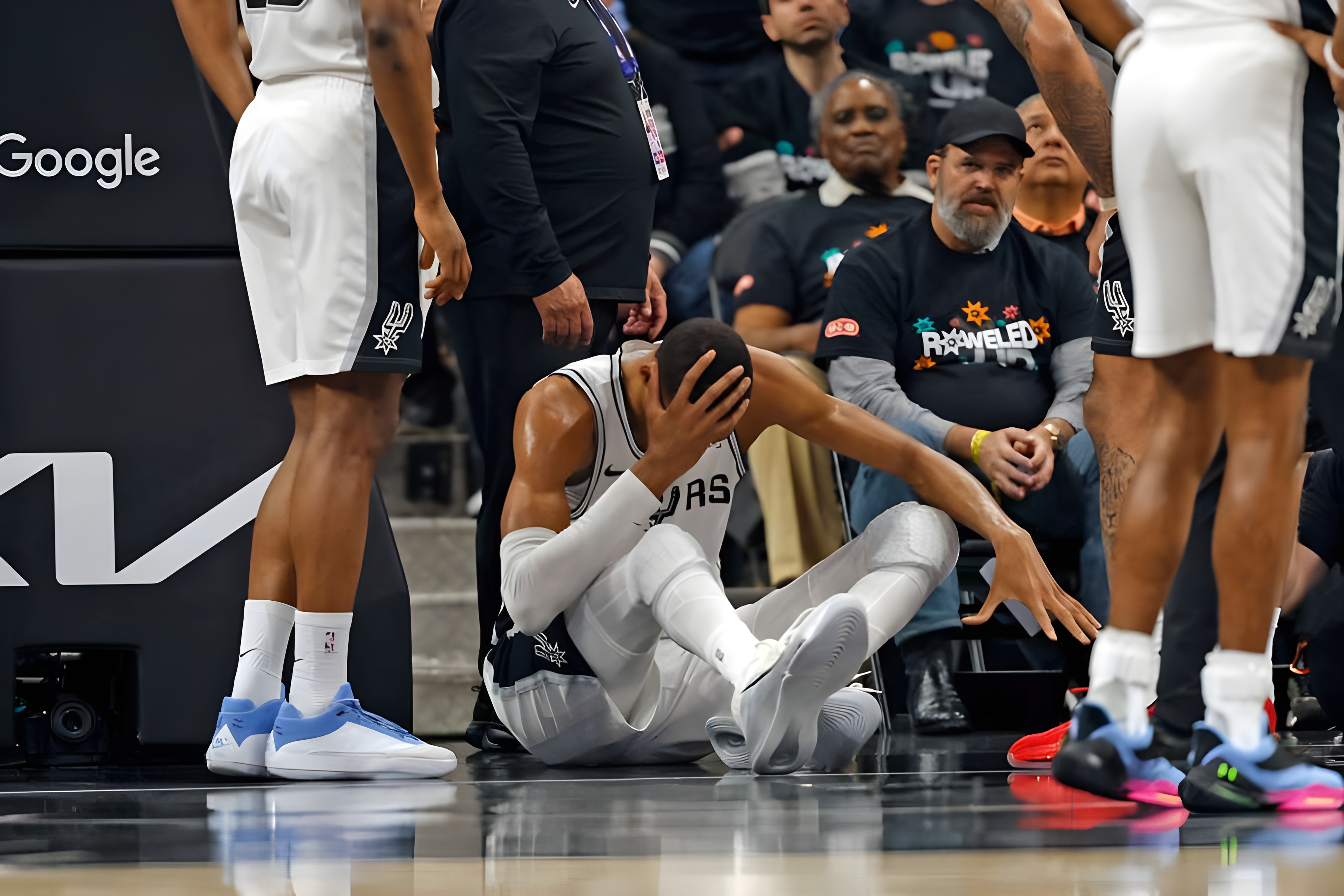
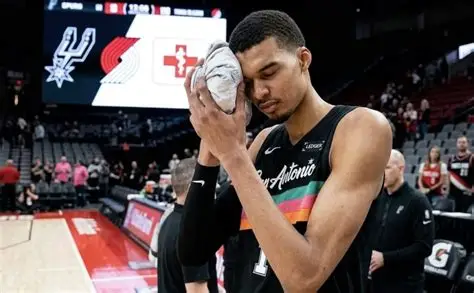
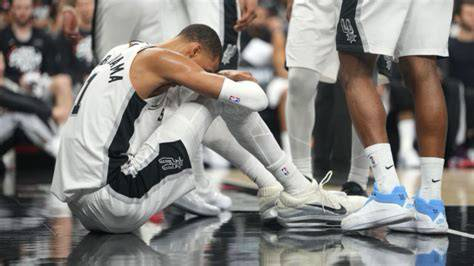
The Injury: Victor Wembanyama suffered a concussion after hitting the floor at the 8:57 mark of the second quarter, entering the NBA's mandatory Concussion Protocol.
The Result: The Portland Trail Blazers erased a 14-point fourth-quarter deficit to defeat the San Antonio Spurs 106-103, tying the series 1-1.
Statistical Impact: Without Wembanyama, San Antonio's Defensive Rating plummeted. Portland generated 23 second-chance points and secured 15 offensive rebounds.
Standout Performances: Scoot Henderson scored 31 points for Portland; Stephon Castle led San Antonio with 18 points.
Playoff Implications: The series shifts to Portland. San Antonio's NBA Finals odds dropped from +550 to +650, making the OKC Thunder the new Western Conference favorites.
What happened in the Spurs vs. Blazers Game 2 matchup?
What happened in the Spurs vs. Blazers Game 2 matchup? The Portland Trail Blazers defeated the San Antonio Spurs 106-103 after Victor Wembanyama suffered a concussion after hitting the floor in a Game 2 loss.
This result completely alters the 2026 Western Conference First Round. The series is now tied 1-1, shifting home-court advantage to Portland. San Antonio must now navigate a hostile road environment without their franchise cornerstone and primary defensive anchor, fundamentally changing the playoff standings and matchup dynamics.
How did the game unfold before and after Victor Wembanyama’s exit?
The game featured two distinct tactical halves. Before the injury, San Antonio dictated the Pace. They utilized Wembanyama's gravity in the half-court to generate open perimeter shots while completely deterring Portland's rim attempts. Following his exit, Portland recognized the missing rim protection, abandoned their perimeter sets, and relentlessly attacked the paint.
What were the key turning points in the Spurs' 106-103 loss?
The momentum reversed on two specific events. The first was the injury itself, which forced San Antonio into emergency rotation adjustments. The second was Portland's methodical execution in the fourth quarter, where they capitalized on San Antonio's fatigued frontcourt to erase a 14-point deficit.
Wembanyama's scary fall and early exit at the 8:57 mark of the second quarter
The defining sequence occurred at the 8:57 mark of the second quarter. Wembanyama contested a driving layup, lost his balance in mid-air, and suffered a face-first fall onto the hardwood. Medical staff removed him from the game immediately. He entered the NBA Concussion Protocol and did not return, finishing with 12 points and 4 blocks in just 15 minutes of action.
Portland's massive 14-point comeback in the final eight and a half minutes
Portland executed a flawless late-game offensive strategy. Facing a 14-point deficit with 8:30 remaining, the Blazers initiated a 22-5 scoring run. They repeatedly ran high pick-and-roll (PnR) actions against San Antonio's backup centers, securing high-percentage shots at the rim and drawing shooting fouls to stop the clock.
Why did this result happen without San Antonio's star?
Which strategies and tactics made the difference for Portland?
The Trail Blazers won because they exploited San Antonio's depleted interior defense. Coach Chauncey Billups instructed his guards to reject ball screens and drive downhill. Without Wembanyama's elite help-side rotation, Portland's slashers faced minimal resistance at the basket.
How did the Blazers exploit the Spurs' interior defense?
Portland targeted specific matchups using isolation sets. They forced switches to get San Antonio's slower big men onto their quick guards. When the Spurs attempted to use drop coverage—a scheme where the center sags into the paint—Portland guards easily stepped into uncontested mid-range jumpers or threw lob passes over the top.
Portland's dominance on the offensive glass (securing 15 offensive rebounds)
The largest statistical discrepancy occurred on the glass. The Blazers secured 15 offensive rebounds. They posted a 35% Offensive Rebounding Rate, meaning they rebounded over a third of their own missed shots. This extra volume of possessions mathematically overwhelmed San Antonio's defensive efforts.
Capitalizing on San Antonio's 17 turnovers for 24 critical transition points
San Antonio's half-court offense deteriorated under pressure. The Spurs committed 17 live-ball turnovers. Portland punished these mistakes instantly, scoring 24 transition points. By pushing the Pace off turnovers, Portland scored before San Antonio could set their half-court defensive assignments.
Who were the standout performers stepping up in Game 2?
Which Trail Blazers players had the biggest impact on the comeback?
Scoot Henderson controlled the offensive tempo. He dictated the floor balance, created scoring opportunities via dribble penetration, and forced San Antonio into constant defensive rotations. Jrue Holiday provided vital secondary playmaking, executing perfectly in high-leverage possessions during the final three minutes.
Who tried to fill the void for the Spurs, and who struggled?
Stephon Castle assumed the primary scoring burden for San Antonio. He showed excellent spatial awareness, using his frame to draw fouls. Conversely, San Antonio's perimeter shooters struggled to find their rhythm. Without Wembanyama drawing double-teams in the post, players like Devin Vassell faced heavy perimeter pressure and shot below their season averages.
Scoot Henderson’s 31-point breakout and Jrue Holiday's clutch go-ahead putback
Henderson recorded a highly efficient 31 points, boasting a 62% True Shooting Percentage (TS%). He consistently broke down point-of-attack defenders. Holiday delivered the decisive blow, securing an offensive rebound and finishing a go-ahead putback with exactly 2:07 remaining to give Portland the final lead.
Stephon Castle's team-high 18 points and veteran Luke Kornet's heavy bench minutes (10 points, 9 rebounds)
Castle led the Spurs with 18 points, attempting a team-high 10 free throws. Luke Kornet played heavy rotation minutes in Wembanyama's absence, contributing 10 points and 9 rebounds. However, Kornet's lack of lateral quickness resulted in a team-worst -14 Plus/Minus, as Portland repeatedly targeted him in space.
What are the strengths and weaknesses revealed by Victor Wembanyama Injury?
What did the Trail Blazers do well to steal home-court advantage?
Portland demonstrated elite late-game execution and physical conditioning. They recognized a structural flaw in San Antonio's defense and ruthlessly exploited it. Their ability to maintain defensive intensity while mounting a double-digit comeback proves their viability as a legitimate playoff threat.
What glaring issues do the Spurs need to fix immediately?
The Spurs lack a functional secondary rim protector. San Antonio's Defensive Rating (DRtg)—points allowed per 100 possessions—spiked from an elite 106.2 with Wembanyama on the floor to a disastrous 119.8 after his exit. They must restructure their defensive rotations to provide aggressive help-side support.
The Spurs' lack of rim protection and size without the reigning Defensive Player of the Year
Wembanyama averages 3.6 blocks per game and alters countless other attempts. Without his 8-foot wingspan, San Antonio simply lacks the verticality required to contest athletic drives. Portland shot an overwhelming 68% in the restricted area during the second half.
Portland's relentless physicality and generation of 23 second-chance points
Second-chance points occur when a team scores immediately following an offensive rebound. Portland generated 23 second-chance points. This negated San Antonio's successful initial defensive possessions, drained their energy, and kept the Blazers within striking distance throughout the third quarter.
What does this mean for the Western Conference playoffs and Finals odds?
How does this 1-1 series tie shift the momentum to Portland?
The series shifts to the Pacific Northwest tied at one game apiece. Portland neutralized San Antonio's higher seed advantage by winning on the road. The Blazers now hold both the momentum and the psychological edge of facing a heavily depleted Spurs roster in front of their home crowd.
What are the betting implications for the Spurs' championship hopes?
Oddsmakers reacted severely to the Victor Wembanyama concussion. Betting markets rely entirely on star availability. An extended absence fundamentally alters how sportsbooks project San Antonio's ceiling against deeper Western Conference opponents.
Spurs' NBA Finals odds dropping (+550 to +650) as the OKC Thunder become Western Conference favorites
Following the Game 2 loss, San Antonio's NBA Finals odds dropped from +550 to +650 across major sportsbooks. Consequently, the Oklahoma City Thunder overtook them as the clear betting favorites to win the Western Conference, reflecting Wembanyama's immense impact on overall win probability.
The pressure of heading to the Moda Center for Games 3 and 4 as betting underdogs
San Antonio faces the daunting task of playing Games 3 and 4 at the Moda Center. Without their superstar, sportsbooks project the Spurs to open as betting underdogs. San Antonio must manufacture highly efficient offense in a hostile environment to avoid falling into a 3-1 series deficit.
What are the common misconceptions about this injury and the Spurs' depth?
Why is the "Spurs won without him in the regular season" narrative misleading?
Many analysts point to the Spurs' regular-season success without Wembanyama as proof they can survive this series. This narrative ignores the fundamental differences in playoff basketball. Regular-season opponents rarely dedicate days of film study to exploit specific rotational weaknesses. Playoff teams design entire series game plans around a missing star's absence.
What does the data actually show about San Antonio's playoff survival?
Advanced NBA stats reveal a heavy reliance on Wembanyama for offensive spacing and defensive anchoring. San Antonio's Net Rating is severely negative in high-leverage, fourth-quarter minutes when Wembanyama sits, proving their depth struggles under intense playoff pressure.
Regular season stats (12-6 record without Wemby) vs. playoff intensity and half-court execution
The Spurs held a 12-6 record without Wembanyama during the regular season. However, playoff basketball requires precise half-court execution because transition opportunities decrease. Without Wembanyama serving as a pressure-release valve against heavy defensive coverages, San Antonio's half-court offense becomes highly predictable.
The reality of the NBA Concussion Protocol vs. standard injuries (mandatory 48-hour absence before ramping up)
A concussion operates under entirely different medical rules than a sprained ankle. The NBA Concussion Protocol requires a player to remain completely symptom-free at rest before beginning a graduated exertion process. This entails a mandatory 48-hour physical rest period, followed by light cardio, agility drills, and contact practice. Only the director of the NBA concussion program can authorize a return.
What happens next for Victor Wembanyama and the San Antonio Spurs?
What rotation adjustments should coach Mitch Johnson make?
Coach Mitch Johnson must alter his rotation to prioritize speed over size. He needs to implement smaller, faster lineups to increase transition scoring and bypass Portland's set defense. Defensively, Johnson should deploy zone concepts to pack the paint and force Portland to win by shooting from the perimeter.
Is Portland's offensive success sustainable for the rest of the series?
Portland's 35% offensive rebounding rate is mathematically difficult to sustain. However, their ability to penetrate the paint will remain a constant threat as long as Wembanyama is sidelined. If Portland continues to limit their live-ball turnovers, their offensive floor remains incredibly high.
Wembanyama's 7-to-10 day average concussion recovery timeline and checklist for return
Medical data indicates the average return-to-play timeline for an NBA concussion ranges from 7 to 10 days. If Wembanyama follows this average trajectory, he will definitively miss Games 3 and 4 in Portland. His availability for a potential Game 5 back in San Antonio remains highly questionable.
Tactical evolution: Leaning on Devin Vassell and Keldon Johnson for increased perimeter scoring
San Antonio must evolve tactically to survive. Devin Vassell and Keldon Johnson will see significant spikes in their Usage Rate. Vassell must operate efficiently out of isolation and PnR setups, while Johnson must utilize his physical driving ability to collapse the Portland defense and draw fouls.
Conclusion – What is the deeper takeaway from Game 2?
What does this reveal about star dependency in the current NBA landscape?
The swift collapse of San Antonio's interior defense highlights the extreme star dependency built into modern NBA roster construction. When a front office builds an entire defensive ecosystem around a singular, generational talent, the structural integrity of the team is highly fragile. Game 2 proves that regular-season depth often evaporates under the intense, targeted scrutiny of a playoff series.
What should fans and analysts pay attention to ahead of Game 3?
Moving forward, analysts must watch how Coach Johnson adjusts his defensive coverages to limit Scoot Henderson's dribble penetration. Furthermore, the daily updates regarding the Victor Wembanyama concussion protocol will dictate the betting lines and overall series trajectory. San Antonio must execute their tactical adjustments flawlessly; otherwise, their promising playoff run will end prematurely in Portland.