
Apple Unveils M5 Pro and M5 Max Chips With Revolutionary Fusion Architecture
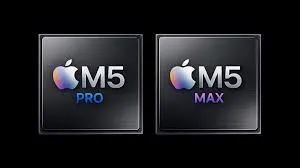
Apple has taken another major step forward in its semiconductor strategy with the unveiling of the M5 Pro and M5 Max chips, two powerful processors designed to push the boundaries of performance in modern computing.
The announcement introduces Fusion architecture, a new design approach that aims to dramatically increase processing power, efficiency, and scalability across Apple’s high-end computing devices.
These new chips are expected to power future generations of professional Macs, including high-performance laptops and desktops used by developers, designers, engineers, and video creators.
With each generation of Apple Silicon, the company has continued to reshape expectations for laptop and desktop performance. The M5 Pro and M5 Max appear poised to continue that momentum.

The Evolution of Apple Silicon
Apple began transitioning away from Intel processors in 2020 with the launch of its first custom chips designed specifically for Mac computers.
The move marked a major turning point in the technology industry.
By designing its own chips, Apple gained control over the entire computing stack—from hardware to operating system optimization.
This vertical integration allowed the company to achieve major improvements in:
-
Performance per watt
-
Battery efficiency
-
Thermal management
-
Software optimization
Over time, the Apple Silicon family expanded with increasingly powerful chips such as the M1, M2, M3, and M4 series.
Now, the M5 generation aims to take those innovations even further.
What Is the New Fusion Architecture?
At the center of the announcement is Apple’s new Fusion architecture, a chip design strategy intended to unlock greater scalability and performance.
Traditional chip architectures typically rely on separate components for CPU, GPU, and memory systems.
Apple’s Fusion approach focuses on tighter integration and faster communication between these components, enabling faster processing and lower latency.
Key elements of Fusion architecture include:
-
Unified high-speed memory system
-
Advanced multi-core CPU design
-
Scalable GPU architecture
-
Improved AI acceleration engines
Together, these technologies allow the chip to handle complex workloads with greater efficiency.
M5 Pro: Designed for Professional Performance
The M5 Pro chip targets professionals who require powerful computing capabilities but also rely on portable systems such as laptops.
These users often work in fields such as:
-
software development
-
graphic design
-
video editing
-
scientific research
-
music production
For these workloads, consistent high performance is essential.
The M5 Pro introduces improvements in both CPU and GPU performance, allowing users to run demanding applications smoothly.
Key Features of M5 Pro
Some of the expected enhancements include:
-
Higher core count for faster multitasking
-
Advanced GPU performance for creative workflows
-
Faster unified memory bandwidth
-
Dedicated AI acceleration units
These upgrades make the chip especially appealing for creators working with high-resolution media.
M5 Max: Built for Extreme Workloads
While the M5 Pro delivers strong performance for most professionals, the M5 Max is designed for the most demanding computing environments.
This chip targets users who rely on maximum computing power, including:
-
film and animation studios
-
3D rendering professionals
-
AI researchers
-
large-scale software developers
The M5 Max expands upon the capabilities of the M5 Pro with larger GPU clusters and additional memory capacity.
Performance Enhancements
The M5 Max includes several performance improvements that make it suitable for intensive tasks.
These include:
-
expanded graphics processing cores
-
faster data throughput
-
enhanced memory architecture
-
improved support for parallel workloads
For professionals working with large datasets or complex visual projects, these features can significantly reduce processing times.
AI and Machine Learning Capabilities
Artificial intelligence is becoming increasingly important in modern computing.
Apple’s new chips incorporate advanced neural engines designed specifically for machine learning tasks.
These engines accelerate operations such as:
-
image recognition
-
natural language processing
-
predictive analytics
-
video enhancement
For developers building AI-driven applications, this specialized hardware provides faster performance and improved efficiency.
It also enables more machine learning tasks to run directly on devices rather than relying on cloud computing.
Power Efficiency Remains a Priority
One of the defining characteristics of Apple Silicon has been its exceptional energy efficiency.
Even as processing power increases, Apple continues to focus on reducing power consumption.
This approach benefits users in several ways:
-
longer battery life for laptops
-
reduced heat generation
-
quieter systems without large cooling fans
For professionals working on portable devices like MacBook Pro laptops, these advantages can significantly improve productivity.
Impact on Future Mac Devices
The introduction of the M5 Pro and M5 Max chips will likely influence several upcoming Mac devices.
Potential hardware updates may include:
-
new MacBook Pro models
-
next-generation Mac Studio systems
-
upgraded Mac desktops
These devices are expected to showcase the full capabilities of Apple’s new chip architecture.
For professionals who rely on Apple hardware, these updates could deliver meaningful improvements in workflow efficiency.
Competing in the Global Chip Market
Apple’s semiconductor strategy has positioned the company as a major player in the global chip industry.
While companies like Intel, AMD, and NVIDIA continue to develop powerful processors, Apple’s integrated approach gives it a unique advantage.
By designing chips specifically for its own devices, Apple can optimize performance across hardware and software.
This tight integration allows features such as:
-
faster application launches
-
smoother graphics rendering
-
efficient background processing
These advantages have helped Apple Silicon gain widespread praise among developers and technology reviewers.
The Role of Custom Silicon in Apple’s Future
Apple’s investment in custom silicon extends beyond Macs.
The company also designs chips for:
-
iPhones
-
iPads
-
Apple Watch devices
-
mixed reality hardware
This unified approach ensures consistent performance improvements across the entire Apple ecosystem.
With each new chip generation, Apple moves closer to its goal of creating highly optimized computing environments.
How Professionals Benefit From These Advances
For everyday users, faster processors might simply mean quicker app launches or smoother multitasking.
For professionals, however, the impact can be far greater.
Creative workflows often involve massive files and complex software tools.
Examples include:
-
editing 8K video footage
-
rendering detailed 3D scenes
-
compiling large software projects
More powerful chips allow these tasks to be completed faster and more efficiently.
This not only saves time but also enables creators to experiment with more ambitious projects.
The Broader Technology Landscape
The unveiling of the M5 Pro and M5 Max chips highlights the rapid pace of innovation in semiconductor technology.
As artificial intelligence, virtual reality, and advanced computing continue to evolve, demand for high-performance processors will only grow.
Companies across the tech industry are investing heavily in chip development.
Apple’s Fusion architecture represents one approach to meeting the increasing demands of modern computing.

Final Thoughts
Apple’s introduction of the M5 Pro and M5 Max chips marks another milestone in the evolution of Apple Silicon.
With the new Fusion architecture, the company aims to deliver higher performance, improved efficiency, and greater scalability for professional computing workloads.
As future Mac devices adopt these processors, users can expect faster performance, better energy efficiency, and enhanced capabilities for creative and technical tasks.
In an industry defined by constant innovation, Apple’s latest chips demonstrate how custom silicon continues to shape the future of personal computing.