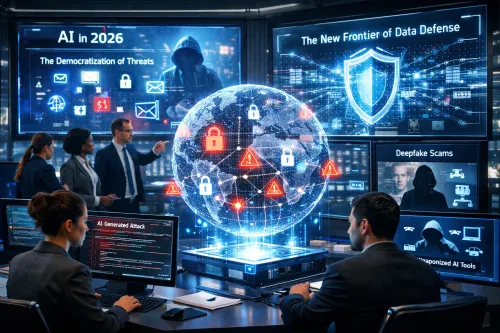
Cybersecurity in 2026: AI Threats, Global Hacks, and the New Digital Battlefield
The cybersecurity landscape in 2026 is more volatile, complex, and high-stakes than ever before. As highlighted across reporting from TechCrunch’s security coverage, the digital world is experiencing a surge in sophisticated cyberattacks, fueled by artificial intelligence, geopolitical tensions, and vulnerabilities in global infrastructure.
From large-scale telecom breaches to stealthy AI-powered exploits, cybersecurity is no longer just an IT concern—it’s a global priority affecting governments, corporations, and individuals alike.
The Rise of Global Cyber Warfare
One of the most alarming developments in 2026 is the scale and coordination of cyberattacks targeting critical infrastructure. A major example is the campaign carried out by the hacking group Salt Typhoon, which infiltrated telecom giants and accessed sensitive communication data.
This operation exposed a harsh reality: modern cyberattacks are no longer isolated incidents. Instead, they are part of broader geopolitical strategies aimed at surveillance, disruption, and control.
According to recent reports, attackers have successfully accessed phone records, messages, and even audio data of high-level government officials. This type of breach signals a shift toward cyber espionage on an unprecedented scale.
At the same time, other state-linked groups are preparing for even more destructive attacks. These include efforts to infiltrate infrastructure systems, potentially enabling future disruptions to communication networks, power grids, and digital services.

AI: The Double-Edged Sword of Cybersecurity
Artificial intelligence is reshaping cybersecurity—but not always for the better.
On one hand, AI is helping organizations detect threats faster, automate responses, and strengthen defenses. On the other hand, cybercriminals are leveraging AI to launch more advanced, scalable, and convincing attacks.
Recent industry insights show that AI-driven threats—such as deepfake scams, automated phishing, and intelligent malware—are rapidly increasing.
Even more concerning is the rise of “agentic AI,” where autonomous systems can execute complex cyberattacks without continuous human input.
This evolution marks a turning point:
- Attacks are becoming faster and harder to detect
- Threat actors require less technical expertise
- Cybercrime is becoming more accessible and scalable
Meanwhile, organizations are racing to integrate AI into their defenses. Reports indicate that a growing number of companies now rely on AI for intrusion detection, phishing prevention, and automated security operations.
However, this creates a new challenge—securing AI itself.
The Emergence of AI Security Risks
As businesses adopt AI tools at scale, new vulnerabilities are emerging. AI systems can be manipulated, poisoned, or exploited to leak sensitive data.
Security experts warn that AI-related risks are now among the top concerns for global enterprises.
These risks include:
- Data leakage through AI models
- Malicious prompt injection attacks
- Exploitation of AI decision-making systems
- Unauthorized access via AI-powered automation
In some cases, attackers are even creating malicious AI tools designed specifically for cybercrime. These tools can generate phishing emails, impersonate individuals, or automate hacking attempts.
The result is a rapidly evolving threat landscape where traditional security methods are no longer sufficient.

Zero Trust: The New Standard in Security
To combat modern threats, organizations are increasingly adopting the Zero Trust security model. This approach assumes that no user or system should be trusted by default, even inside a network.
Instead, every access request must be continuously verified.
Experts emphasize that traditional perimeter-based security is no longer effective, as most attacks now exploit stolen credentials or insider access.
Zero Trust focuses on:
- Identity verification
- Device security
- Continuous monitoring
- Strict access controls
In 2026, Zero Trust is evolving further to include behavioral analysis—ensuring that not just identity, but intent, is verified.
While implementation can be challenging, especially for organizations with legacy systems, the shift toward Zero Trust is becoming essential for long-term resilience.
Supply Chain Attacks and Hidden Vulnerabilities
Another major trend shaping cybersecurity is the rise of supply chain attacks. Instead of targeting organizations directly, attackers compromise third-party vendors or software providers.
This method allows hackers to infiltrate multiple organizations at once.
A notable example involves compromised software updates that delivered malware to users—a tactic that highlights how trust in digital ecosystems can be exploited.
Additionally, vulnerabilities in widely used platforms and services can create cascading risks across industries.
Security researchers warn that limited visibility into third-party systems remains one of the biggest challenges for organizations today.
As a result, companies are investing more in:
- Vendor risk management
- Continuous monitoring of supply chains
- Stronger compliance requirements

The Growing Threat to Everyday Devices
Cybersecurity threats are no longer limited to enterprises—they are increasingly targeting everyday users.
Recent findings reveal that millions of smartphones remain vulnerable to sophisticated hacking tools capable of extracting personal data, messages, and even financial information.
These attacks often exploit outdated software or unpatched vulnerabilities, emphasizing the importance of regular updates.
Experts warn that even common devices—such as phones, laptops, and smart home systems—can become entry points for cybercriminals.
This shift highlights a critical reality:
Cybersecurity is now a personal responsibility as much as it is an organizational one.
Cybersecurity as a Business Imperative
In 2026, cybersecurity is no longer just about preventing breaches—it’s about ensuring business continuity and resilience.
Companies are recognizing that cyber incidents can have long-term financial, operational, and reputational impacts.
As a result, organizations are:
- Increasing cybersecurity budgets
- Integrating security into business strategy
- Partnering with cybersecurity experts
- Investing in employee training
For small and medium-sized businesses, the challenge is even greater. Many lack the resources and expertise needed to effectively manage cybersecurity risks.
However, this is driving a shift toward strategic partnerships, where businesses rely on external experts to guide their security strategies.

The Future of Cybersecurity: What Lies Ahead
Looking ahead, several key trends are expected to define the future of cybersecurity:
1. AI-Driven Defense Systems
Organizations will increasingly rely on AI to detect and respond to threats in real time.
2. Quantum-Resistant Encryption
As quantum computing advances, new encryption methods will be needed to protect sensitive data.
3. Increased Regulation
Governments are introducing stricter cybersecurity regulations, requiring organizations to improve their defenses and transparency.
4. Cybersecurity Talent Shortage
The demand for skilled cybersecurity professionals continues to outpace supply, creating challenges for organizations worldwide.
5. Greater Focus on Digital Trust
Building trust in digital systems—especially AI—will become a critical priority for businesses and governments alike.
Conclusion
Cybersecurity in 2026 is defined by rapid change, growing complexity, and escalating risks. From AI-powered attacks to global hacking campaigns, the digital battlefield is expanding at an unprecedented pace.
As highlighted in TechCrunch’s security coverage, staying ahead of these threats requires a proactive, adaptive approach.
Organizations must move beyond traditional defenses and embrace modern strategies such as Zero Trust, AI-driven security, and comprehensive risk management.
At the same time, individuals must remain vigilant—keeping devices updated, practicing good digital hygiene, and understanding the risks of an increasingly connected world.
In this new era, cybersecurity is not just a technical challenge—it is a fundamental pillar of digital survival.