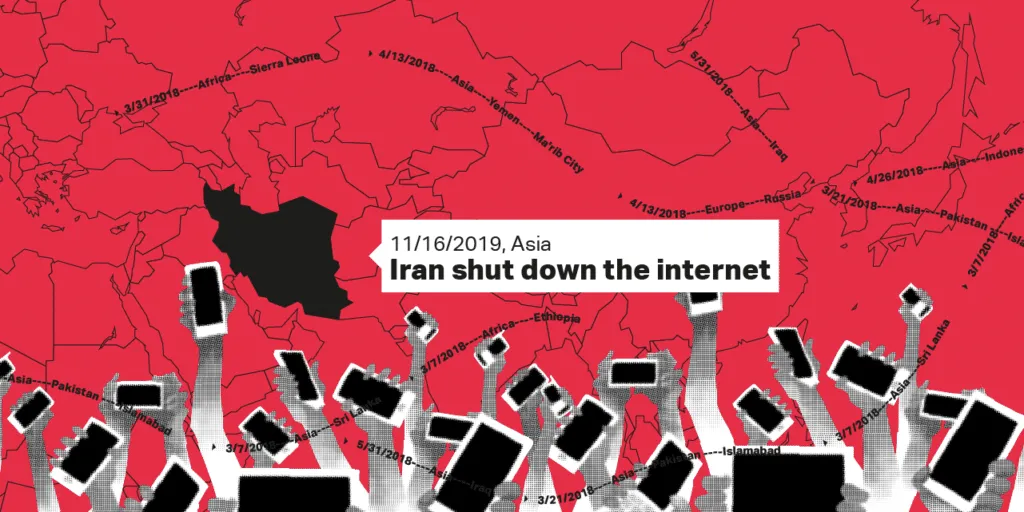
Iran is once again largely offline—and this time, the blackout is stretching into history.
As nationwide protests continue to ripple across the country, Iran has imposed one of the longest and most severe internet shutdowns in its modern history. Mobile data access has been heavily restricted, social media platforms remain unreachable for many, and millions of Iranians are cut off from the digital world at a moment when communication is most critical.
What is happening inside Iran is not just a political crisis—it is also a technology and human rights crisis, one that underscores how the internet has become both a lifeline for protest movements and a pressure point for governments seeking control.
A Blackout That Keeps Growing Longer
According to multiple monitoring groups and digital rights organizations, Iran’s current internet shutdown has surpassed many previous disruptions in both duration and scope.
What makes this shutdown different?
-
Length: It has continued for weeks, not days
-
Precision: Mobile internet is far more restricted than fixed broadband
-
Timing: The blackout coincides with sustained, decentralized protests
Rather than a single nationwide switch-off, authorities appear to be applying selective throttling, limiting access during peak protest hours or in specific regions.
Why Iran Turns to Internet Shutdowns During Protests
Iran has a long track record of using internet controls as a political tool. During periods of unrest, authorities often argue that restrictions are necessary to:
-
Prevent the spread of “misinformation”
-
Limit coordination among protesters
-
Maintain public order and security
In reality, digital rights experts say the goal is far more direct: to disrupt protest organization and reduce global visibility.


When protesters cannot livestream, message, or upload footage, it becomes harder for movements to sustain momentum—and harder for the outside world to see what is happening on the ground.
Mobile Internet: The Primary Target
One of the most striking aspects of the current blackout is how mobile internet has been disproportionately affected.
Why mobile data matters
-
It is the primary way most Iranians access the internet
-
It allows real-time communication during protests
-
It enables quick sharing of photos and videos
Fixed-line connections in homes and offices may remain partially functional, but they are far less useful during street demonstrations. By cutting mobile access, authorities effectively silence the protest zone.
The Human Cost of Going Dark
For millions of ordinary Iranians, the shutdown is more than a political inconvenience—it is a daily hardship.
Everyday consequences include:
-
Inability to contact family members
-
Disruption to remote work and online businesses
-
Loss of access to banking, ride-hailing, and delivery apps
-
Isolation from news and emergency information
For students, freelancers, and small business owners, the blackout can mean lost income and lost opportunities—with no clear end in sight.
Protests Persist Despite Digital Silence
Perhaps most notably, the protests have not stopped.
Even without reliable internet access, demonstrations continue across multiple cities, suggesting that:
-
Offline networks and word-of-mouth remain powerful
-
Public anger has reached a critical mass
-
Digital suppression alone cannot erase dissent
This persistence highlights a key lesson seen in other countries: internet shutdowns may slow protests, but they rarely eliminate the underlying causes.
A Familiar Pattern in Iranian History
Iran’s current blackout echoes earlier episodes, including major shutdowns during protests in:
-
2009
-
2019
-
Early 2020s
Each time, authorities relied on digital restrictions as a rapid-response measure. Each time, international condemnation followed. And each time, the shutdowns became longer and more technically sophisticated.
What is different now is the scale of global reliance on digital communication—making the costs of disconnection far higher than in previous decades.
How Authorities Enforce the Shutdown
Iran’s internet controls are made possible by its highly centralized telecommunications infrastructure.
Key mechanisms include:
-
State oversight of internet service providers
-
Centralized routing through government-controlled gateways
-
Deep packet inspection and traffic filtering
This architecture allows authorities to:
-
Throttle speeds instead of fully cutting access
-
Block specific platforms like messaging apps
-
Restore service selectively when needed
The result is a patchwork internet, where access varies by location, provider, and time of day.
Social Media Platforms Go Silent
Most major social media platforms are either fully blocked or functionally unusable during the shutdown.
For activists, journalists, and ordinary citizens, this means:
-
No livestreams from protest sites
-
No rapid sharing of videos or images
-
No direct communication with international audiences
As a result, much of what the world learns about the protests comes from delayed uploads, satellite data, or accounts from outside the country.
Global Reaction and Condemnation
International human rights organizations have repeatedly condemned Iran’s use of internet shutdowns, calling them:
-
Disproportionate
-
Harmful to civilians
-
Violations of freedom of expression
Several governments and advocacy groups argue that access to the internet should be treated as a basic human right, especially during times of crisis.
Despite this pressure, shutdowns remain an attractive tool for authoritarian regimes because they are:
-
Relatively low-cost
-
Immediately effective
-
Difficult for outsiders to stop
The Economic Toll of a Prolonged Blackout
Beyond human rights concerns, the shutdown carries a significant economic cost.
Industries most affected:
-
E-commerce and online marketplaces
-
Digital payments and fintech services
-
Freelancing and remote work
-
Startups and tech entrepreneurs
In a country already facing economic challenges, cutting off digital commerce further strains livelihoods—especially for younger generations who depend heavily on online income.
Workarounds—and Their Limits
Some Iranians attempt to bypass restrictions using:
-
VPNs
-
Proxy services
-
Alternative messaging platforms
However, during intense shutdowns:
-
VPN traffic is often throttled or blocked
-
Connections are unstable and slow
-
Access requires technical knowledge many users lack
This means that digital workarounds, while helpful for some, cannot replace open internet access for the majority.
Why This Shutdown Is One of the Longest Ever
Analysts say the duration of the current blackout reflects several factors:
-
Authorities’ determination to prevent protest coordination
-
Fear of viral images shaping international opinion
-
Confidence in improved censorship infrastructure
Instead of short, total shutdowns, Iran appears to be experimenting with long-term partial disconnection, a model that may become more common globally.
A Global Trend, Not an Isolated Case
Iran is not alone in using internet shutdowns during unrest. Similar tactics have been deployed in:
-
South Asia
-
Parts of Africa
-
Eastern Europe
What makes Iran’s case stand out is the scale, repetition, and technical sophistication of its blackouts.
This raises broader questions about:
-
The future of digital freedom
-
The role of tech companies in censorship
-
How protest movements adapt in disconnected environments
Life Under a Throttled Internet


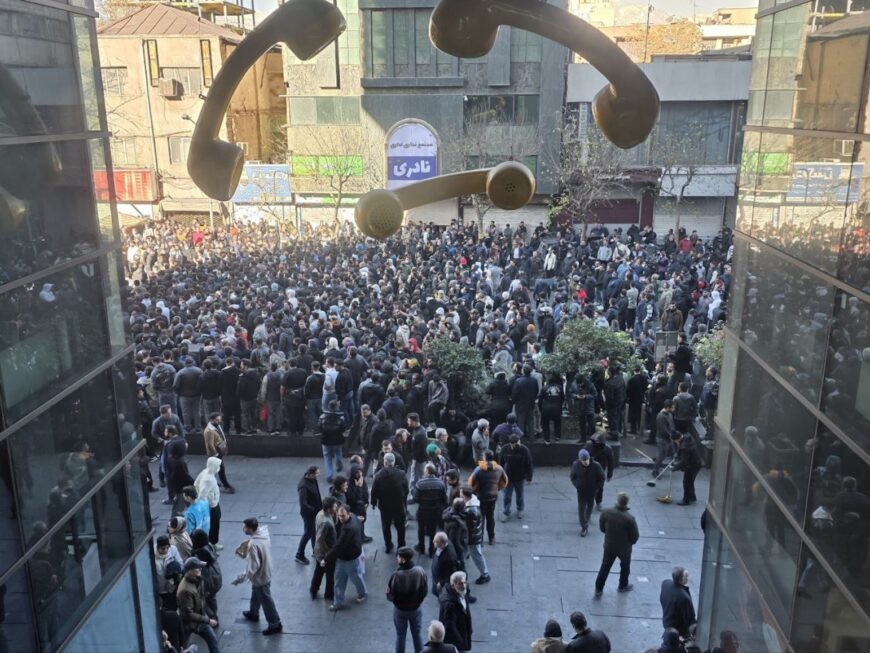
For many Iranians, daily life under an internet shutdown becomes an exercise in patience and uncertainty:
-
Messages send hours late—or not at all
-
News arrives through rumor rather than verification
-
Fear and confusion fill the information vacuum
In such conditions, misinformation can spread just as easily as truth—ironically undermining the stated goals of censorship.
What Happens When the Internet Comes Back?
History suggests that when connectivity is eventually restored:
-
A flood of images and videos emerges
-
Global attention spikes
-
Authorities face renewed scrutiny
The longer the blackout lasts, the more powerful that moment of reconnection can be.
The Bigger Picture: Control vs. Connectivity
At its core, Iran’s internet shutdown highlights a defining tension of the modern age:
-
Governments seek control
-
Societies seek connection
As long as the internet remains central to how people organize, learn, and express themselves, it will remain a battlefield—not just in Iran, but worldwide.
Final Thoughts: Silence Is Not Stability
Iran’s internet shutdown may be one of its longest ever, but it has not delivered calm.
Instead, it has:
-
Deepened public frustration
-
Isolated millions from essential services
-
Drawn renewed global criticism
Most importantly, it has shown that disconnecting a population does not erase its demands.
In an era where information is power, shutting down the internet may delay change—but it rarely prevents it.