How Did the 2026 Playoff Collapse Create The Lakers’ 2026 Free‑Agent Crossroads?
The Los Angeles Lakers' season ended in a four-game sweep by the Oklahoma City Thunder, exposing a roster that prioritized offensive variance over defensive sustainability. Despite a 53-29 regular-season record and an elite 18-5 late-season run, the Lakers' "two-timeline" architecture collapsed when injuries to Luka Dončić and Austin Reaves removed the playmaking margin for error, leaving the franchise facing a $200M+ decision involving nine expiring contracts and Second Apron tax penalties.
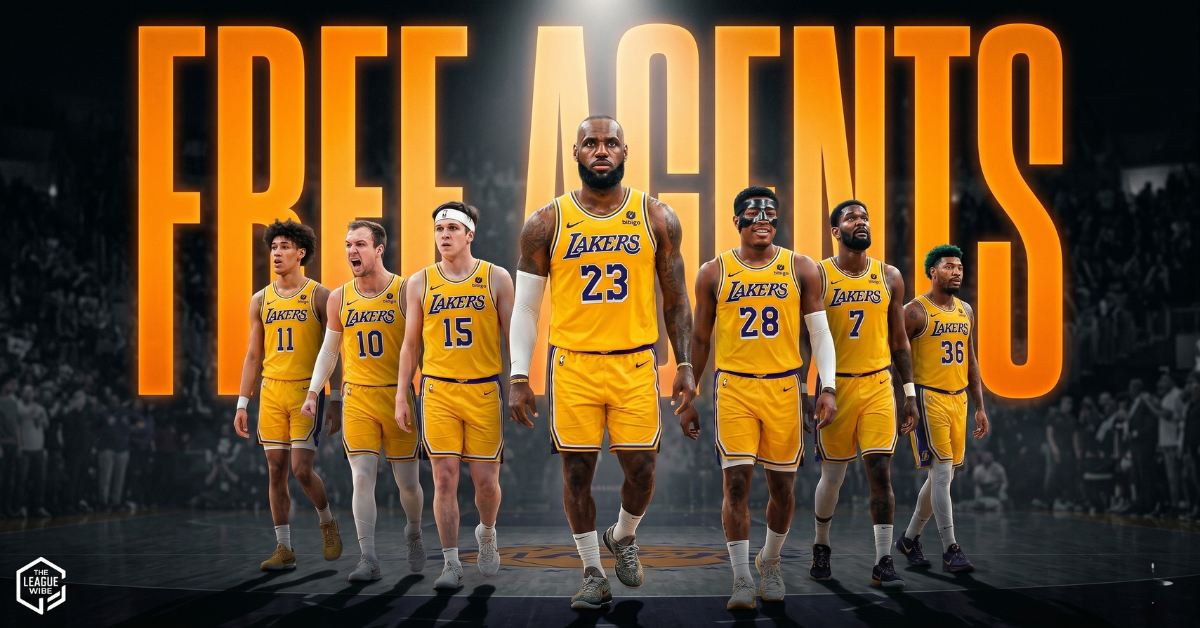
This offseason represents the most significant RGE Lakers 2026 free-agent crossroads in the post-Kobe era. The front office must now decide whether to "max out" a core that statistically dominated the regular season or execute a "Hard Reset" to build a switchable, high-speed defense around Luka Dončić’s prime.
Why did the Lakers' 53-win season end in a sweep?
The Lakers' collapse was a result of defensive scheme exploitation and personnel fragility. During their 18-5 surge, the Lakers relied on an unsustainable 41% team shooting average from three-point range to mask a defensive rating that ranked only 18th in the league.
The Tactical Breakdown: Why "Triple Playmaking" Failed
The Lakers’ offensive system, built on the gravity of Dončić, James, and Reaves, functioned by hunting mismatches in the half-court. However, the Thunder utilized a "Next" defensive rotation—aggressively jumping the first pass and forcing the Lakers into secondary and tertiary decisions.
The Luka-James P&R: When Dončić and James screened for each other, OKC switched 1-through-5, neutralizing the Lakers’ size advantage with lateral quickness.
The Shot Profile Shift: In the Rockets series, 42% of Lakers’ shots were at the rim. Against OKC, that number plummeted to 28% as the Thunder’s "scramble" defense took away the paint.
The Injury Catalyst
While injuries are often an excuse, the data shows the specific loss of Austin Reaves’ oblique health was catastrophic. The Lakers posted a -11.4 Net Rating when Reaves was off the floor in the second round, as they lacked a secondary "downhill" threat to relieve pressure on a hobbled Dončić.
Is Austin Reaves a Max-Contract Player in 2026?
The Lakers face a $160M+ valuation question with Austin Reaves’ free agency. Strategically, Reaves is no longer a luxury; he is a foundational requirement for the Luka Dončić era.
The Case for the Max
The 20-Point Metric: The Lakers were 23-4 when Reaves scored 20+ points. His ability to function as a "Swiss Archer"—hitting 36% of his threes while maintaining a 2.8:1 assist-to-turnover ratio, makes him the perfect foil for Dončić’s high-usage style.
The Synergy Data: Lineups featuring Dončić and Reaves produced a 122.4 Offensive Rating, the highest two-man floor-spacing metric in the Pacific Division.
The Risk Factor
The concern for L.A. is Reaves’ durability profile. At 51 games played in 2026, a max contract would tie up 25% of the cap in a player whose high-usage role has led to repeated soft-tissue injuries. However, in a market where "Tier 2" guards are fetching $35M+ annually, the Lakers have zero leverage to negotiate a discount.
The LeBron James Paradox: Will the "Second Apron" Force an Exit?
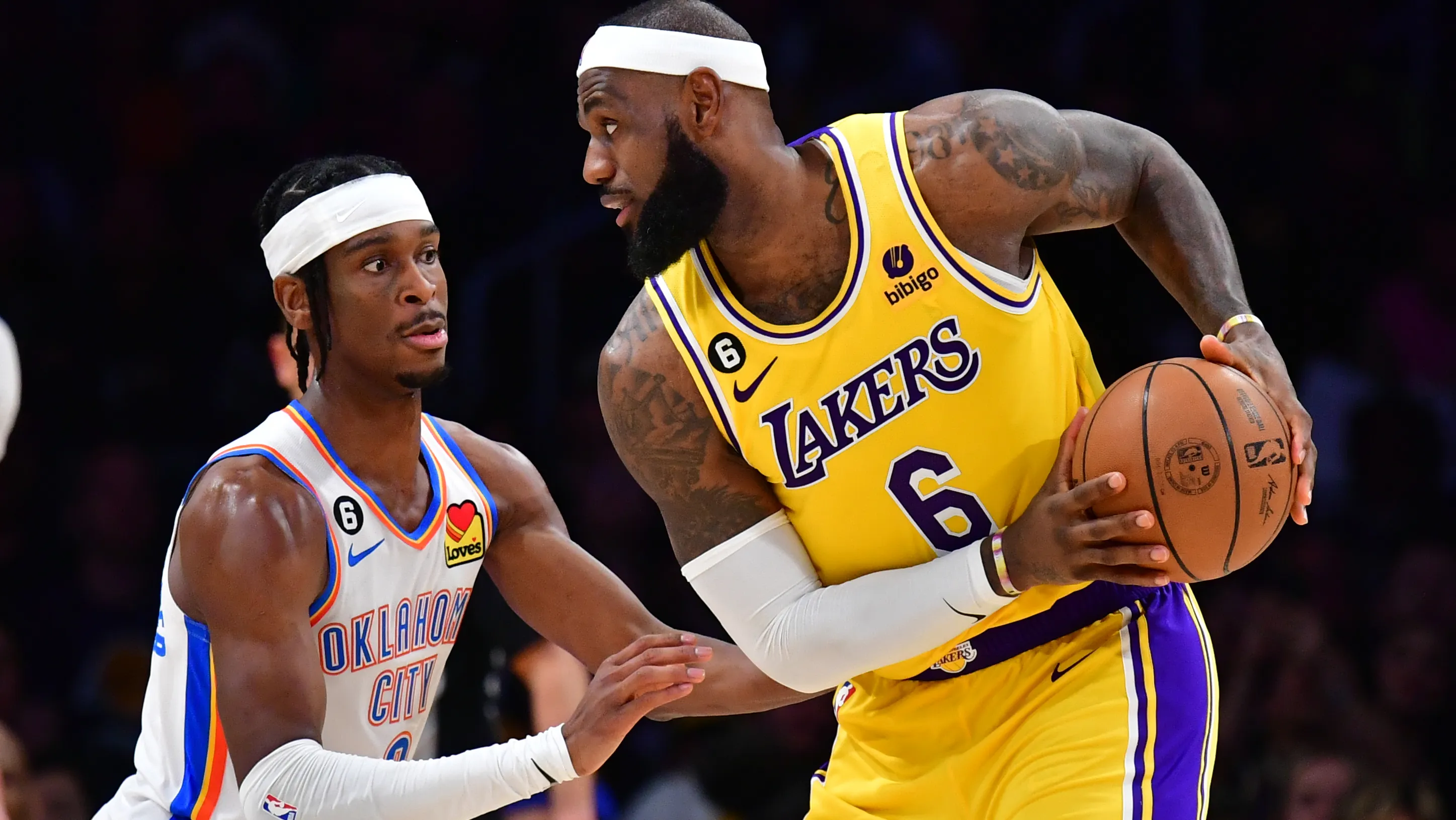
The Lakers’ biggest hurdle isn't LeBron James’ age—it’s his Cap Hold. At 41, James remains an elite transition weapon, leading the league with 343 fast-break points. But the new CBA’s Second Apron rules change the math for 2026.
What the Second Apron Means for the Lakers:
If the Lakers re-sign LeBron James, Austin Reaves, and Rui Hachimura to market-value deals, they will surpass the $190M Second Apron. This triggers:
Frozen Draft Picks: Their 2033 first-round pick becomes untradeable.
Trade Restrictions: They cannot aggregate salaries or send out cash in trades.
Buyout Bans: They lose access to the mid-season buyout market.
The Verdict: The Lakers' smartest path is a "Legacy Discount." If James accepts a deal in the
25M–25M–30M range (similar to the late-career moves of Tim Duncan), the Lakers can retain their depth. If he insists on a $50M+ max, the Lakers will likely be forced to renounce the Bird Rights of Luke Kennard and Deandre Ayton, effectively gutting the rotation.
The "Expiring Nine": Who Stays and Who Goes?
The Lakers have nine expiring contracts, providing them with $67M in "theoretical" cap space. However, this space disappears the moment they retain their own stars.
Player
2026 Status
Tactical Value
Projected Decision
Austin Reaves
UFA (Bird Rights)
Secondary Playmaker
Must Re-Sign (Max)
Rui Hachimura
UFA
Corner Spacer (44.3% 3P)
Re-Sign (Market)
Luke Kennard
UFA
Gravity Specialist
Walk (Too Expensive)
Deandre Ayton
Player Option
Rim Protector
Likely Opt-In
Marcus Smart
Player Option
POA Defender
Trade Asset
The Hidden Chokepoint: The Lakers' lack of Point-of-Attack (POA) defense. While Luke Kennard provides elite spacing (128.4 ORtg), his defensive liability was a primary reason OKC’s Shai Gilgeous-Alexander averaged 34 points in the sweep. The Lakers must decide if "Shooting Gravity" is more important than "Defensive Containment."
Narrative vs. Reality: Was the 18–5 Run a Fluke?
Narrative: "The Lakers are a championship-caliber team that just got unlucky with injuries."
Reality: The Lakers were a statistically imbalanced team. Their 18-5 run was fueled by a league-leading 61.2% True Shooting percentage, a figure that almost always regresses in the playoffs.
The reality is that the Lakers’ defense never improved; their offense simply outran their problems. Against a disciplined OKC defense that ranks 1st in turnover generation, the Lakers’ lack of a "Plan B" beyond high-screen-and-roll was exposed. They didn't lose because of bad luck; they lost because their roster lacked the defensive versatility required for a seven-game series.
What Happens Next? The Lakers’ Summer Strategy
The Lakers are at a pivot point: Commit to the Past or Build for the Dončić Future.
The Defensive Reset: The Lakers must prioritize a "Switchable 5" and a "Lockdown Wing." This may require letting Luke Kennard walk and exploring trades for Marcus Smart’s expiring contract.
The Reaves Signing: Expect a 4-year, $160M+ deal. This solidifies the "Post-LeBron" backcourt.
The 2027 Cap Management: By keeping deals short (1+1 structures), the Lakers are eyeing the 2027 free-agent class to find a true defensive co-star for Dončić.
Final Takeaway:
The 2026 offseason isn't about "reloading"; it’s about architectural correction. The 53-win season proved that Luka and LeBron can coexist offensively, but the OKC sweep proved they cannot win together without a total overhaul of the defensive support staff. If the Lakers don't fix their POA defense this summer, they risk wasting the prime of the league’s most efficient offensive engine.